Last updated October 31, 2026
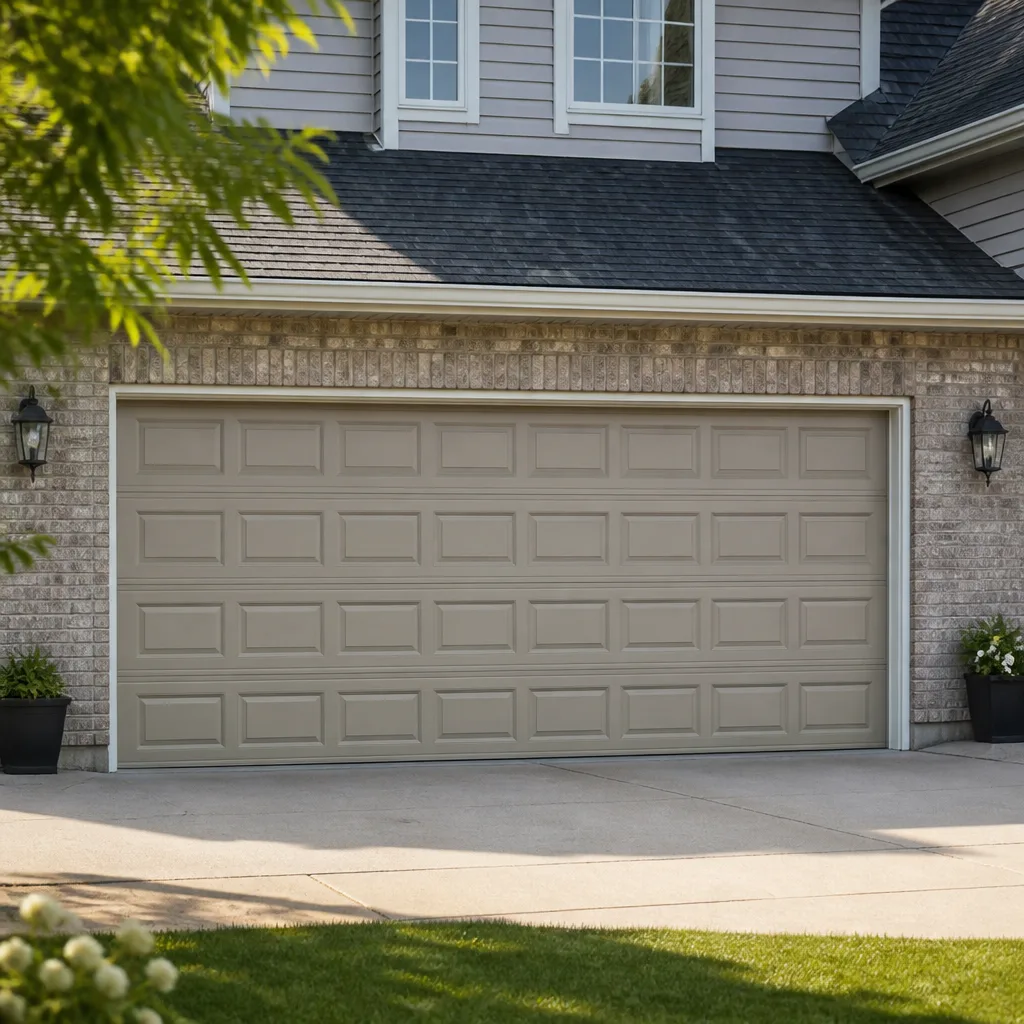 Raised-panel steel
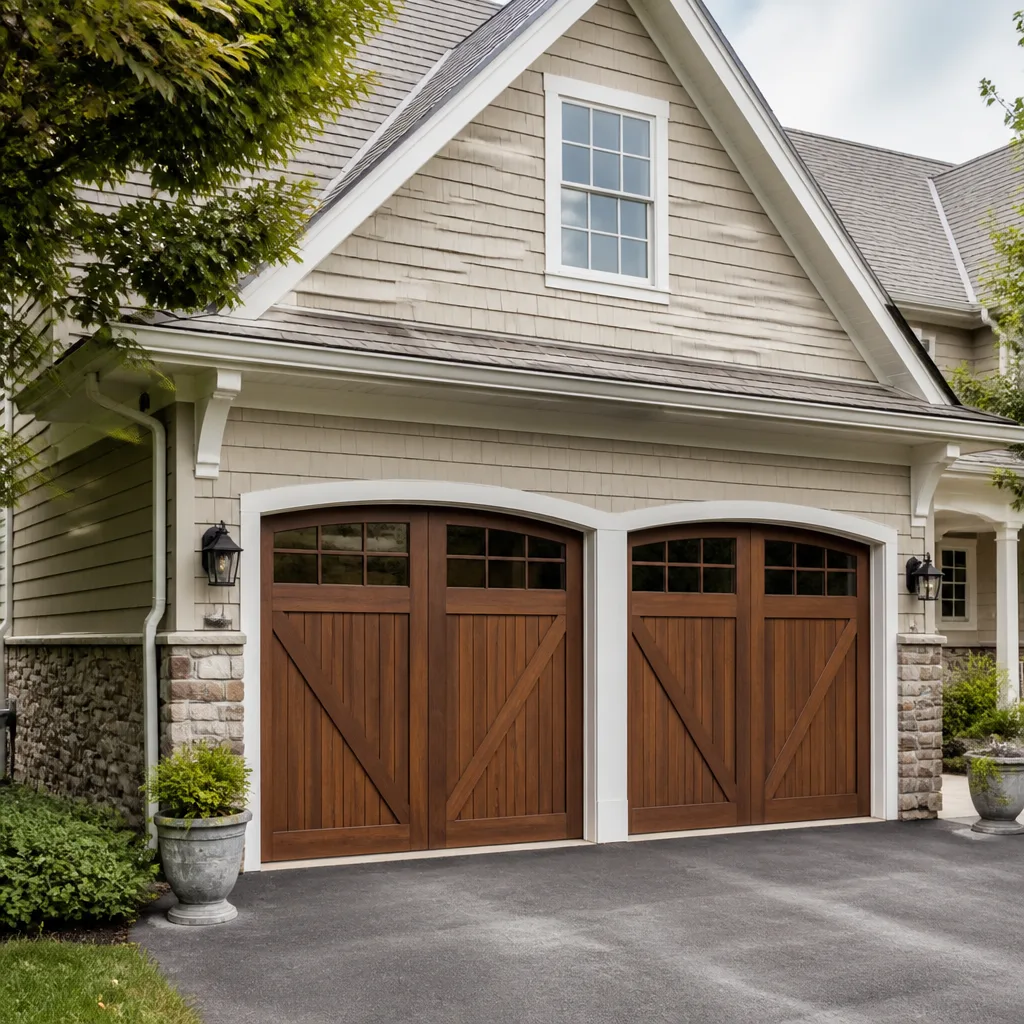 Carriage house
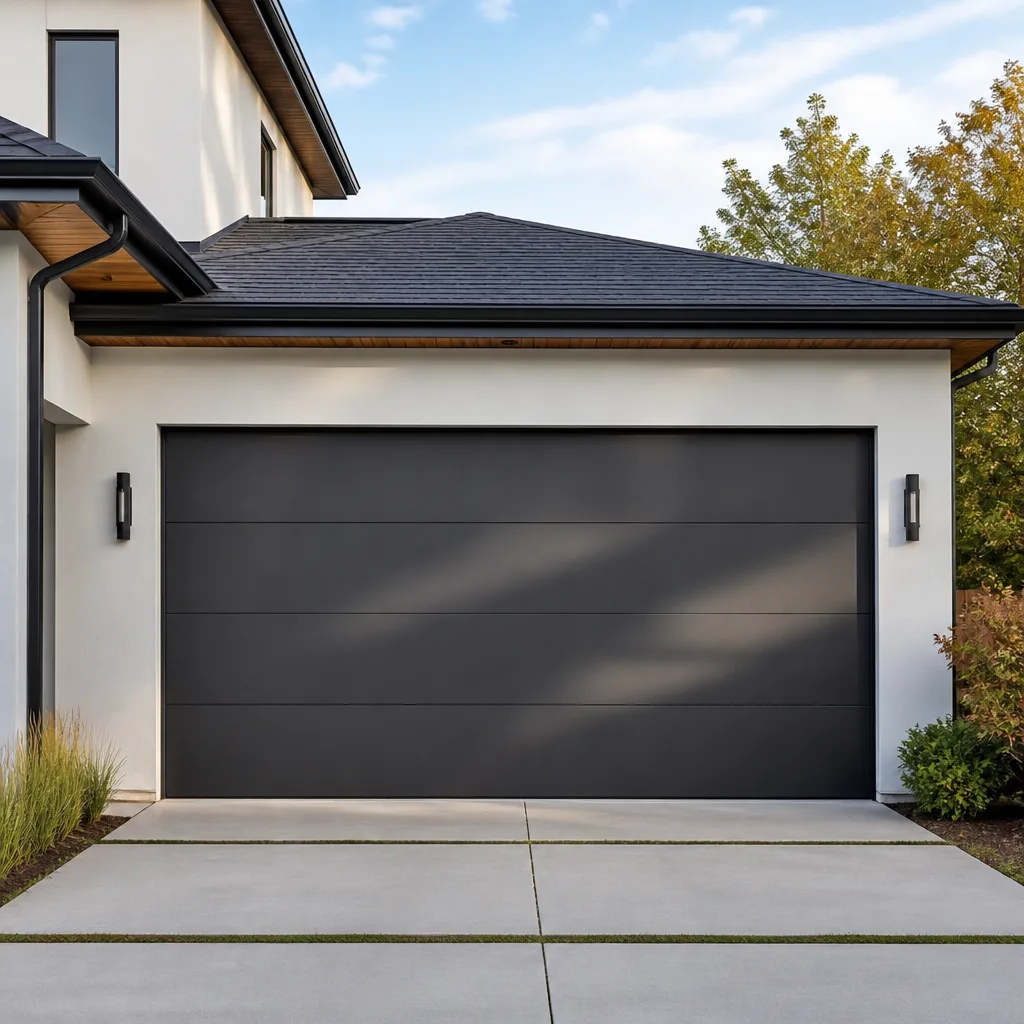 Modern flush
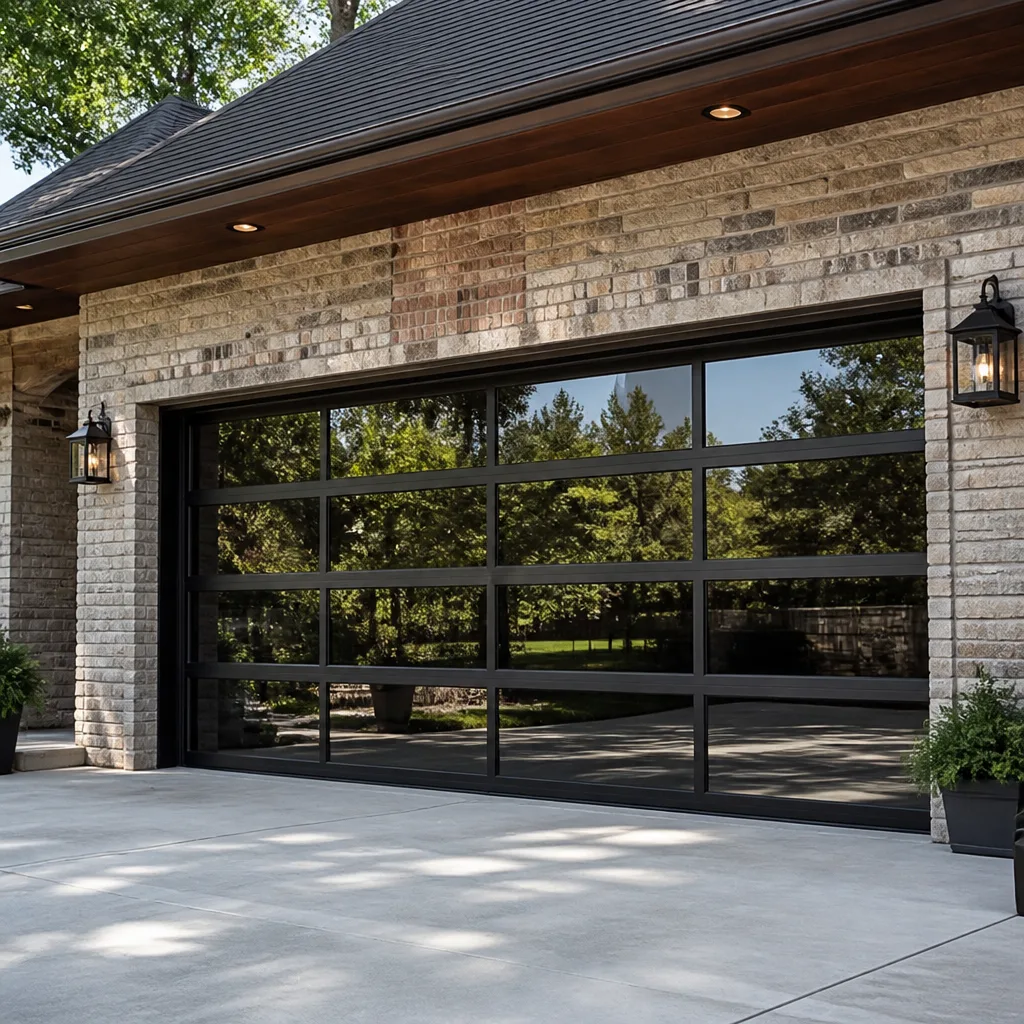 Full-view glass
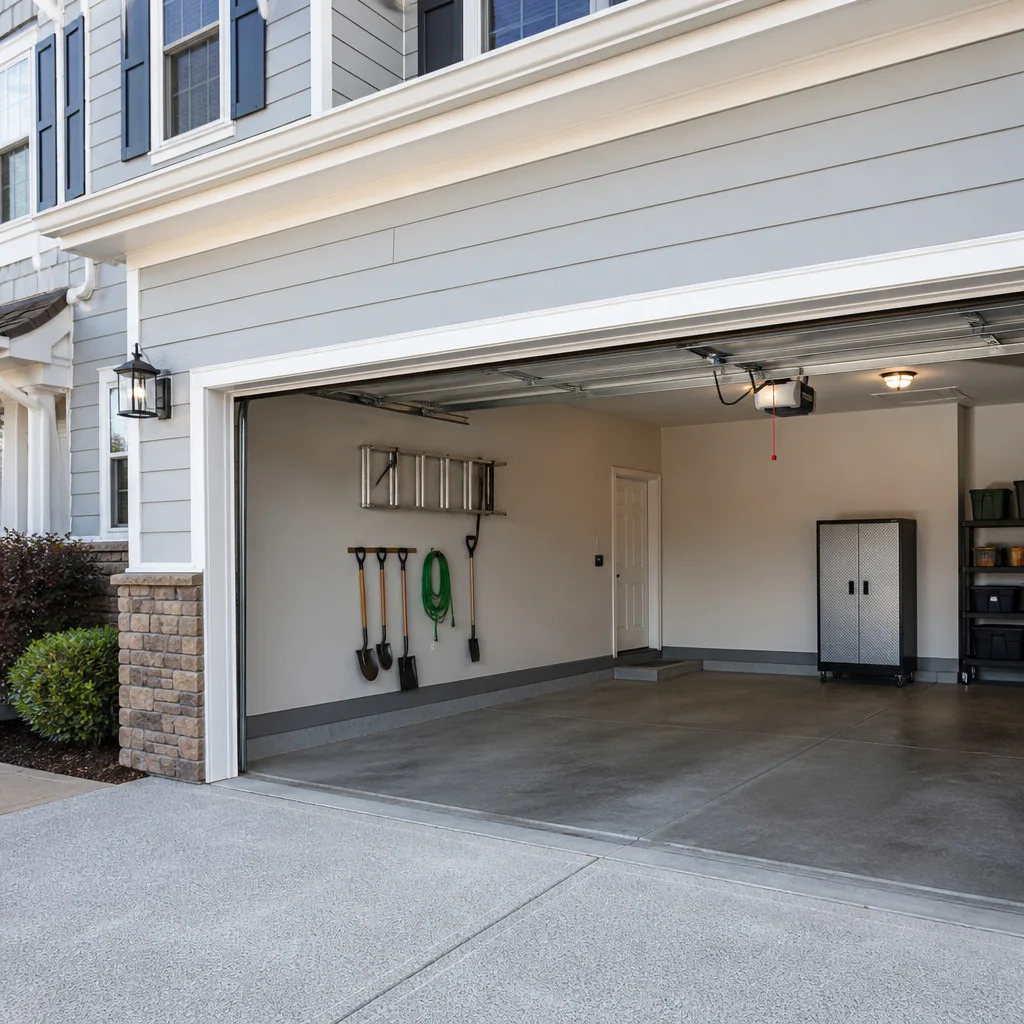 LiftMaster openers
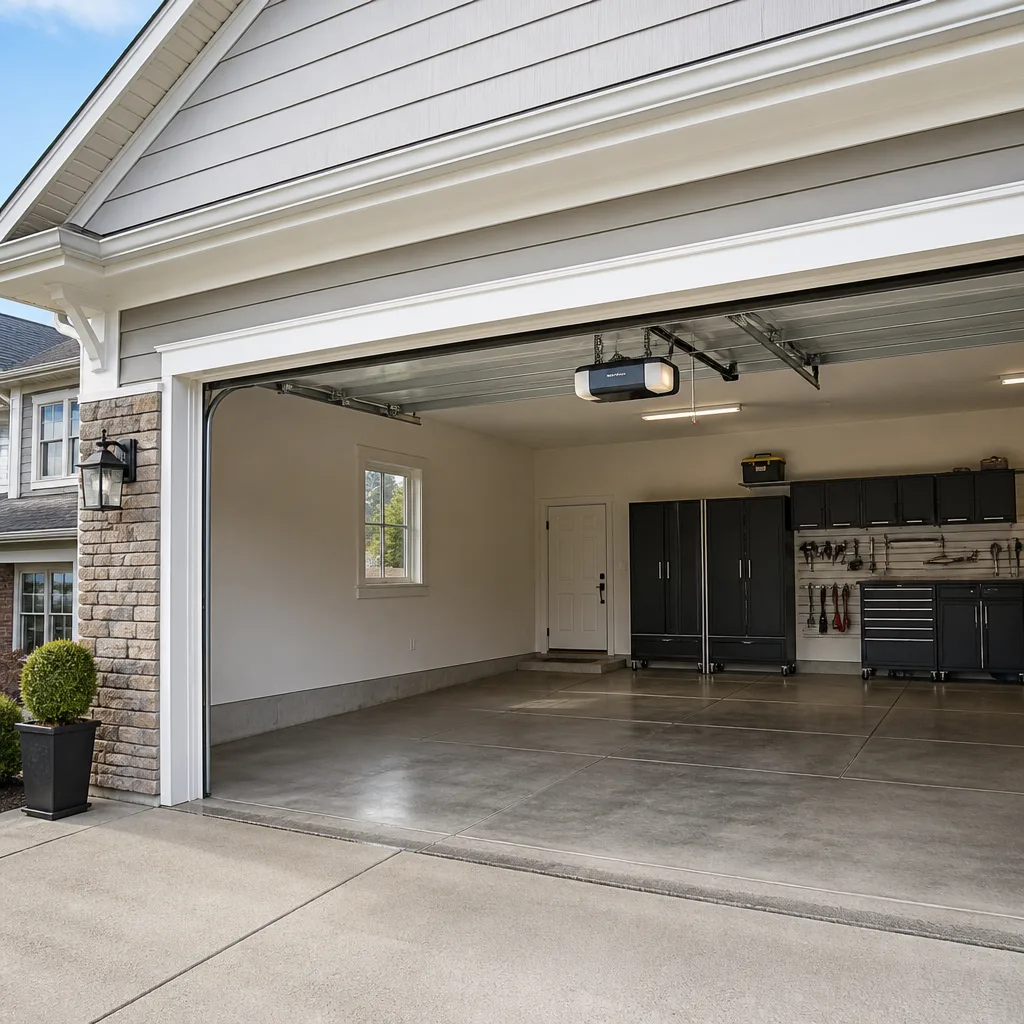 Chamberlain openers
Full 25-point door and opener safety check with every visit - springs, cables, rollers, tracks, and your LiftMaster or Chamberlain opener included
You get a price before we start. It does not change when the truck arrives.
Get your free estimateGarage Door Emergency Preparedness Guide for Anaheim Homes
During the last major Southern California power outage, a wave of calls hit emergency locksmiths and garage door companies across Orange County. The surprising part? A substantial number of those calls weren’t for broken openers or snapped springs. They were from Anaheim homeowners who couldn’t get their car out of the garage, not because the door was damaged, but because they had never once operated the manual release. They stood in dark garages, staring at a red cord hanging from the opener rail, unsure whether pulling it would free the door or drop it on their hood. This guide fixes that gap in a hurry. We’ll walk through the exact steps for releasing every common opener style found in Anaheim homes, how to prepare for outages, earthquakes, and wildfire evacuations, and the post-emergency inspection routine that keeps a bad situation from becoming an expensive one.
Quick Answer
Garage door emergency preparedness in Anaheim means knowing how to operate your manual release cord before you need it, keeping your vehicles positioned for fast exit during wildfire or earthquake threats, and understanding what your opener can and cannot do when power fails. Most emergency garage problems are preventable with a ten-minute practice session and a basic visual inspection routine. The manual release on your opener is your primary emergency tool, and it works the same way whether your door is a Clopay, Amarr, Wayne Dalton, Craftsman, or Raynor.
Table of Contents
- Why Anaheim Homes Face Unique Garage Door Risks
- How to Operate Your Manual Release by Opener Type
- Power Outage Preparedness: What a Battery Backup Actually Does
- Earthquake Preparedness: Before, During, and After Seismic Events
- Wildfire and Evacuation: Positioning, Locks, and Fast Exits
- The Five-Point Post-Emergency Inspection Protocol
- The 15-Minute Monthly Preparedness Drill
- Common Mistakes to Avoid
- When to Call a Professional
- Frequently Asked Questions
Why Anaheim Homes Face Unique Garage Door Risks
Anaheim sits in a specific risk crosshair. We’re close enough to the San Andreas and Puente Hills fault systems that a moderate earthquake would shake every residential door on its tracks. We’re in wildfire adjacency zones, particularly homes in Anaheim Hills and along the eastern edges near the 91 and 241 corridors, where evacuation orders can arrive with very little notice. And while Southern California’s grid is generally reliable, the heat-driven demand spikes between July and October, combined with the occasional Santa Ana wind event taking down lines, make multi-hour outages a realistic annual occurrence in certain Anaheim neighborhoods. A garage door is not a static fixture. It’s a large moving object under spring tension, connected to an electronic opener, mounted on tracks bolted to a frame that shifts with the building. Each of those systems responds differently to emergencies. Your preparation has to account for all of them.
Our team works on garage doors throughout Anaheim, from the older single-family homes near downtown to the newer construction in Platinum Triangle. We’ve seen doors knocked off track by minor seismic rattling that didn’t even crack the drywall inside the house. We’ve replaced openers that failed during heat waves because the motor’s thermal cutoff tripped. And we’ve helped more than a few Anaheim Hills residents whose evacuation plan stalled because the opener’s vacation lock, a built-in security feature, made the door refuse to open from inside. The common thread in every emergency is this: the homeowner’s outcome was determined by what they knew before the event, not by what they tried to figure out during it.
What makes garage door preparedness different in Anaheim specifically, versus other cities in the region, is the combination of older housing stock and newer retrofits. Many Anaheim homes built in the 1950s and 1960s have original garage framing that has settled over decades. Doors that were installed or retrofitted decades ago may sit on tracks that are no longer perfectly plumb. A minor event that wouldn’t bother a new build in Irvine can send an older Anaheim door off its rollers because the margin for error was already thin. Knowing your home’s age and your door’s condition going into an emergency is part of the preparation.
For a full breakdown of what emergency repairs involve at the component level, our Garage Door Repair in Anaheim guide covers springs, cables, tracks, and rollers in detail.
How to Operate Your Manual Release by Opener Type
The manual release, usually a red cord hanging from the opener rail, disconnects the door from the motorized trolley so you can lift the door by hand. Every Anaheim homeowner should know where this cord is and exactly what happens when it’s pulled. The mechanics differ slightly between opener types, and the difference matters when you’re doing this in the dark during a power outage.
Chain Drive and Belt Drive Openers (LiftMaster, Chamberlain, Craftsman, Genie, Raynor)
These are the most common openers in Anaheim homes. The motor unit mounts to the ceiling, and a rail with a trolley connects it to the door. The manual release hangs from the trolley. Here’s the sequence:
- Confirm the door is fully closed if possible. If the door is stuck partway up, do not pull the release yet. Call a professional instead because releasing tension on a partially open door can cause it to slam.
- Stand to the side of the rail, not directly under it or the door.
- Pull the red cord firmly downward and toward the door. You’ll hear or feel the trolley disengage.
- Lift the door manually using the handles or the bottom edge. A properly balanced door lifts with one hand and stays where you leave it.
- To reconnect, pull the cord again toward the opener, then run the opener through one cycle. You may need to press the wall button once so the carriage can re-engage.
The critical distinction most guides miss is whether the door has spring tension actively holding it in place. On a door that is fully closed and the torsion springs are intact, pulling the release simply disengages the motor. The door stays closed until you lift it. But on a door that is stuck partially open due to a broken spring, pulling that cord is dangerous. If a spring has snapped and the door is still partially held by the opener, releasing the trolley can allow the full weight of the door to drop. In our experience across Anaheim service calls, this is the single most common cause of emergency room visits related to garage doors. When in doubt, if the door sits at an unusual angle or the spring above the door has a visible gap, leave the release alone and call us at (877) 752-4135.
Jackshaft/Wall-Mount Openers (LiftMaster, Chamberlain)
Jackshaft openers mount to the wall beside the door, not the ceiling. They turn the torsion bar directly. The manual release on these units is usually a pull cord or a small handle built into the unit. Operating it disengages the motor from the shaft, allowing manual operation. These openers are increasingly common in newer Anaheim construction, particularly in homes with high ceilings or garages converted for extra storage. The release operates the same way: pull the cord or flip the lever, then lift the door by hand. The reclosing procedure reverses it; push the lever back or pull the cord again, then run the opener through a cycle to re-seat the lock.
Older Screw Drive Openers (Genie, Sears, Older Craftsman)
Screw drive openers from the 1980s and 1990s still serve many older Anaheim homes. These units have a manual release that is typically a small knob or handle on the carriage, not a cord. You pull it or twist it to disengage. Some models require pulling toward the opener; others require pulling down. If your opener is older than 2000, locate the brand and model number on the motor housing now, before you need it. The release may not be obvious and may be stiff from years of disuse. Practicing once makes the emergency operation second nature.
If you have a wall-mount or older screw drive opener and have never used the release, our Garage Door Opener Repair in Anaheim page explains what to expect from various opener generations and common failure modes.
The Tension Variable That Changes Everything
Here’s the detail that separates a true emergency guide from a generic one: pulling the manual release with tension on the door versus without tension are two completely different scenarios. With the door fully closed and the springs intact, the cord moves freely. You’re lifting a balanced door. With the door partially open and the springs broken or damaged, the cord may resist, and pulling it changes what connects to what. The door’s full weight, often 150 to 250 pounds depending on the model, can shift suddenly. Never pull the release when the door is not fully closed unless you have confirmed the springs are intact. This one caution prevents more Anaheim garage injuries than any other single piece of advice we give.
Power Outage Preparedness: What a Battery Backup Actually Does
Battery backup openers, available on many LiftMaster and Chamberlain models, provide power to the opener when the household current fails. The battery allows the opener motor to lift and lower the door a limited number of cycles, typically between 20 and 50 depending on the model and the door’s weight, before it drains. What it does not do is restore power to the wall button backlighting, the safety sensors in some configurations, or the myQ app without a separate UPS or cellular connection. It also does not guarantee operation if the battery is more than three years old, or if the unit has been beeping a low-battery warning for months that everyone ignored.
In Anaheim, considering that homes can go years between outages, many people with battery backups have never tested them. They assume the beeping they occasionally hear is a smoke detector, not their opener’s battery alert. The better approach is to plan around the manual release every time. Here’s why: the manual release works regardless of battery charge, regardless of the power grid, regardless of whether the opener’s logic board is functioning at all. It’s mechanical. It doesn’t fail. A ten-minute monthly practice run, pulling the cord and lifting the door by hand, builds muscle memory that no blackout can erase.
A battery backup is a convenience. It’s useful for households with older residents or physical limitations where lifting a heavy door manually is not realistic. But for a typical able-bodied Anaheim homeowner, the manual release should be the primary plan and the battery backup the secondary. Relying on the backup battery as your entire outage strategy is a gamble that the battery is charged, the opener’s electronics are intact, and the door’s balance is still within manual tolerance. Any one of those assumptions can be wrong on the worst possible day.
If you’re considering a battery backup or want to check whether your existing unit has one, the Ranger Garage Door Service home page lays out the opener services we offer across all eight brands we routinely service.
Earthquake Preparedness: Before, During, and After Seismic Events
Anaheim sits roughly 30 miles from the San Andreas Fault and closer still to the Puente Hills Thrust System, which runs beneath parts of Los Angeles and Orange County. A magnitude 6.5 or higher on the Puente Hills system is the scenario emergency planners use for the region, and it would shake every garage door track from Fullerton to Santa Ana. The preparation happens in three phases.
Before: What to Check Now
- Confirm your door’s balance. Disengage the opener and lift the door manually to roughly waist height. It should stay in position without support. A door that drops or rises on its own has spring tension problems that an earthquake will exploit.
- Inspect the track bolts. Where the vertical and horizontal tracks attach to the wall and ceiling, every bolt should be snug. Loose track hardware is the most common point of failure in even minor seismic shaking.
- Verify the safety cables on extension springs if your door uses them. These cables run through the springs and prevent a snapped spring from becoming a projectile. Older Anaheim homes sometimes have extension spring doors that predate the cable requirement.
- Check the header. The horizontal beam above the door opening should show no cracks or separations from the wall. Structural movement starts at the header.
During: What Actually Matters
During shaking, do not try to operate the door. Do not run through it. If you’re in the garage when an earthquake starts, move away from the door, the springs, and anything hanging from the ceiling. The door itself is not likely to injure you; the spring hardware and opener are. Wait for the shaking to stop, then assess.
After: The Inspection Before Any Operation
- Stand back and look at the door. Is it square in the opening, or does it tilt?
- Examine the vertical track on both sides. Any bowing, twisting, or gap between the track and the wall indicates frame movement.
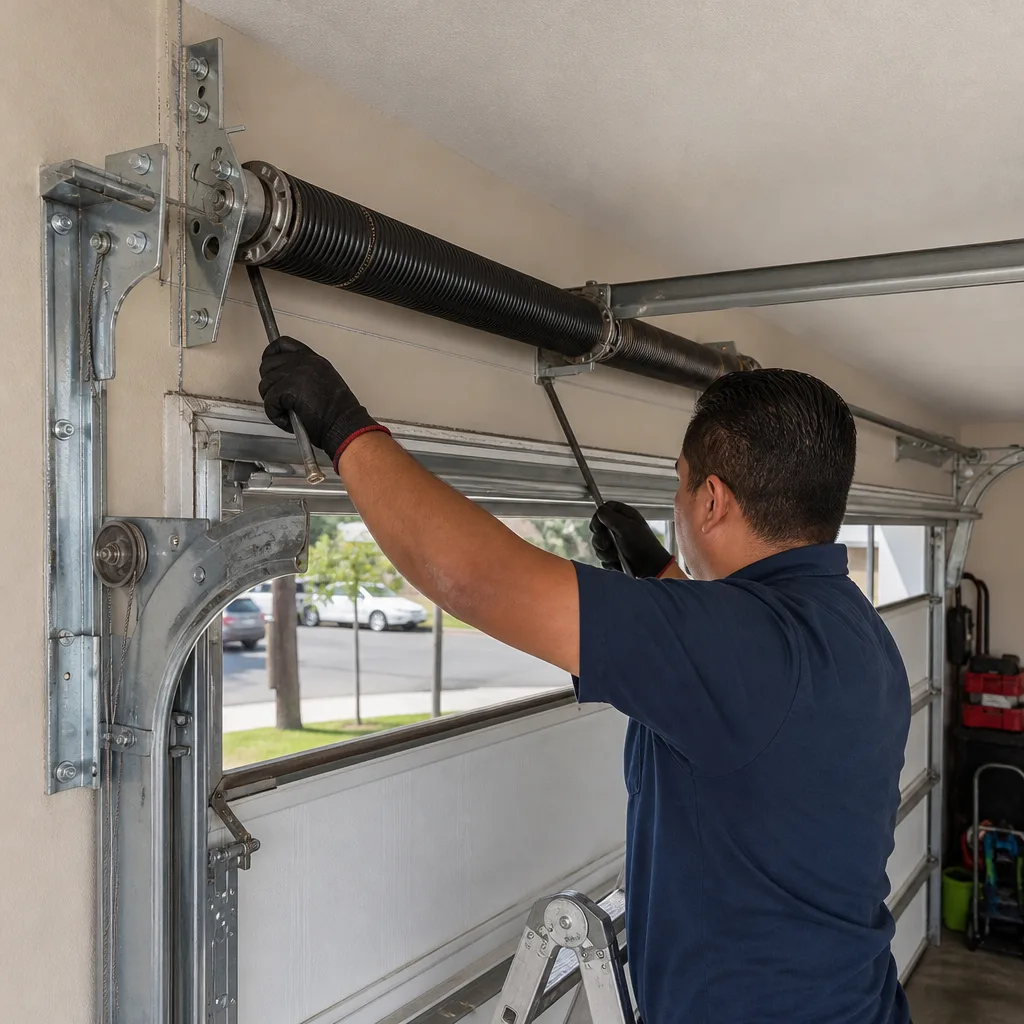
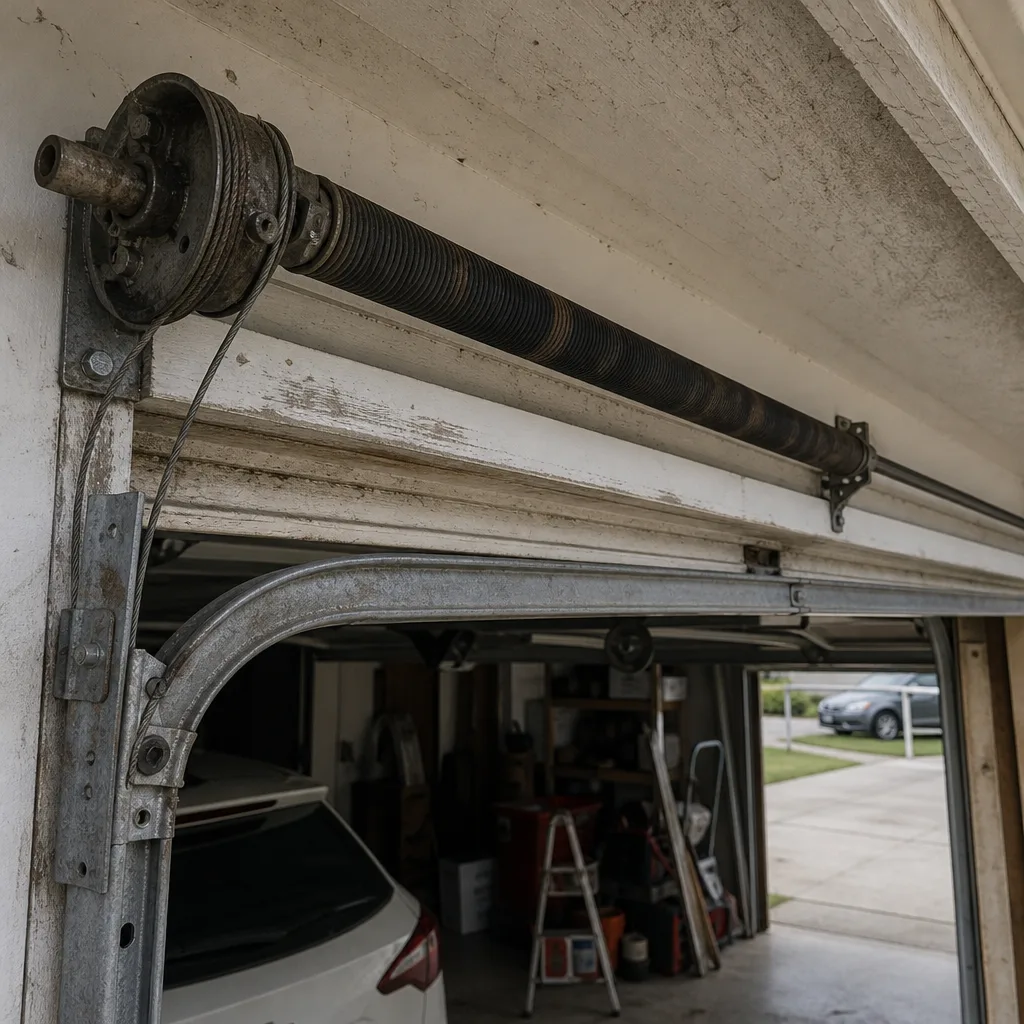
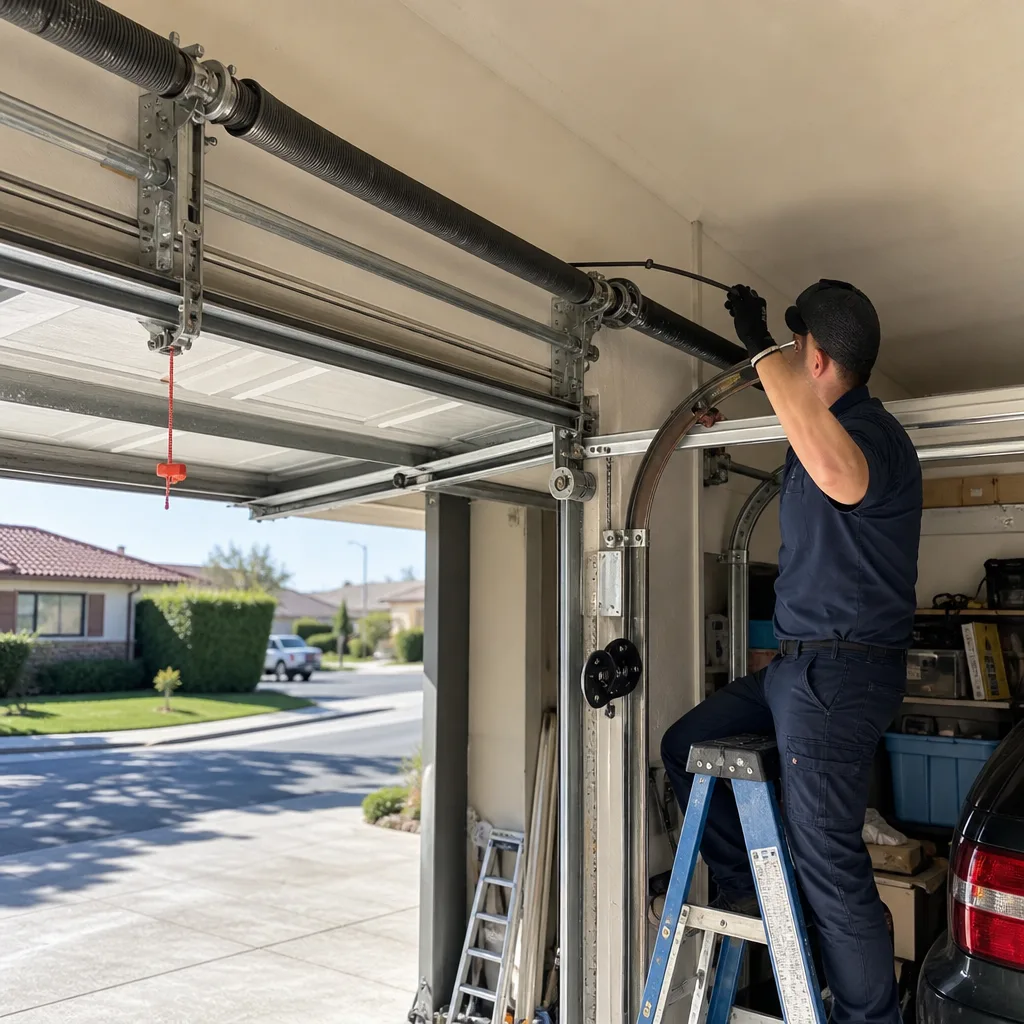
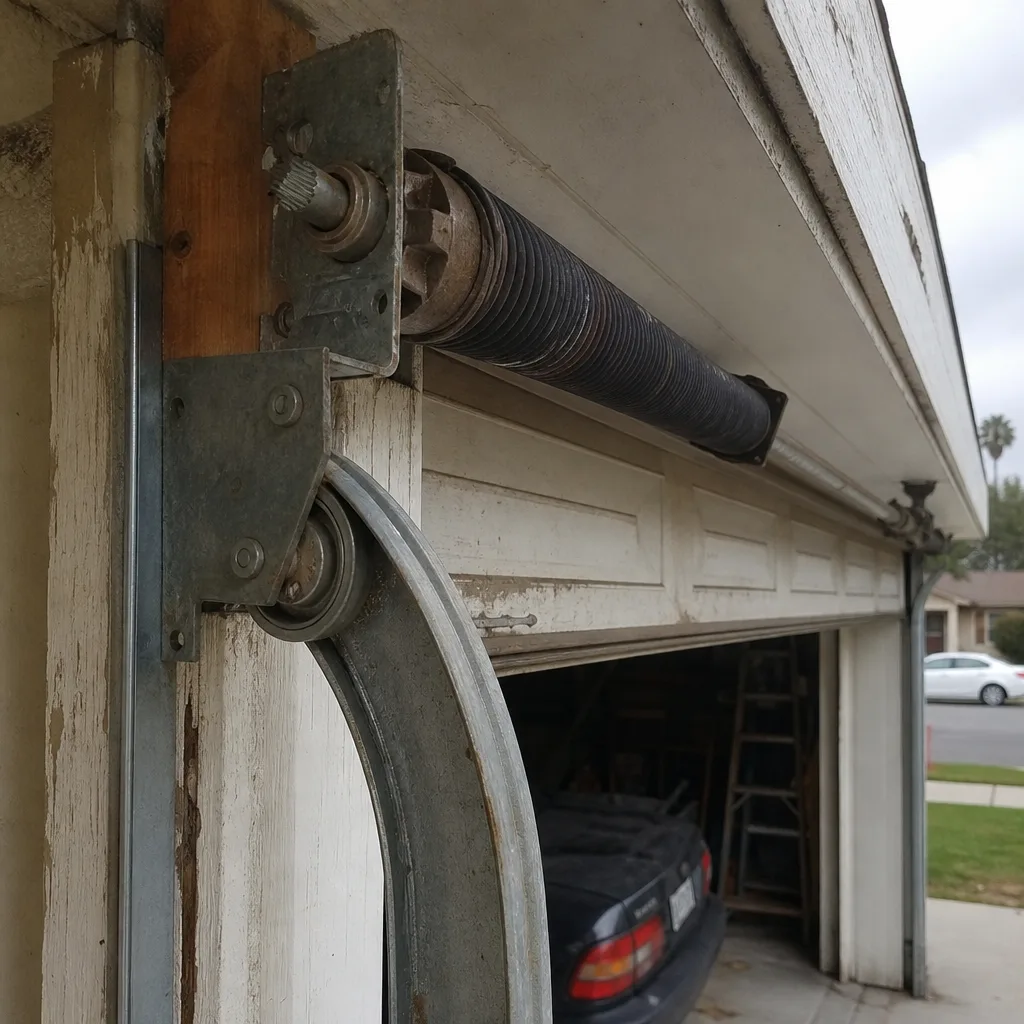
- Look at the spring assembly above the door. A torsion spring with a visible separation in the coil has snapped. An extension spring that is hanging loose or stretched has failed.
- Check the gap between the door sections. If the panels have separated at the hinges, the door may bind when operated.
- If anything looks shifted, leave the door as it is and call for a professional assessment before running the opener. Pressing the wall button first and hoping for the best is how shifted doors get dragged off their tracks and into cars or walls.
For what a shifted track or damaged roller repair involves, our Garage Door Repair in Anaheim service page details the process and the parts we commonly replace after seismic events in the area.
Wildfire and Evacuation: Positioning, Locks, and Fast Exits
Evacuation orders in the Anaheim Hills and canyon areas can move from advisory to mandatory faster than most residents expect. When the Santa Ana winds are driving a fire toward the 91 corridor, the time between the evacuation alert and the moment you need to be in your car can be measured in minutes, not hours. Your garage door is part of that timeline in two ways: whether it opens when you’re leaving, and whether it protects your home if you’re gone.
Pre-Positioning Vehicles During Fire Weather
The standard advice from fire agencies is to back your car into the garage, facing outward, during red flag conditions. This seems obvious until you consider what it requires: a working garage door at the moment of departure. Many Anaheim residents instead park their cars in the driveway on high fire danger days, precisely because they don’t trust their garage door to open during a power failure or local grid shutdown. Both strategies have merit. Backed in with a functioning battery backup or a practiced manual release is best; driveway parking with keys staged is second. What never works is a forward-facing car trapped behind a door that won’t open because the power is out and the manual release was never practiced. If you live in the Anaheim Hills interface zones, choose your positioning based on how much you trust your manual release execution, not on what a generic checklist says.
The Opener Lock Feature That Traps Doors
Most modern openers have a vacation or lock mode, usually engaged by holding the lock button on the wall console for a few seconds or by toggling a switch on the unit. Once active, the opener will not respond to remote controls, including the one in your car. This security feature is excellent for deterring code-grabbing thefts when you’re away, but it becomes a trap during an evacuation if you forget it’s active. You press the remote from your car in the driveway, the door doesn’t move, and now you’re troubleshooting in a stress spiral. Know whether your opener has this feature, know how to disengage it, and know that the manual release bypasses it entirely because it’s a mechanical disconnection, not an electrical override.
Leaving With the Door Up
If your evacuation plan involves leaving the garage door open, whether to allow quick re-entry or because the opener has failed, understand the tradeoffs. An open door leaves your home vulnerable to ember intrusion. During a wildfire, a garage with the door open can act as a wind tunnel, pulling embers deep into the structure. If you must leave with the door up, disengage the opener so it can’t attempt to close on its own, and accept that you’re trading security now for the possibility of re-entering later. The better option in most Anaheim evacuations is to close the door if you can, provided you have a working manual or powered operation. An open garage door during a Santa Ana wind event is one of the fastest ways to lose a home to ember ignition.
The Five-Point Post-Emergency Inspection Protocol
After any event that could have shifted your home’s foundation, frame, or door tracks, an earthquake being the prime example, but also after severe wind events, vehicle impacts to the door, or any situation where the door was forced, run through this five-point inspection before resuming normal use. This takes five minutes and it catches problems before they become repair bills or injuries.
- Frame and header check. Look at the header beam above the door. Any new cracks, gaps between the beam and the wall, or visible deflection means the structural opening has moved. The door cannot operate properly in a shifted frame, and forcing it will damage the door.
- Track alignment check. The vertical tracks on both sides should be parallel to each other and flush against the wall. Use a level if you have one. Any bowing, twisting, or fasteners pulled from the wall indicate movement. The horizontal tracks should be straight and level where they run back into the garage.
- Spring assembly check. On torsion spring doors, look at the spring above the door. It should be a single continuous coil. A clear gap in the coil means it snapped. On extension spring doors, both springs should be intact and under the same tension, with safety cables running through them.
- Roller and hinge check. Open the door manually about three feet and stop. Every roller should stay in the track, and no hinge should appear loose or separated from the door sections. Creaking, grinding, or wobbling rollers are immediate red flags.
- Balance check. With the opener disengaged, lift the door to waist height. It should stay put. A door that slams downward or flies upward has spring tension problems. Do not operate it with the opener until the springs are adjusted by a professional.
If any of these five checks fails, the door is not safe for normal use. Leave the opener disengaged, avoid parking under the door, and call for service. The problem will not improve on its own, and running the opener against a mechanical issue is how a $200 roller replacement becomes a $1,200 track and panel repair. During the aftermath of an earthquake, our phones light up with Anaheim homeowners who ran the opener before checking the door and paid for a full track replacement when a simple bolt tightening would have sufficed had it been caught early.
The 15-Minute Monthly Preparedness Drill
Preparedness is not a one-time project. It’s a monthly habit that takes fifteen minutes and keeps every system ready. Here’s the drill we recommend to every Anaheim homeowner, and it requires no tools beyond a flashlight and your hands.
- Test the manual release. Pull the cord, lift the door manually to shoulder height, lower it, and re-engage the opener. Run the opener through one full cycle to confirm reconnection. This is the single most valuable preparation step, full stop.
- Check the balance. With the door disengaged, lift to waist height. It should stay. If it doesn’t, the springs need adjustment. Note it and schedule it; don’t wait for the emergency that makes the imbalance dangerous.
- Listen during operation. Run the door through a cycle while standing beside it. A smooth hum is normal. Grinding, clicking, or shuddering is not. The opener should not strain audibly.
- Inspect the safety sensors. Near the floor on both sides of the opening, two small sensors should have solid LED lights. Wave a hand between them while the door is closing; it should reverse. If it doesn’t, the photo eyes are misaligned or dirty.
- Check the weatherstripping and floor seal. The rubber strip along the bottom of the door deteriorates in the Anaheim sun and heat. A worn seal doesn’t affect emergency function, but it does let water, pests, and embers into the garage.
- Look at the springs. A quick visual check of the torsion spring for gaps or the extension springs for slack. Thirty seconds. Do it every month.
These checks take no special skill and no special tools. They do take consistency. The Anaheim homeowner who does this monthly is the one who won’t be calling us from a dark garage during the next outage, wondering which cord does what.
If your monthly drill uncovers a problem, addressing it before an emergency is always cheaper and safer than after. For doors that need professional attention, Garage Door Repair in Anaheim covers spring replacement, track realignment, cable repair, and roller service. For openers that fail the operation test, Garage Door Opener Repair in Anaheim covers motor failures, sensor problems, and receiver issues across LiftMaster, Chamberlain, Genie, Craftsman, Raynor, and the other major brands. And if your door is too far gone for economical repair, Garage Door Installation in Anaheim walks through what replacement involves, from measuring to installation.
Common Mistakes to Avoid
- Pulling the release cord while the door is partway up. This is the most dangerous mistake. If the springs are compromised, the door can drop suddenly. Always check spring condition before releasing tension on a partially open door.
- Assuming the battery backup is charged. Battery backup units have finite life spans, usually 3 to 5 years for the replaceable batteries. An untested backup is not a backup. Run a monthly test cycle on battery power.
- Never locating the manual release until the power is out. Finding a red cord in a dark garage during an emergency is not a plan. Locate it now, practice it monthly, and remember where it is by feel.
- Forgetting the vacation lock is engaged. If your remote worked yesterday and doesn’t today, and you don’t remember engaging any lock feature, check the wall console. A flashing lock icon means the opener is in locked mode and will ignore all remotes.
- Running the opener after an earthquake without checking the tracks first. Shifted tracks plus opener torque equals dragged panels and expensive damage. The five-point inspection takes five minutes. Forced operation costs hundreds.
- Parking forward-facing during red flag warnings in fire-prone Anaheim Hills areas. If the door fails and the power is out, a forward-facing car requires a 12-point turn in a small garage to exit. Back in when fire risk is high, or park outside entirely.
- Ignoring a door that feels heavy when lifted manually. A properly balanced door lifts easily. A heavy door means failing springs. The heavier it feels, the closer the spring is to catastrophic failure, which tends to happen at the worst possible moment.
When to Call a Professional
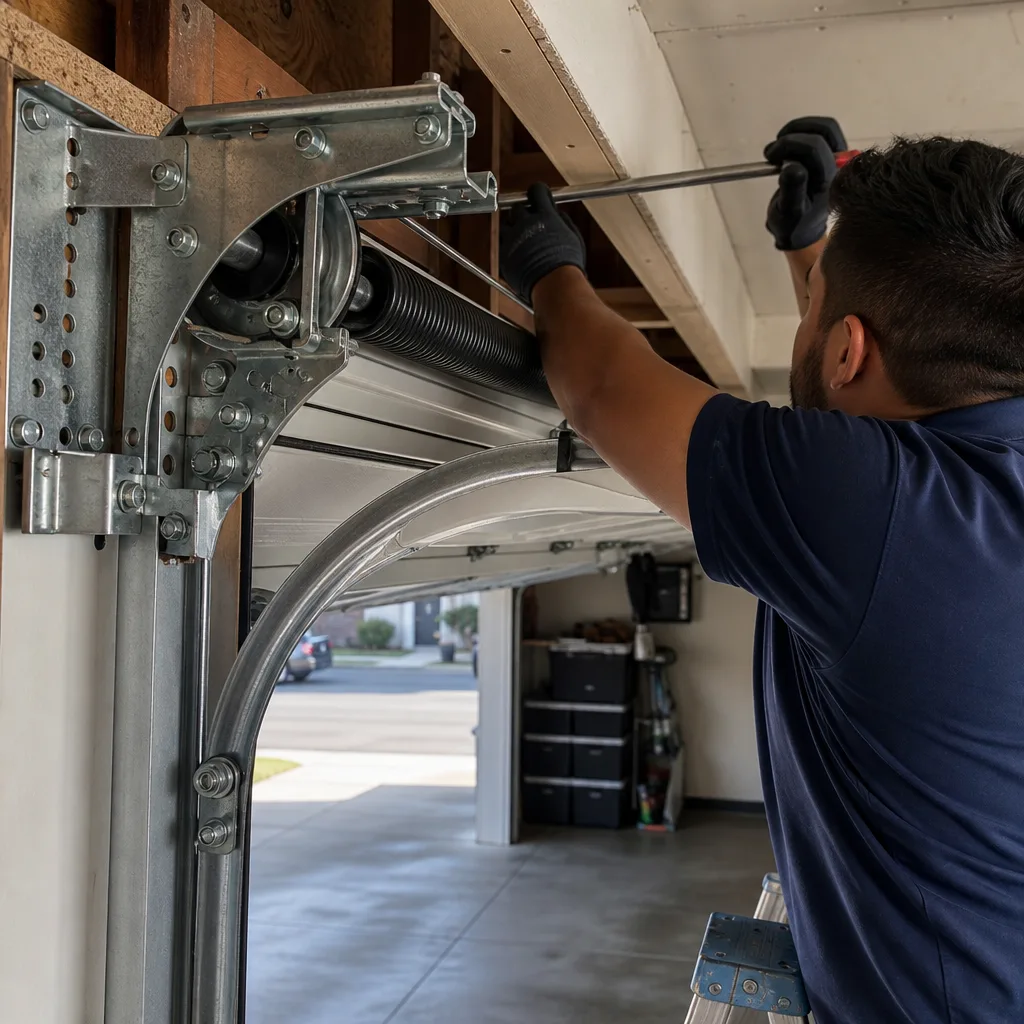
Some situations are beyond preparation and require a trained technician with the right tools and parts. Call a professional when you see a visible gap in a torsion spring, when the door has come off its track, when a cable is frayed or dangling, when the door sits crooked in the opening, or when the opener makes grinding noises and loses power. These are not DIY adjustments. The springs on a residential garage door hold enough tension to cause serious, even life-threatening injury to someone without the proper winding bars and training. The same applies to any repair that requires working with the door under tension. Our standard at Ranger Garage Door Service is to diagnose first, then recommend only what the door actually needs. We work on Amarr, Wayne Dalton, Craftsman, Raynor, and the other major brands found in Anaheim homes, so the recommendation is based on the door in front of us, not on what we happen to sell. Ranger Garage Door Service offers free estimates in Anaheim, call (877) 752-4135.
Frequently Asked Questions
Pull the red manual release cord hanging from the opener rail, which disconnects the door from the motor, then lift the door by hand. The release works on every major brand, including LiftMaster, Chamberlain, Genie, Craftsman, Raynor, and models paired with Clopay, Amarr, and Wayne Dalton doors. Practice this monthly so it’s second nature when the power goes out. If the door won’t lift smoothly after pulling the cord, call (877) 752-4135 and leave the door as it is until a technician assesses it.
After an earthquake, check five things before operating the door: the header beam for cracks, the vertical and horizontal tracks for alignment, the spring for visible gaps, the rollers for alignment, and the door’s balance when lifted manually. Any failure on these five points means the door should stay disengaged until professionally inspected. Anaheim’s proximity to the Puente Hills fault makes this a real and recurring concern for every homeowner in the city.
A battery backup provides 20 to 50 open-close cycles on a full charge, depending on the opener model and door weight. It does not provide unlimited operation, and it does nothing if the battery is old or the backup unit was never installed. In a multi-day outage, the manual release is the reliable option. We recommend treating the backup as a convenience and the release as the plan.
The most common reason a remote stops working suddenly is the vacation lock feature, which disables all remote signals while still allowing the wall button to work. If you toggled this on during a trip and never toggled it off, that’s your culprit. Other possibilities include a tripped GFCI outlet serving the opener, a dead remote battery, or signal interference. The manual release bypasses all of these, which is another reason to know where it is and how to use it.
Monthly. Pull the release, lift the door to shoulder height, lower it, and reconnect. This takes less than one minute and ensures the release mechanism stays functional and you stay familiar with it. It’s the highest-value preparation step any Anaheim homeowner can take for garage door emergencies.
No, it’s generally not safe. An open garage door during high wind conditions allows embers to enter the garage, and the garage acts as a chimney that draws fire into the home’s structure. If you can close the door before leaving, close it. If the door cannot be closed, that’s a condition to note for whoever is managing the property while you’re gone, not a trivial detail.
The Bottom Line
Emergency preparedness for your Anaheim garage door comes down to three things: knowing your manual release by feel, checking your door’s condition before every high-risk season, and respecting what a door under spring tension can do when something has shifted. The power will go out again. The ground will shake again. Fire season will return. The homeowners who glide through these events are the ones who spent fifteen minutes a month preparing. The ones who struggle are the ones who learned everything they know about their garage door in the dark, under pressure, at the exact moment they needed it to work. Start with the manual release drill this week. Make it a habit. When the next emergency hits, you’ll be the one backing out of the garage while your neighbors are still standing in the dark, staring at the ceiling, trying to remember which cord does what. Written by the team at Ranger Garage Door Service, serving Anaheim since 2018.
Styles & brands we work with
See the difference
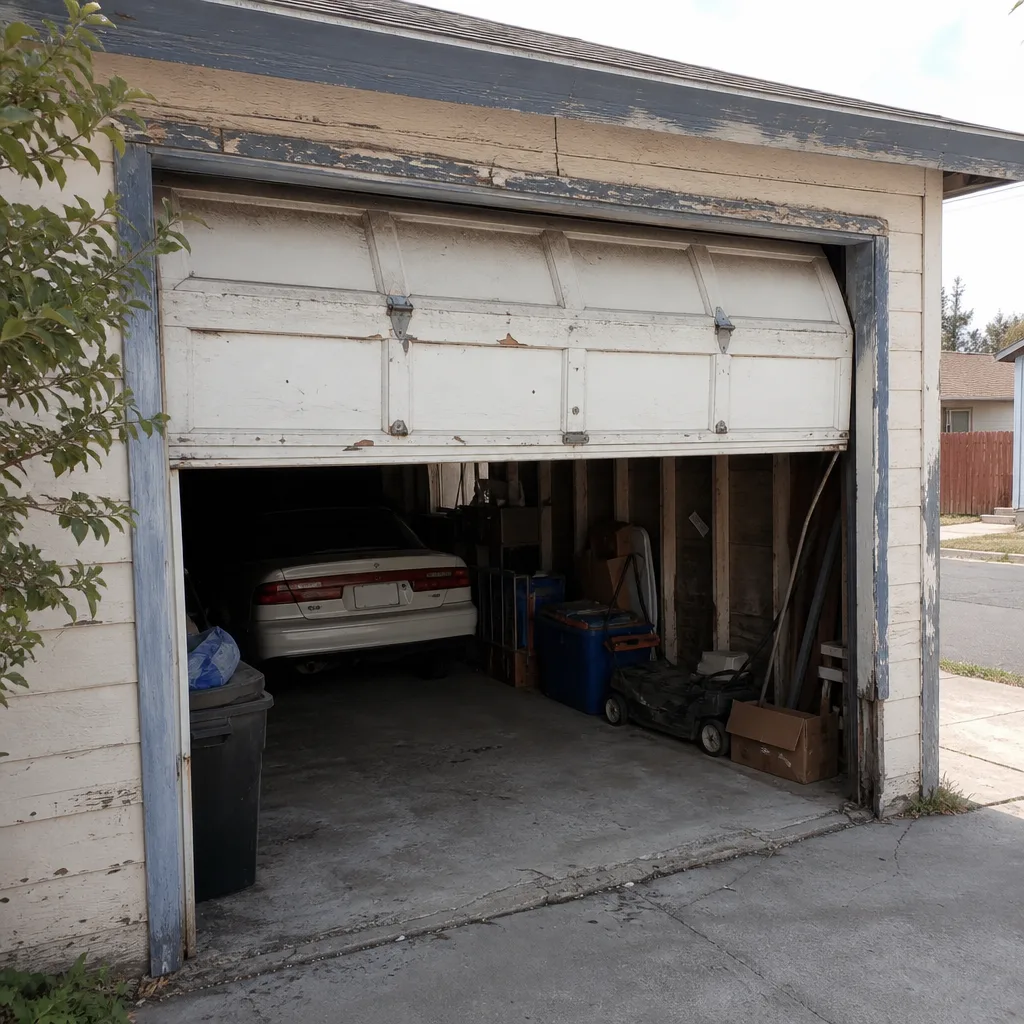 Before
 After
 Before
 After
 Before
 After