Last updated October 31, 2026
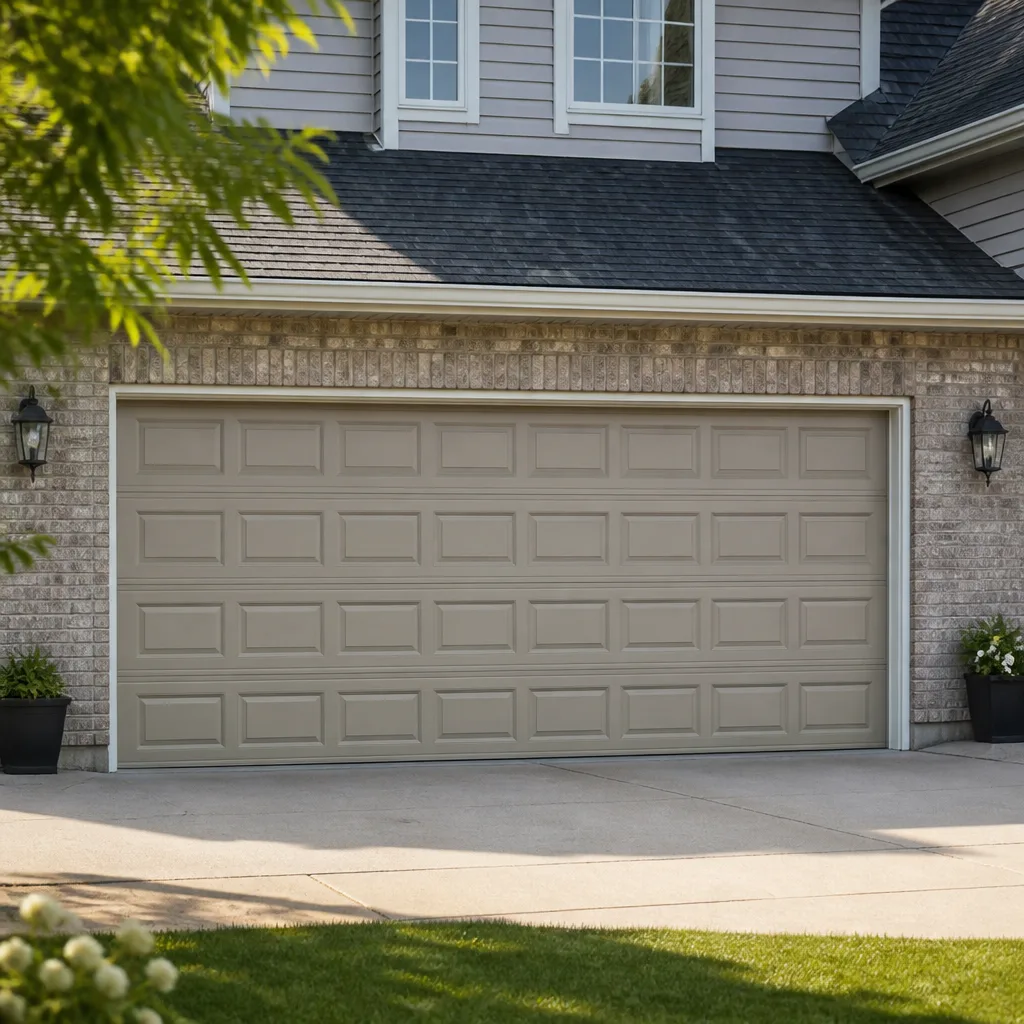 Raised-panel steel
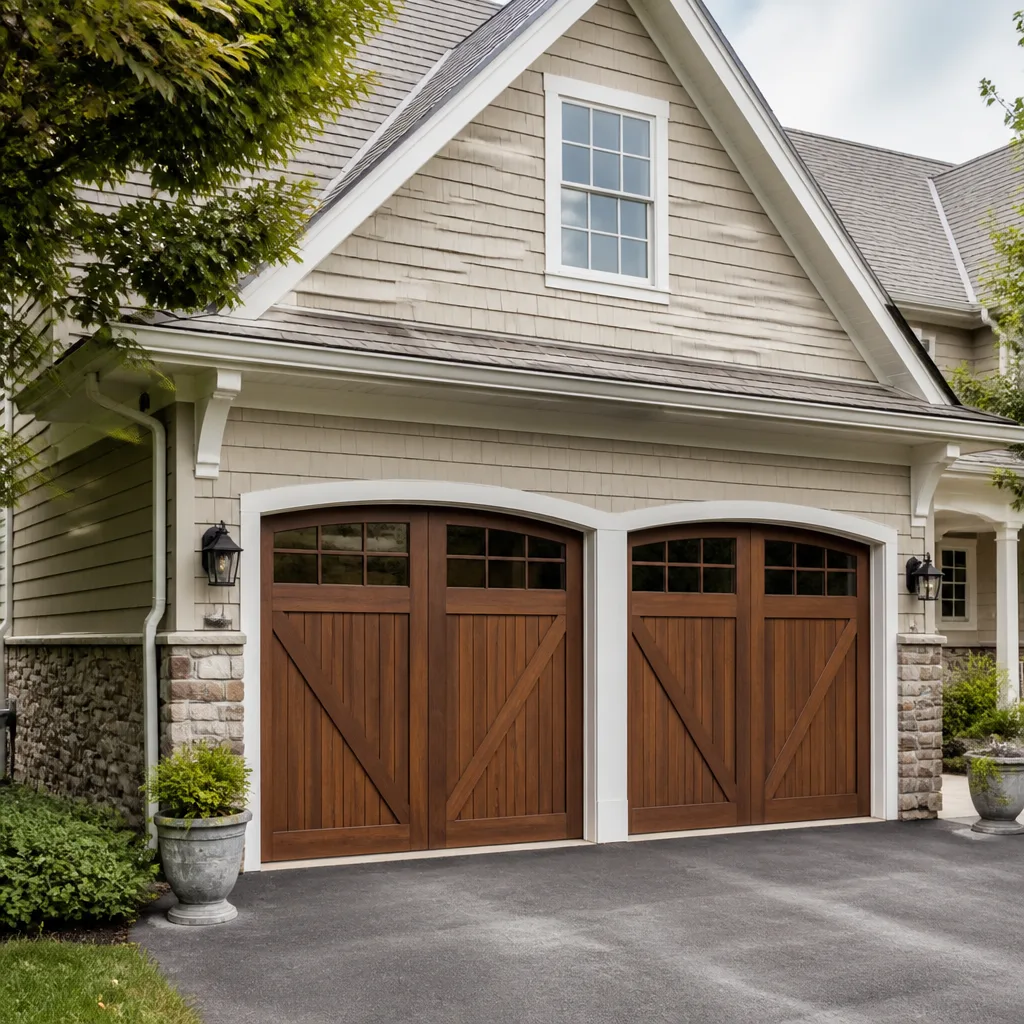 Carriage house
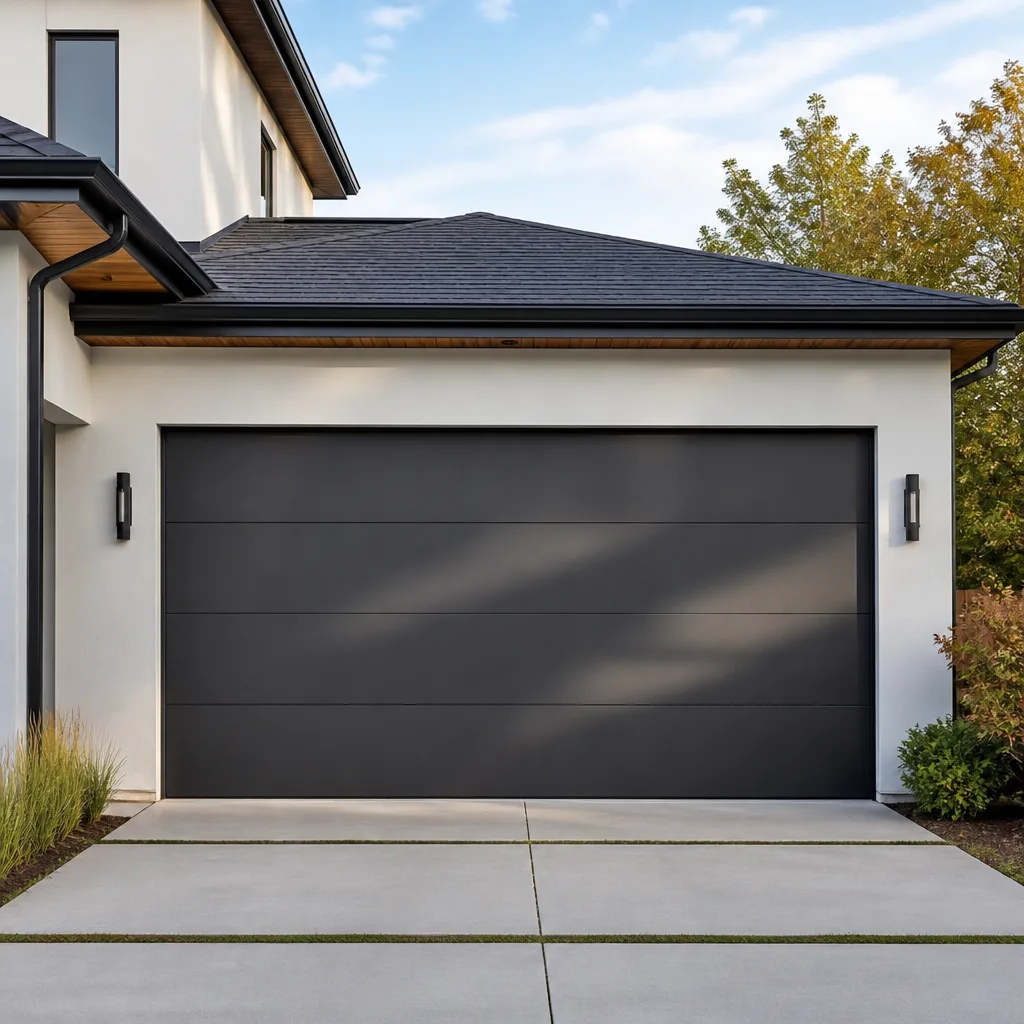 Modern flush
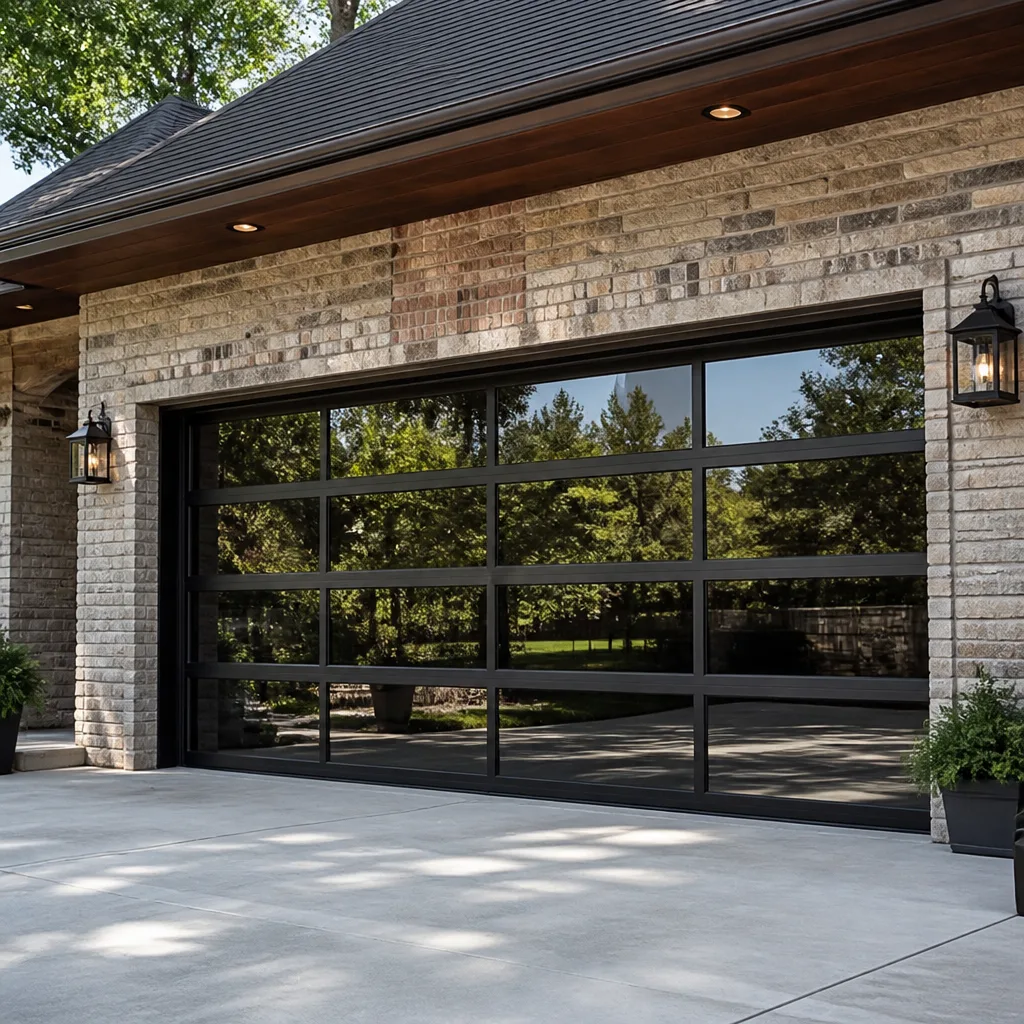 Full-view glass
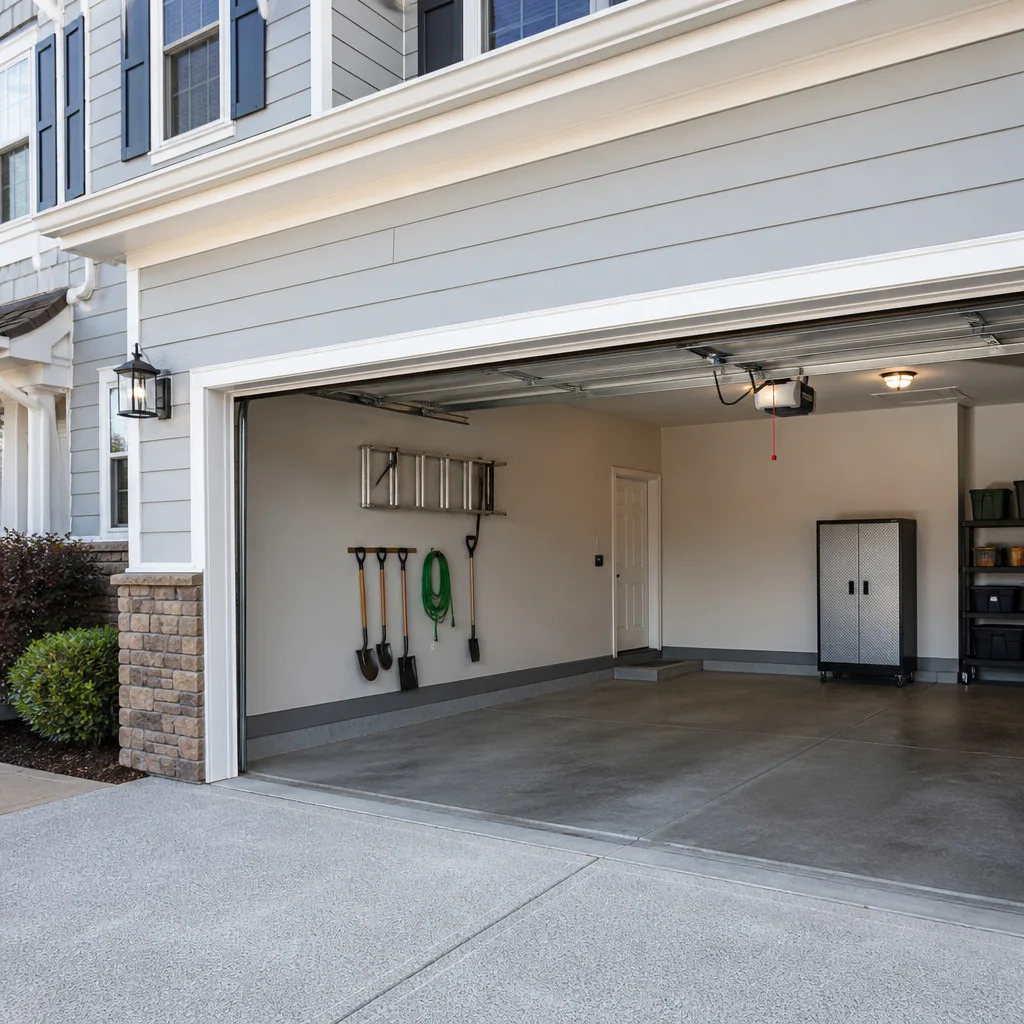 LiftMaster openers
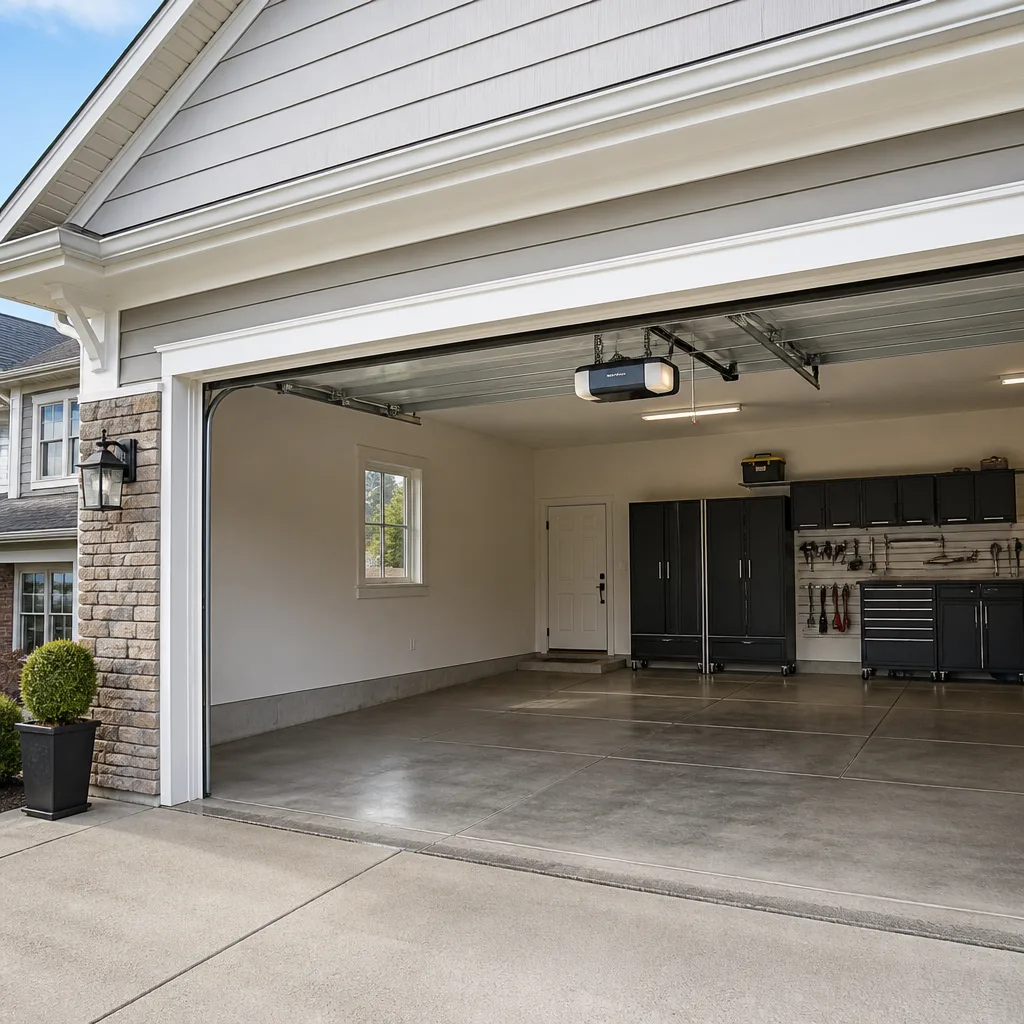 Chamberlain openers
Full 25-point door and opener safety check with every visit - springs, cables, rollers, tracks, and your LiftMaster or Chamberlain opener included
You get a price before we start. It does not change when the truck arrives.
Get your free estimateThe Complete Guide to Garage Door in Anaheim
Your garage door is the largest moving part of your home. It can weigh 300 pounds or more, cycles up and down over a thousand times a year, and most homeowners in Anaheim couldn’t tell you whether theirs runs on torsion springs or extension springs if their life depended on it. That gap in knowledge costs real money every time something breaks, because you end up paying for emergency calls that basic maintenance could have prevented, or worse, you ignore a small cable issue until it takes out a roller, a track, and a section of the door itself. This guide exists to close that gap. We’ll show you what those parts do, how they work together, what fails first in Anaheim’s climate and housing stock, what you can safely handle yourself, and what genuinely requires a trained technician from Ranger Garage Door Service home. By the time you finish this page, you’ll be able to diagnose most common problems before you ever pick up the phone, and you’ll know exactly what a fair repair looks like when you do call.
Styles & brands we work with
Quick Answer
A garage door in Anaheim is a system of counterbalanced springs, steel cables, rollers, metal tracks, and a motorized opener designed to lift and lower a heavy door hundreds of times per year. The most common failure points are the torsion springs (which last roughly 10,000 cycles, or seven to ten years for a typical Anaheim household), the opener’s circuit board or drive gear, and misaligned tracks from daily use. Most repairs fall between $125 and $400, and a homeowner can safely maintain rollers, sensors, and lubrication, but should never attempt spring replacement or cable work without professional training and tools. For help deciding what’s safe to handle yourself, see our DIY vs Professional Garage Door: The Anaheim Homeowner’s Decision Guide.
Table of Contents
- How a Garage Door System Actually Works
- Anaheim Housing Stock and Common Door Types
- Lifespan Expectations for Every Major Component
- Brand-Agnostic Service: What It Means in Practice
- Springs: The Most Dangerous Part of the System
- Openers: Mechanical vs. Electronic Failures
- What Homeowners Can Safely Do Themselves
- Common Mistakes to Avoid
- When to Call a Professional
- Frequently Asked Questions
- The Bottom Line
How a Garage Door System Actually Works
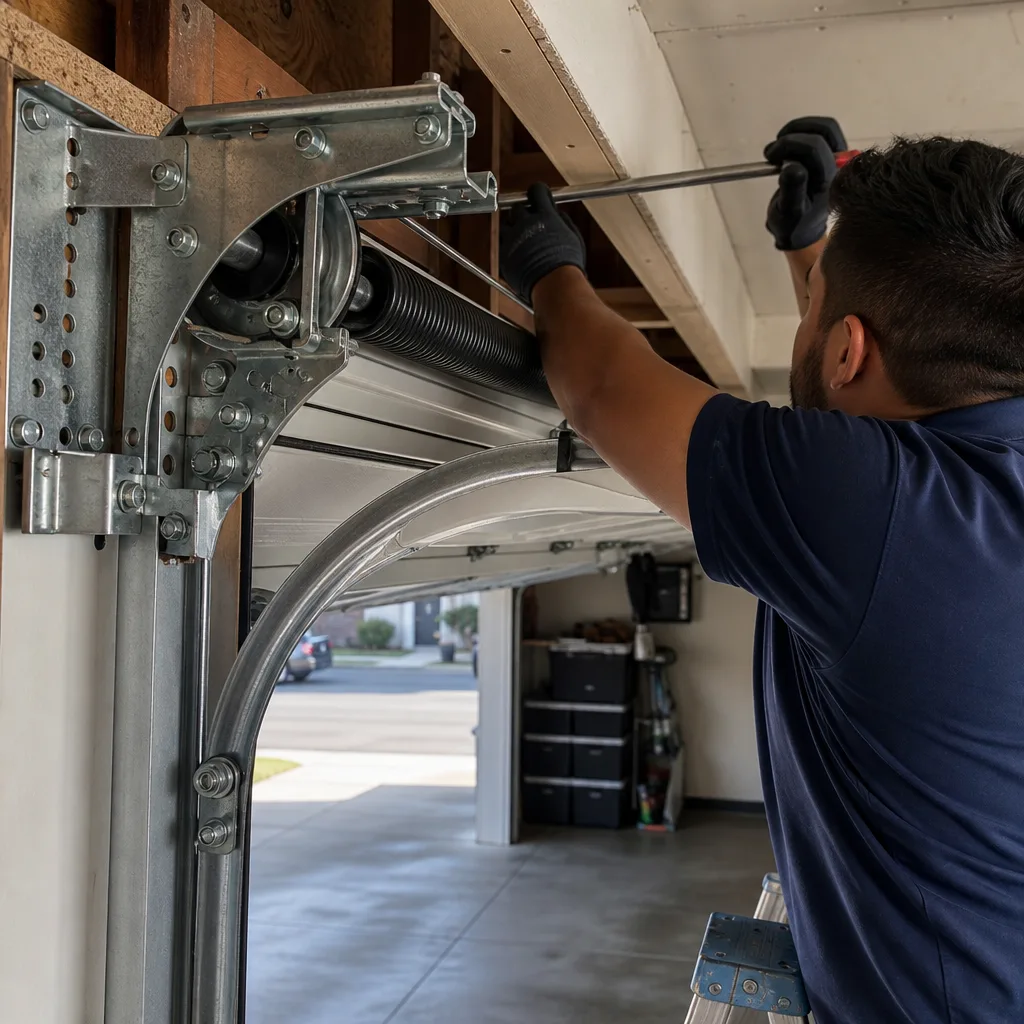
Every garage door in Anaheim, whether it’s a 1970s wood slab on extension springs or a modern insulated Clopay on a LiftMaster jackshaft opener, operates on the same principle: the springs do the heavy lifting, and the opener just guides the motion. Here’s the sequence as your door opens.
- You press the button on the wall or remote. The opener receives the signal and activates its motor.
- The motor turns a drive mechanism (chain, belt, screw, or direct shaft) that pulls a trolley along a rail.
- The trolley is attached to the door by a curved arm. As the trolley moves, it starts lifting the door.
- The springs, which were wound under tension, release their stored energy as the door rises. This is the critical part: the springs are counterbalancing most of the door’s weight, not the opener. A properly balanced door feels like it weighs about 8 to 10 pounds when you lift it manually.
- Rollers glide inside the vertical tracks, carrying the door up and over onto the horizontal track sections above.
- Once the door reaches the fully open position, the opener stops on a limit switch.
When people talk about a garage door “breaking,” what they usually mean is one of three things. The springs snapped and the door suddenly weighs 250 pounds. A cable jumped off a drum and the door is hanging crooked. Or the opener runs but the door doesn’t move because the trolley disengaged. Understanding that the opener is not what lifts the door is the single most important piece of knowledge in this whole guide. It explains why a car parked too close to the opener won’t matter, why springs break at the worst possible moments, and why a technician who only looks at the opener when your door won’t move is not doing the job right.
Speaking of the full system and how each part interacts: Garage Door Repair in Anaheim covers what happens when a single failing component starts dragging down the rest of the door, and why inspecting the whole mechanism on every call matters more than replacing just the broken part.
Anaheim Housing Stock and Common Door Types
Anaheim’s housing stock tells a story that matters when it comes to garage doors. The city experienced two major building booms: the 1950s and 1960s post-war expansion around the old downtown core, and the massive tract-home developments of the 1970s through the 1990s that pushed into West Anaheim, Anaheim Hills, and the areas east of the 57. The result is that the overwhelming majority of single-family homes in Anaheim have attached two-car garages, many of them front-loading, with doors that were either built to match the home’s original architecture or replaced at some point in the last two decades.
What that means practically is this: if you live in a tract home built between 1970 and 1995, your garage door is most likely a 16-foot-wide steel sectional door, either non-insulated or minimally insulated, and your opener is probably a chain-drive unit from LiftMaster, Chamberlain, Genie, or Sears Craftsman. These systems were workhorses, but many are now at or past their second spring replacement, and their openers are running on circuit boards that are no longer manufactured. If you live in an older Anaheim neighborhood, like the Colony District or the neighborhoods north of Lincoln Avenue, you may have an original wood door that was retrofitted with an opener at some point, or a newer door retrofitted onto older framing. Retrofit jobs bring their own complications: non-standard track spacing, low headroom above the door, and sometimes door sections that were never perfectly balanced.
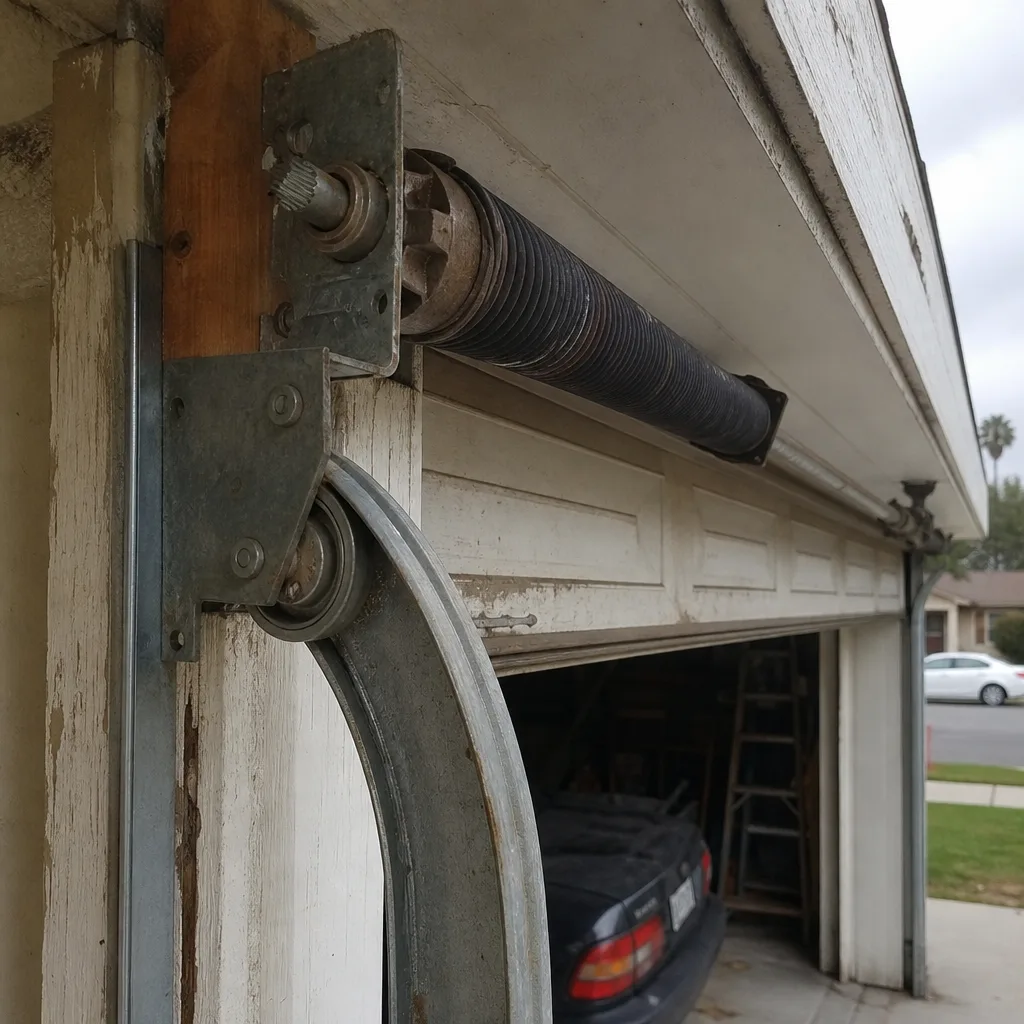
One Anaheim-specific factor that shortens component life compared to inland cities like Riverside or Victorville is the marine layer influence. Anaheim sits close enough to the coast that many neighborhoods experience cool, damp morning air, especially in June Gloom season, and that moisture settles on unpainted metal hardware. Rust on tracks, hinges, and spring coils is a frequent finding on doors in Anaheim that have been ignored for a few years. Galvanized hardware helps on newer doors, but plenty of 15- and 20-year-old installations never had it.
Lifespan Expectations for Every Major Component
Knowing how long each part should last lets you budget for replacement before it fails, instead of scrambling when it does. Our Garage Door Cost Breakdown: The Anaheim Homeowner’s Reference for 2026 has detailed pricing to help you plan ahead. Here’s what we tell Anaheim homeowners to expect.
- Torsion springs: 10,000 cycles on average, which translates to 7-10 years for a door used four times a day. Upgraded springs rated for 25,000 to 50,000 cycles can extend that to 15 years or more. If you’ve never heard the term “cycles,” a cycle is one full open and one full close.
- Extension springs: Similar cycle life to torsion springs, found mostly on older doors and one-piece doors. They stretch along the horizontal track and should always have a safety cable running through them.
- Garage door opener (motor and drive): 10-15 years, with chain drives often outlasting belt drives mechanically but making more noise. The circuit board usually fails before the motor. In Anaheim’s occasionally humid mornings, opener logic boards can develop corrosion issues faster than in dry inland areas.
- Rollers: Steel rollers last 7-10 years. Nylon rollers with sealed bearings last 12-15 years and are quieter. If a roller is worn flat on one side, it’s dragging through the track instead of rolling.
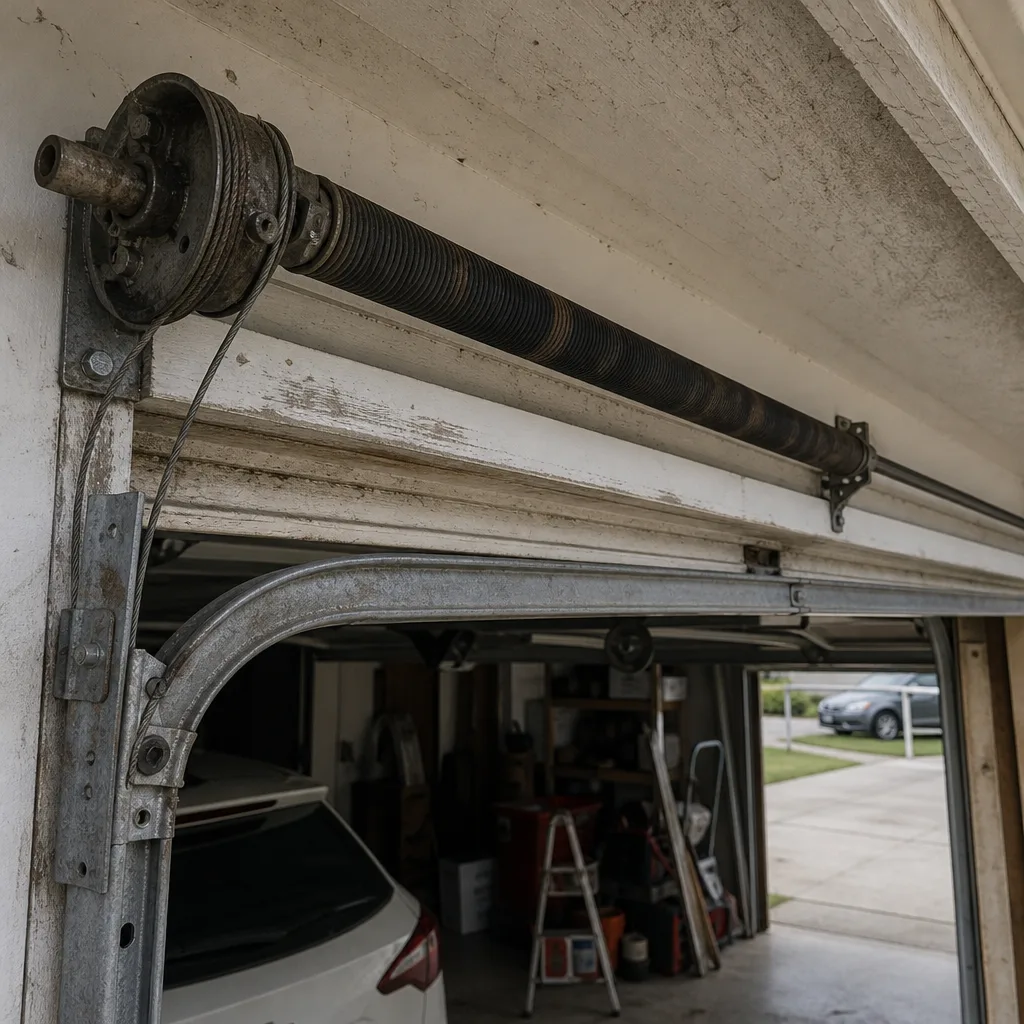
- Cables: 8-12 years, but they should be inspected any time you have spring work done. Anaheim’s coastal humidity can accelerate fraying on older steel cables.
- Tracks and hardware: The tracks themselves rarely need replacement unless bent by impact. Bolts, brackets, and hinges wear out and rust far sooner.
- Weather seal (bottom rubber): 3-5 years. The sun hitting the lower panel of a west-facing Anaheim garage door will crack this seal faster than you expect.
- Door sections and panels: Steel sections can last 20-30 years if not dented or rusted through. Wood doors need repainting or restaining every few years and will rot if moisture gets behind the paint.
Brand-Agnostic Service: What It Means in Practice
“Brand-agnostic” is a phrase that gets thrown around without much meaning. Here’s what it actually means when a technician shows up at your Anaheim home. A factory-trained dealer for a single brand is taught how that brand’s products work, how they install, and how they are supposed to be repaired. When a Raynor door fitted to a 1980s track system starts binding, a single-brand tech has to figure out the quirks on the fly. A technician who works across brands and has serviced Raynor, LiftMaster, Chamberlain, Genie, and others has seen how different manufacturers solve the same mechanical problems. That pattern recognition is what gets a correct diagnosis on the first visit instead of the third.
At Ranger Garage Door Service, working on eight major brands means we’re not guessing when a Genie opener has a limit switch failure or a Chamberlain belt drive has a stripped sprocket. We’ve seen that exact failure before. We work on your brand, not just our preferred brand. One call covers repair, opener, and full installation.
This breadth also matters when a homeowner needs actual product recommendations. We’re not attached to any one manufacturer’s margin. If your LiftMaster opener has a dead logic board and the rest of the unit is ten years old, replacing the whole opener makes sense. If you have a five-year-old Genie with a worn gear, a $90 repair beats a $400 replacement. The ability to make that call without brand bias is exactly what Garage Door Opener Repair in Anaheim is about: the right fix for the system you own, not the one we’d prefer to sell.
Springs: The Most Dangerous Part of the System
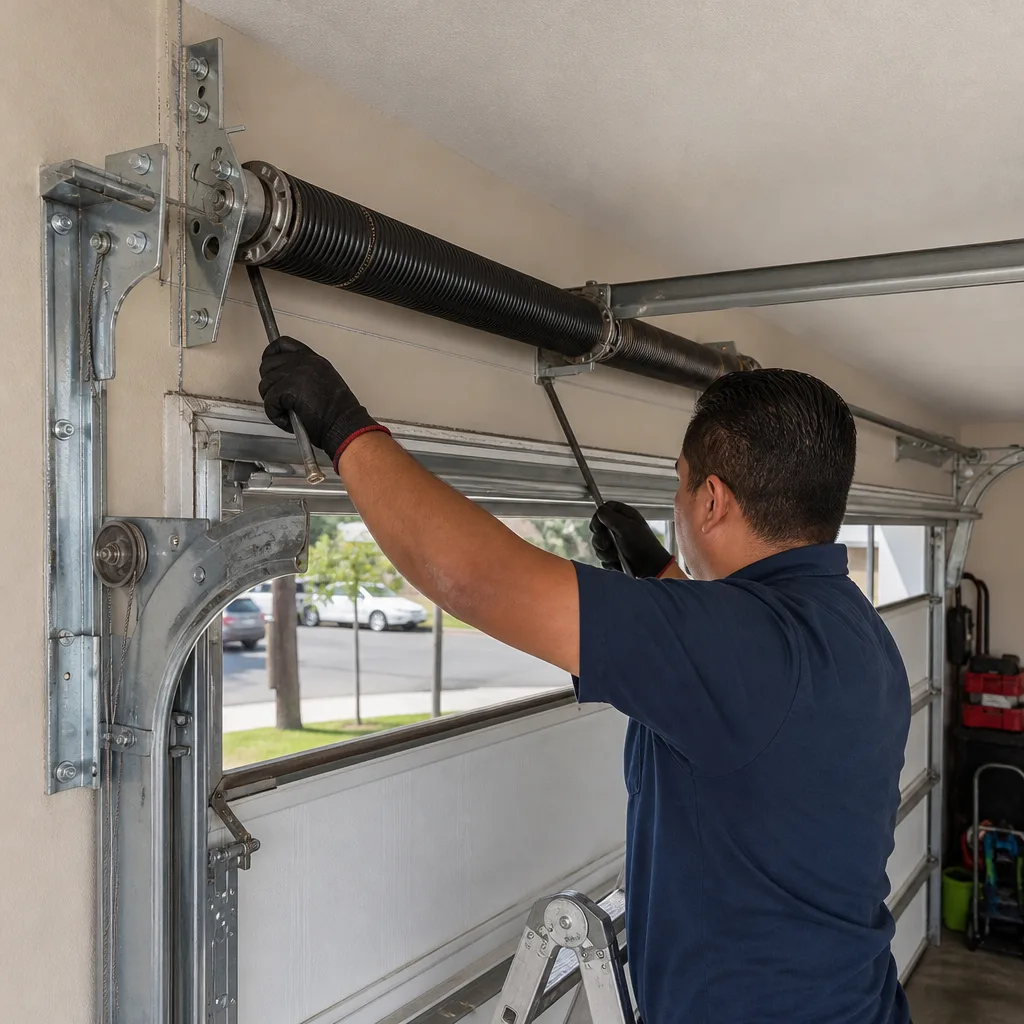
No part of a home generates more serious injuries than a garage door torsion spring. The numbers back this up: hospital data consistently shows hundreds of garage door related injuries every year in the United States, and a disproportionate number of them are spring failures during DIY attempts. A torsion spring under full tension stores more than enough energy to break bones, sever tendons, or worse if it lets go while someone is working on it. This is not a “watch three YouTube videos and give it a shot” repair.
When a torsion spring breaks, you’ll hear it. It sounds like a gunshot inside the garage. The door will not open, or if it opens at all, it will be terrifyingly heavy because the opener cannot lift 200 pounds of unbalanced steel. The immediate move is simple: stop pressing the opener button. Attempting to force a door with a broken spring can bend the top section, damage the opener’s gear, and pull a cable off its drum, turning a $180 spring replacement into a $600 repair.
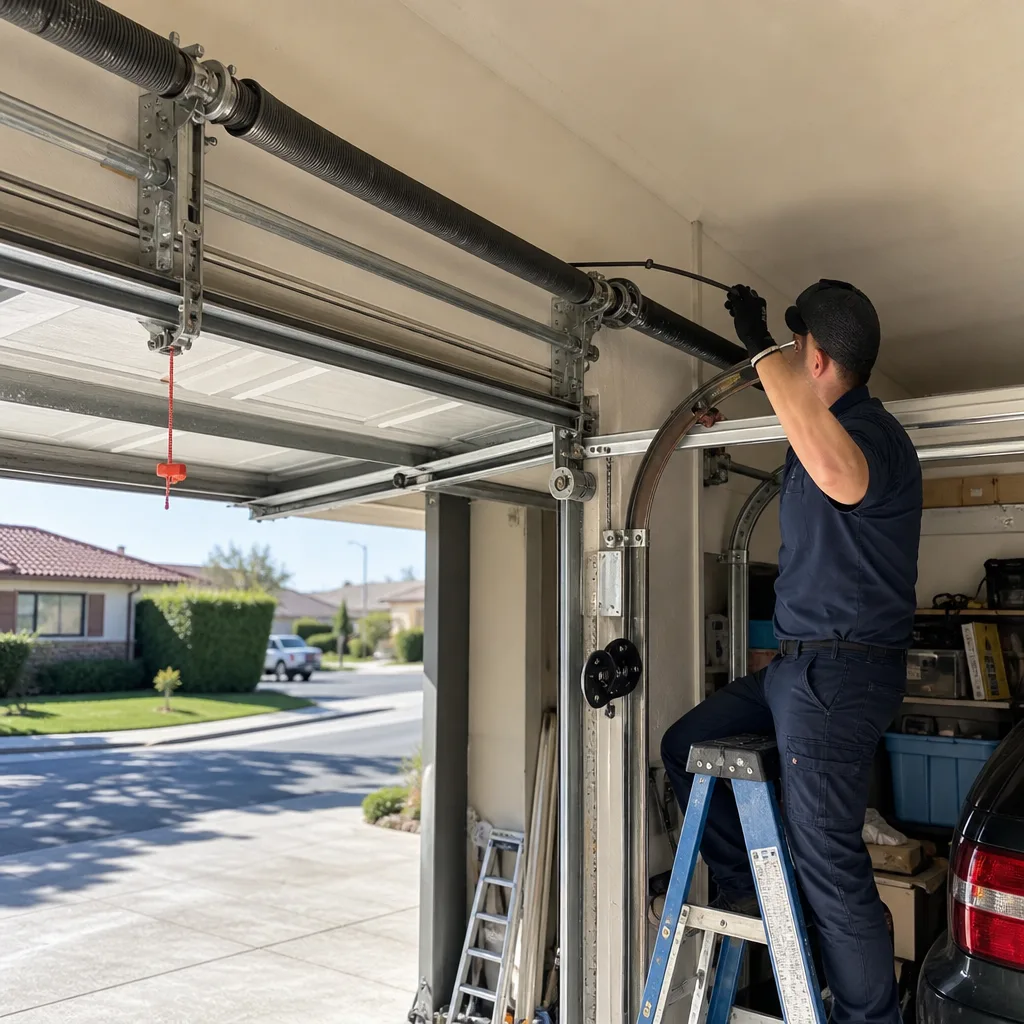
We inspect the entire counterbalance system on every spring job we do in Anaheim: both springs, both cables, the drums, the center bearing, the end bearings, and the opener’s force settings. Replacing a spring without checking the cable condition is how repeat service calls happen. A frayed cable that snaps three weeks after a new spring goes in looks to a homeowner like a bad spring install. It was actually a missed cable inspection. That sequence is why we replace springs in pairs or inspect the remaining spring carefully before recommending a single-spring swap. Springs age at the same rate. If one broke on cycle 9,800, the other is a few hundred clicks behind it.
Openers: Mechanical vs. Electronic Failures
Garage door openers fail in two broad categories, and knowing which one you’re dealing with saves you from paying for unnecessary parts. Mechanical failures are the physical parts wearing out: stripped plastic gears inside Chamberlain and LiftMaster chain drives, worn belts, broken sprockets, seized bearings in the motor. These tend to announce themselves with grinding, clicking, or an opener that runs but the door doesn’t move. Electronic failures are logic board problems, capacitor failures, sensor issues, and radio receiver problems. These show up as an opener that’s completely dead, a door that reverses for no reason, or remotes that stop working one day.
In our experience in Anaheim, electronic failures are more common in older openers that have sat in garages with the same conditions we touched on earlier: temperature swings that stress solder joints and occasional humidity from coastal air. The frustrating thing about electronic failures is that a dead logic board in a ten-year-old opener is rarely worth repairing. Opener repair makes sense when the issue is mechanical, like a gear set, or when it’s a simple electronic part like a capacitor or safety sensor. When the board itself dies, replacement is almost always the smarter move.
The exception to every rule is a quick one: if your opener is less than five years old and acting erratically, have it diagnosed before you shell out for a new unit. Sometimes the problem is as simple as misaligned safety sensors or a limit switch that lost its setting after a power surge. Rangers technicians arrive familiar with your system before the truck pulls in, and a diagnosis call is always cheaper than a new opener.
What Homeowners Can Safely Do Themselves
There is a real line between routine maintenance and dangerous work. Most routine upkeep is genuinely safe, and it will extend the life of your door and opener. Here’s a step-by-step maintenance sequence you can do in about twenty minutes, twice a year.
- Pull the manual release cord (usually a red handle hanging from the opener rail) and open and close the door by hand. It should move smoothly and stay put at the halfway point. If it slams down or flies up, your springs need adjustment. Call a professional before doing anything else.
- With the door closed, inspect all moving parts. Look at the cables for frayed strands, the springs for gaps or rust, the rollers for flat spots, and the hinges for loose bolts or cracks.
- Tighten any loose bolts or nuts on the hinges and track brackets using a socket wrench. Do not touch the bolts at the bottom of the track, those are the track anchors and there are usually specific specs for those.
- Lubricate the rollers (nylon rollers get a drop on the bearing, steel rollers get a light wipe), the hinges, the spring coils, and the opener rail with a garage door lubricant. Do not use WD-40, it’s a cleaner more than a lubricant and it will attract dirt. White lithium grease on moving metal parts, or a dedicated garage door spray lube, is what we use.
- Test the auto-reverse safety feature by placing a roll of paper towels under the door and closing it. The door should reverse within two seconds of touching the roll. If it doesn’t, that opener needs attention immediately, especially if you have kids or pets.
- Clean the safety sensors at the bottom of the door tracks with a dry microfiber cloth. Spider webs, dust, and Anaheim’s morning moisture film are a common cause of “the door won’t close” complaints.
What you should never do: touch the torsion springs (the ones on a metal shaft above the closed door), touch the bottom brackets or cables (they are under the same tension), or try to bend a damaged track back into shape. Those tasks require specialized tools and training, and the consequences of a mistake are serious. We mention this because we’ve been called to more than one Anaheim home after a well-meaning DIY spring attempt went wrong. For urgent situations, our Garage Door Emergency Preparedness Guide for Anaheim Homes explains how to respond safely. In every one of those cases, the eventual cost was three to four times what the original repair would have been.
Common Mistakes to Avoid
- Replacing the opener when the springs are the problem. If your door is heavy and your opener struggles, the springs have failed. A new opener will grind itself to death fighting an unbalanced door.
- Lubricating everything with any product in the garage. Grease and oil attract dust and gum up. Only use products meant for garage doors, and only on the parts that need it.
- Ignoring a noisy door. A door that was quiet and now screeches or grinds is telling you something specific: a dry bearing, a failing roller, or a spring binding. Noise never fixes itself.
- Leaving the manual release cord pulled after a power outage. If your door is disengaged and you press the opener, the trolley will move without the door and the arm can swing violently. Re-engage it properly.
- Skipping the safety reverse test. This is the only safety device between a closing door and a child or pet. Test it monthly. If it fails, stop using the opener until it’s fixed.
When to Call a Professional
Some jobs are a twenty-minute Saturday fix. Others are a genuine safety risk. Call a professional if you hear a loud bang from the garage (broken spring), if your cables are frayed or off their drums, if your door hangs crooked, if the opener sparks or smells like burning electronics, or if your door fails the auto-reverse test. If you live in Anaheim and any of these happen, don’t force the door open and don’t keep pressing the opener button. Ranger Garage Door Service offers free estimates in Anaheim and will quote the repair before any work begins. Call (877) 752-4135 and describe what you’re seeing. We’ll tell you over the phone whether it’s urgent, whether you should stop using the door, and what to expect when we arrive.
For a complete new door, the process is different: we measure, recommend a door that fits your opening and your budget, and schedule the install. Every installation is quoted in writing before we start, and the price we agree on is the price you pay. Garage Door Installation in Anaheim goes through the options: steel gauge differences, insulation R-values, window styles, and what fits Anaheim’s specific home styles.
Frequently Asked Questions
Most garage door repairs in Anaheim fall between $125 and $400, with spring replacement typically running $180-$340 and opener repairs running $100-$280. The biggest variable is whether the job requires only a part replacement or if a failed component has damaged adjacent parts. The price is always quoted and agreed before any work starts. For an exact quote, call (877) 752-4135.
Yes, for urgent repair work like broken springs or a jammed door, same-day service is standard. For installation or replacement projects, we schedule a free measuring appointment first, then the install itself. Call (877) 752-4135 and tell us what’s happening, we’ll tell you over the phone whether it’s a same-day repair or a scheduled job.
A garage door that feels heavy when you disconnect the opener, doesn’t stay put at the halfway point, or shows a visible gap in a torsion spring coil is telling you the springs are failing. Springs also make more noise than usual in the weeks before they break. Have them inspected at the first sign of these symptoms.
We work on LiftMaster, Chamberlain, Genie, Raynor, and several other major brands, and we’re trained on each of them rather than specializing in one product line. That matters because diagnosing a Chamberlain gear failure and a Genie limit switch fault are two different skill sets. You won’t wait while we learn your system.
No. We quote based on what we diagnose during the service call, and the price is agreed before any work begins. If we find hidden damage during the repair that changes the scope, we stop work and show you the additional issue, with a new price, before proceeding. You never approve work after the fact.
That depends on the noise. Squeaking from the rollers or hinges is usually a lubrication issue and not an immediate hazard. Banging, snapping, or the sound of grinding metal means something is failing under load, and you should stop using the door and call for an inspection. Call (877) 752-4135 for guidance.
The Bottom Line
Your garage door in Anaheim is a machine with a finite lifespan. The springs will fail first, the opener will follow, and the tracks, cables, and rollers will wear out along the way. The difference between a $150 maintenance call and a $600 emergency repair is knowing what those parts do and catching problems before they cascade. A door that you understand is a door that lasts longer and costs less. Explore more guides & resources to keep your system running smoothly. When something does go wrong, call a company that works on your brand and your system, not just a preferred product line. One call to Ranger Garage Door Service covers repair, opener work, and full installation. We quote before we work, we arrive familiar with the brands we service, and we don’t sell you anything you don’t need.
Written by the team at Ranger Garage Door Service, serving Anaheim since 2018.
See the difference
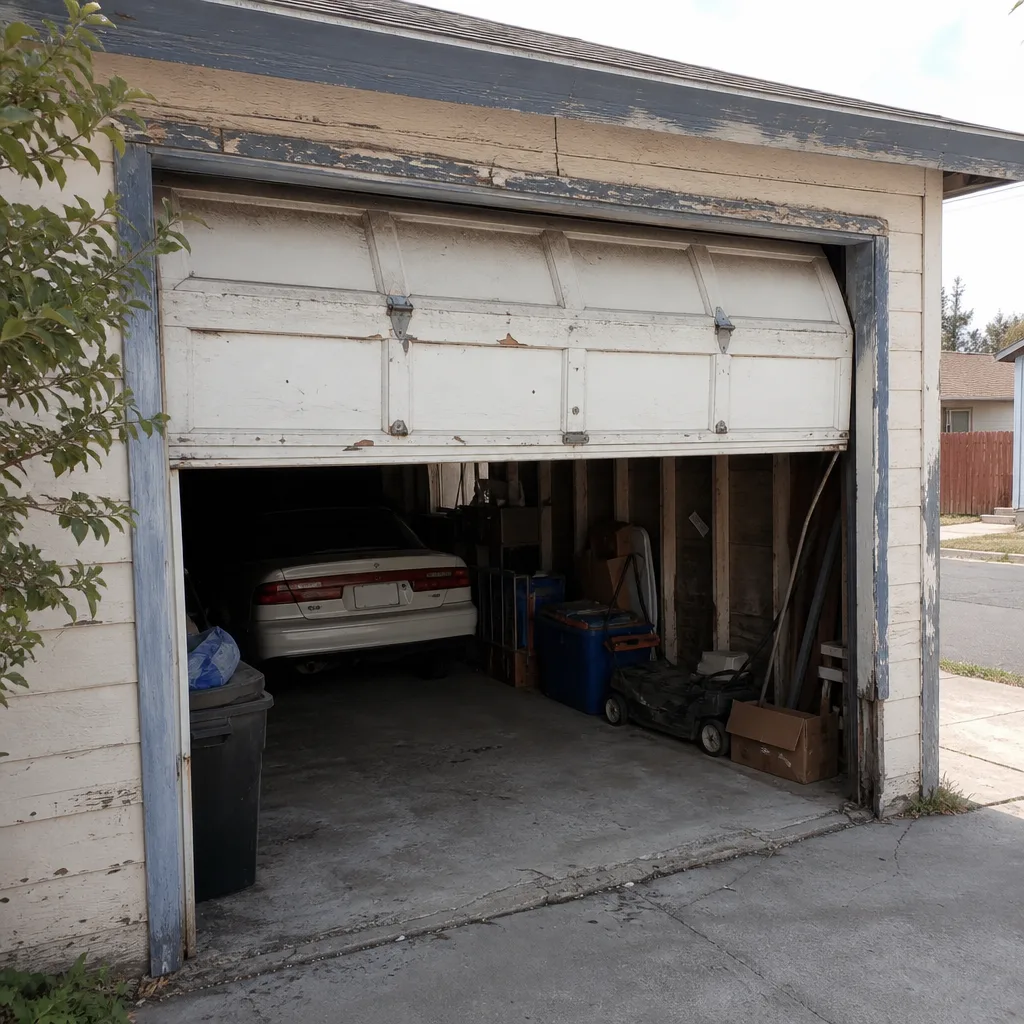 Before
 After
 Before
 After
 Before
 After