Last updated October 31, 2026
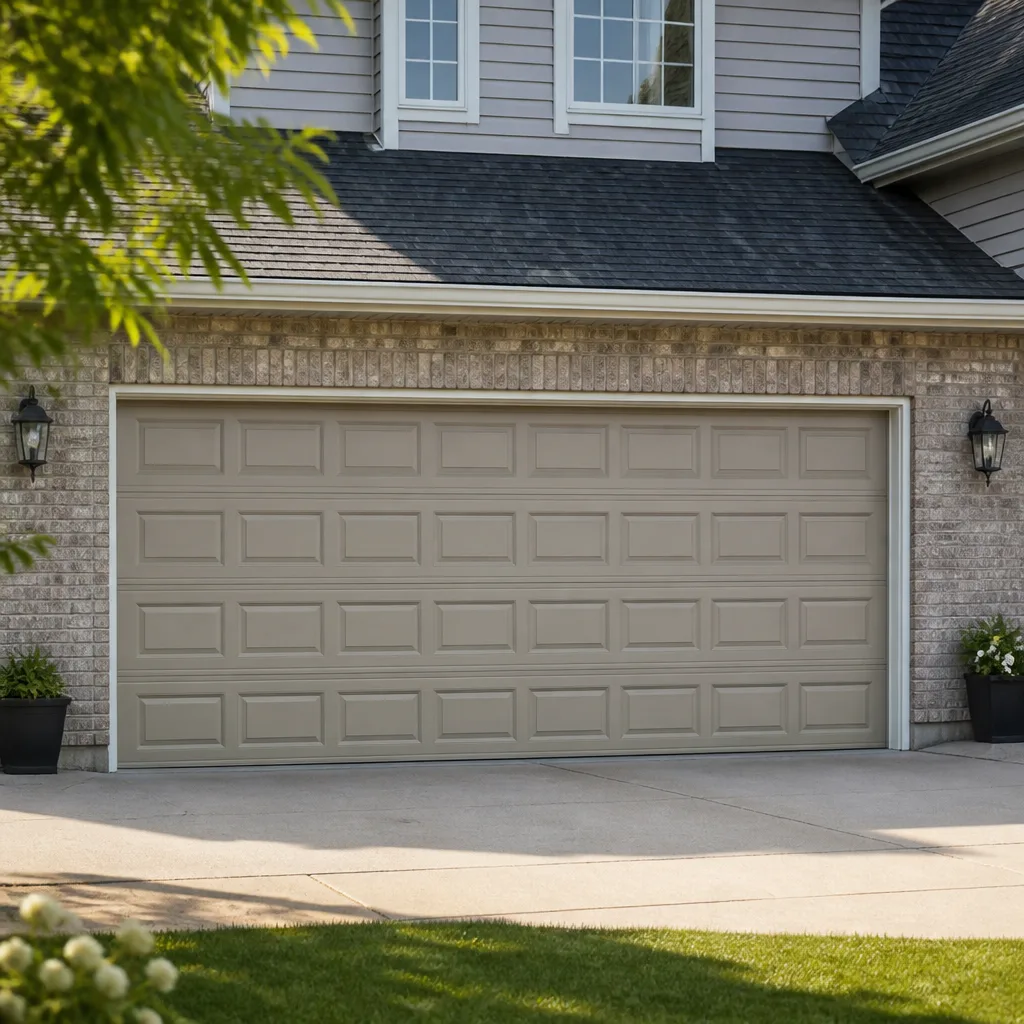 Raised-panel steel
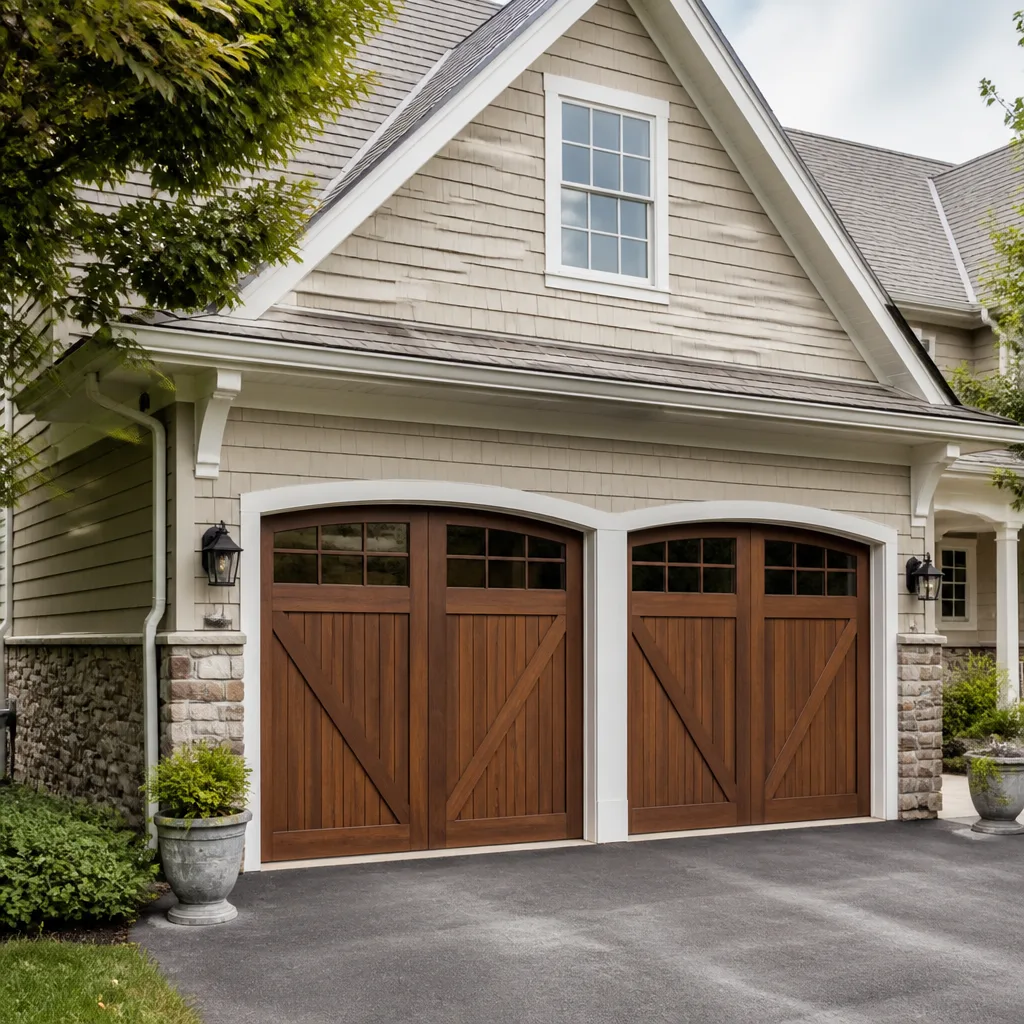 Carriage house
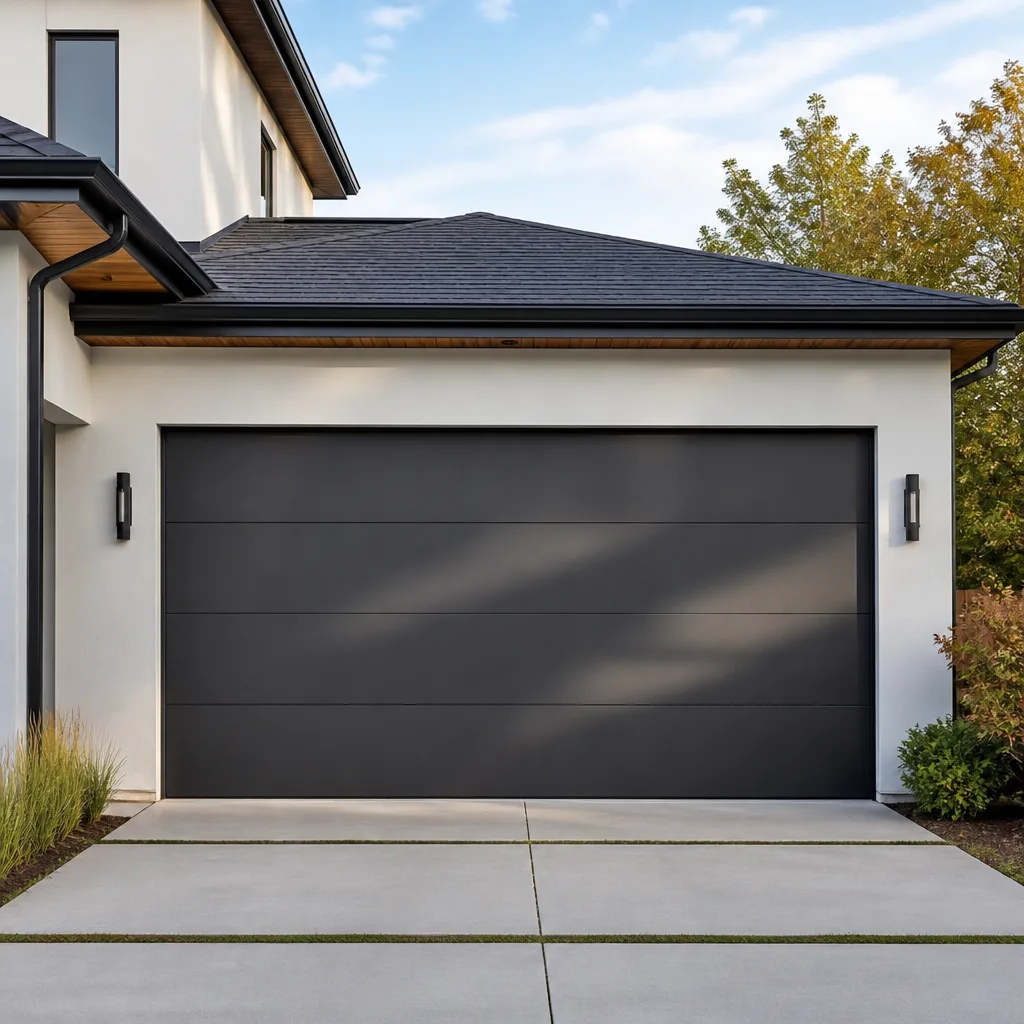 Modern flush
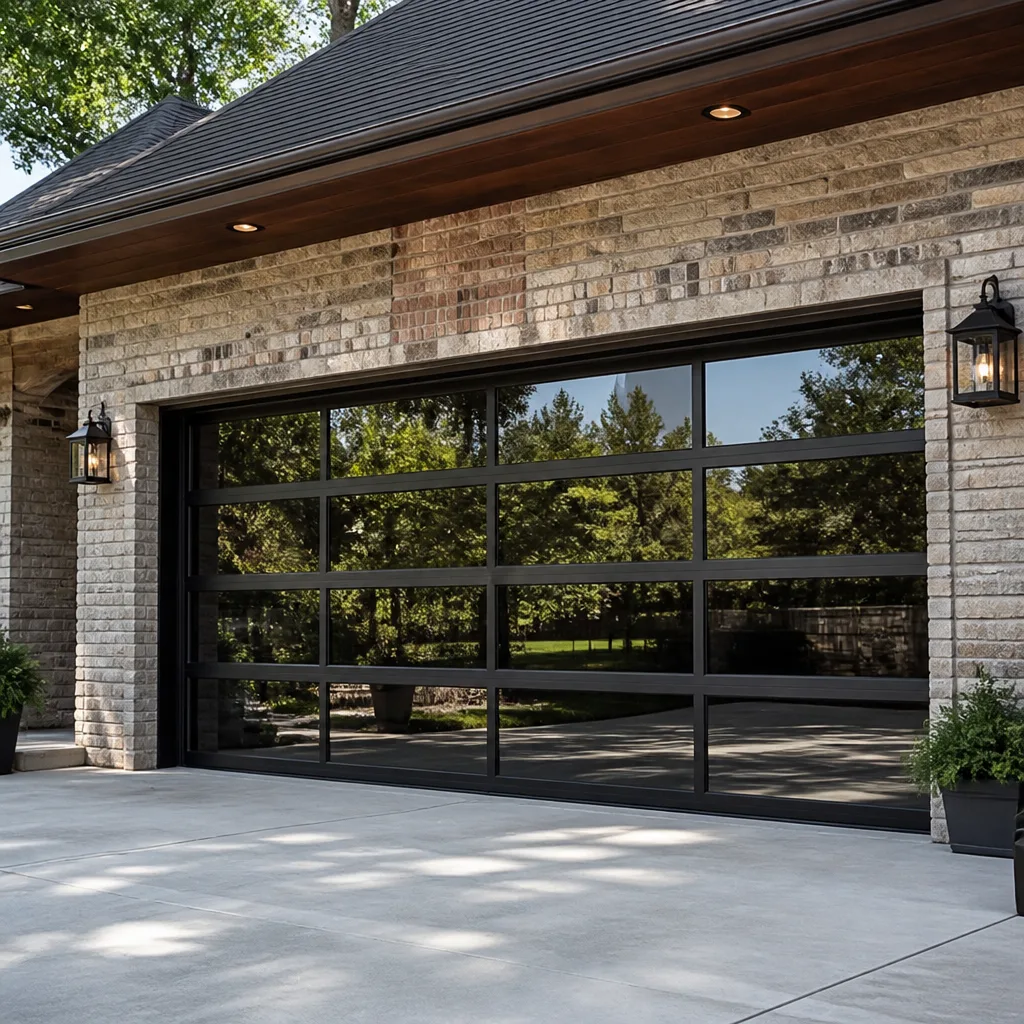 Full-view glass
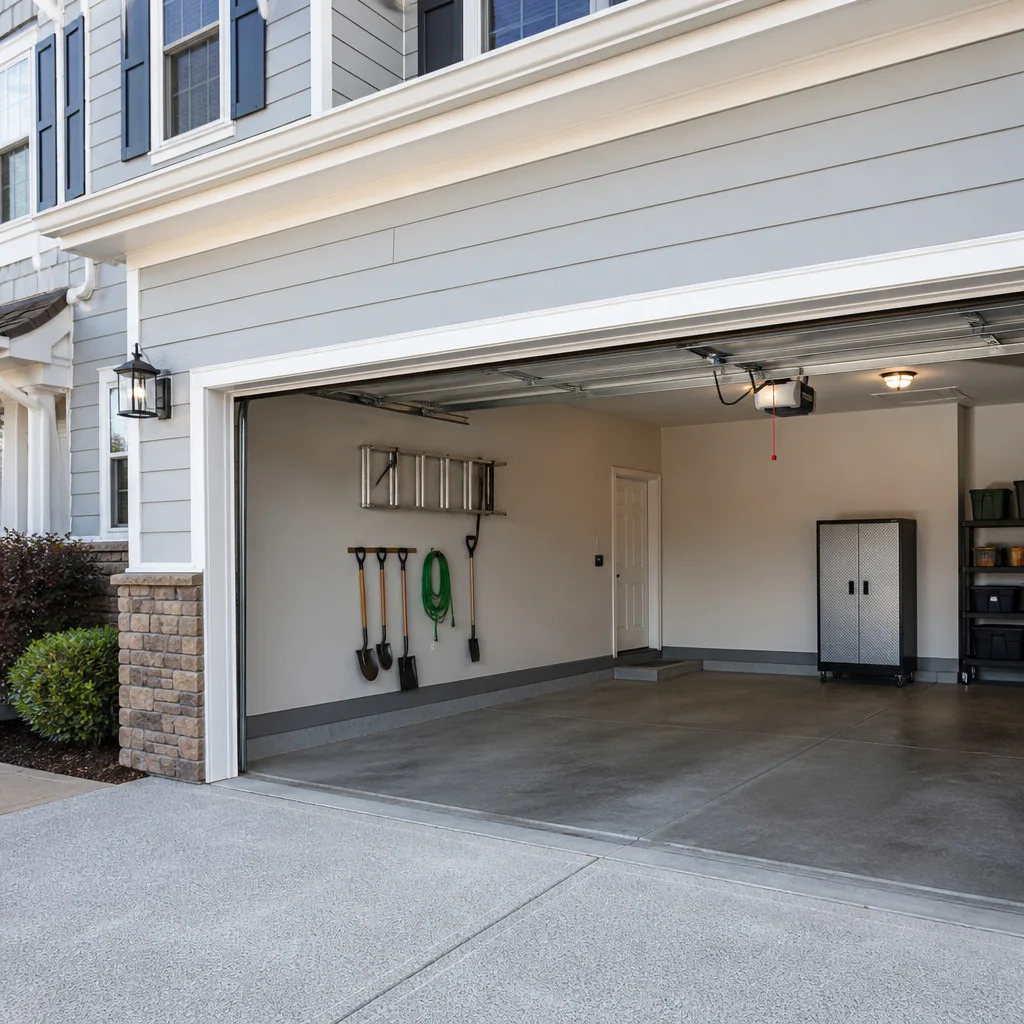 LiftMaster openers
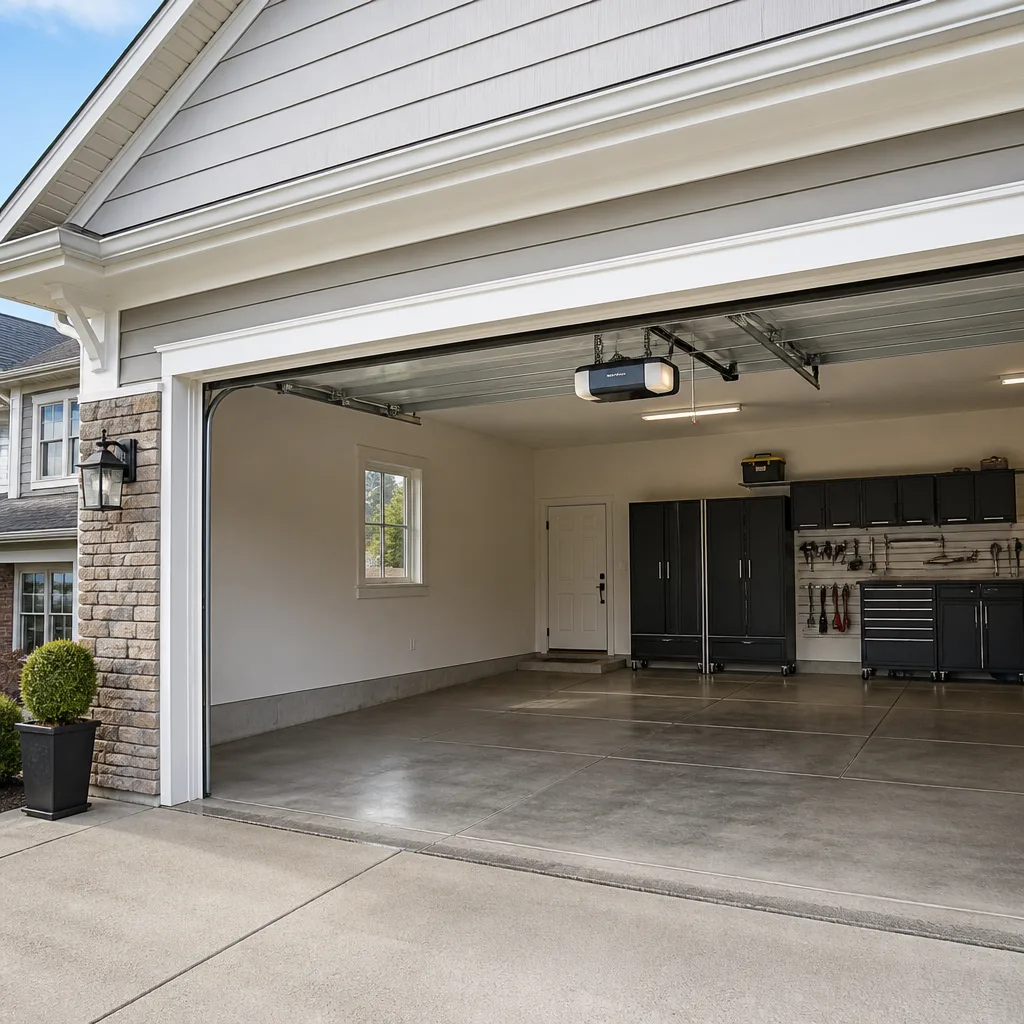 Chamberlain openers
Full 25-point door and opener safety check with every visit - springs, cables, rollers, tracks, and your LiftMaster or Chamberlain opener included
You get a price before we start. It does not change when the truck arrives.
Get your free estimateChoosing the Right Garage Door Brand: A Buyer’s Guide for Anaheim
Here’s a stat that surprises most Anaheim homeowners: the average garage door opens and closes roughly 1,500 times a year. Over two decades, that’s 30,000 cycles of springs coiling, cables winding, and panels flexing in Southern California heat. The brand stamped on the door matters less than you’d think. What matters more is the gauge of steel behind the paint, whether replacement parts sit on a shelf in Orange County or in a factory warehouse in Ohio, and who actually installs the thing. This guide cuts through dealer bias and gives you the criteria that determine whether a door still works smoothly in Anaheim in 2045. For The Complete Garage Door Repair Guide for Anaheim Homeowners, see our dedicated resource.
Quick Answer
The best garage door brand for an Anaheim home is the one with proven UV-stable paint, locally available parts, and a panel profile your HOA will approve. For most Anaheim neighborhoods, we recommend mid-grade steel doors from Clopay, Amarr, or Wayne Dalton, paired with a LiftMaster or Chamberlain opener. The installation quality matters more than the brand name on the panel, so choose an installer who actually services the brand you’re buying, not just sells it.
Styles & brands we work with
Table of Contents
- How Anaheim’s Climate Actually Affects Garage Doors
- The 5 Criteria That Matter More Than Brand Name
- The Honest Tier Breakdown: Entry, Mid-Grade, and Premium
- Parts Availability: The Hidden Cost of Choosing Wrong
- HOA Compatibility in Anaheim’s Planned Communities
- Opener Brands: What Works With What
- Why Installation Quality Beats Brand Choice
- Common Mistakes to Avoid
- When to Call a Professional
- Frequently Asked Questions
How Anaheim’s Climate Actually Affects Garage Doors
Anaheim gets roughly 280 sunny days a year. That’s a selling point for tourism and a slow-motion stress test for any exterior building material. Garage doors face a specific set of conditions here that you won’t find in Seattle or Chicago, and those conditions should shape your brand decision more than any glossy brochure.
First, there’s ultraviolet radiation. A dark-painted steel door in Anaheim can reach surface temperatures of 140 to 160 degrees on an August afternoon. Cheap polyester paint films break down under that kind of UV load. The result is chalky fading within five to seven years, then oxidation, then rust. Premium brands like Clopay and Amarr use polyurethane or fluoropolymer topcoats that hold color noticeably longer. We’ve seen 12-year-old doors in the Anaheim Hills that still look new, and five-year-old bargain doors in the flatlands that already show fade lines where the sun hits the top panels hardest.
Second, there’s the heat itself. Steel expands when it’s hot. A 16-foot-wide door can grow by a quarter inch between a cool morning and a 95-degree afternoon. Cheap doors with thin gauge steel, meaning 27 or 28 gauge, flex visibly in that expansion. You’ll see oil-canning, that wavy distortion across the panel face. Mid-grade doors use 25 or 24 gauge steel, which resists this far better. Premium doors use 24 gauge with internal bracing, and in our experience servicing doors across Anaheim, that’s the point where heat-related panel warp essentially disappears.
Third, there’s the marine layer. Evenings in Anaheim, especially in the western neighborhoods near the 5, bring moisture. Condensation collects on door hardware and in the bottom seal track. Brands that use galvanized steel hardware and zinc-plated fasteners resist this corrosion. Brands that cut corners on hardware show rust spots within a few years, even if the panels themselves look fine.
Insulation deserves its own mention here. Garage door manufacturers love to quote R-values, but a garage in Anaheim isn’t a refrigerated space. It’s a vented, non-climate-controlled box attached to your house. An R-18 door won’t meaningfully cool your garage if the walls are uninsulated and the door has perimeter gaps. What insulation does provide in Anaheim is rigidity, noise dampening, and a slight buffer against the afternoon heat radiating through a west-facing door. For those benefits, an R-9 to R-12 polyurethane core is the sweet spot. Anything beyond that is money better spent on a belt-drive opener or better weatherstripping.
The 5 Criteria That Matter More Than Brand Name
We repair doors from eight major brands, and we’ve learned that the name on the panel tells you less than these five factors. Here’s how to evaluate any door, regardless of who manufactured it.
1. Steel Gauge and Core Construction
Steel gauge is counterintuitive: a lower number means thicker steel. Entry-level doors use 27 or 28 gauge, which dents if a soccer ball hits it wrong. Mid-grade doors use 25 or 24 gauge, which shrugs off most impacts. Premium doors use 24 gauge with a polyurethane foam core injected at high density. That core bonds to the steel skins and makes the whole panel structurally rigid. For Anaheim, 24 or 25 gauge is the minimum we’d recommend for a door that faces the sun daily.
2. Paint System Durability
Look for the word “polyurethane” or “fluoropolymer” in the finish description, not just “baked-on enamel.” Clopay’s polyester and polyurethane finishes run through a multi-stage pretreatment process that includes a zinc phosphate bath for corrosion resistance. Amarr uses a similar system. The brand difference here is real, not marketing: doors with proper pretreatment and a polyurethane topcoat hold their color in Anaheim’s UV environment for a decade or more. Doors with single-stage polyester fade in five.
3. Hardware Quality
The rollers, hinges, and brackets do the actual work while the panels just ride along. Entry-level doors come with plastic or unsealed steel rollers that wear out in three to five years. Mid-grade doors typically include sealed ball-bearing nylon rollers, which run quieter and last 10 to 15 years. Premium doors often include upgraded galvanized hinges and heavier-duty end brackets. Pay attention to this. A $200 hardware upgrade at purchase time beats three service calls later.
4. Spring System Design
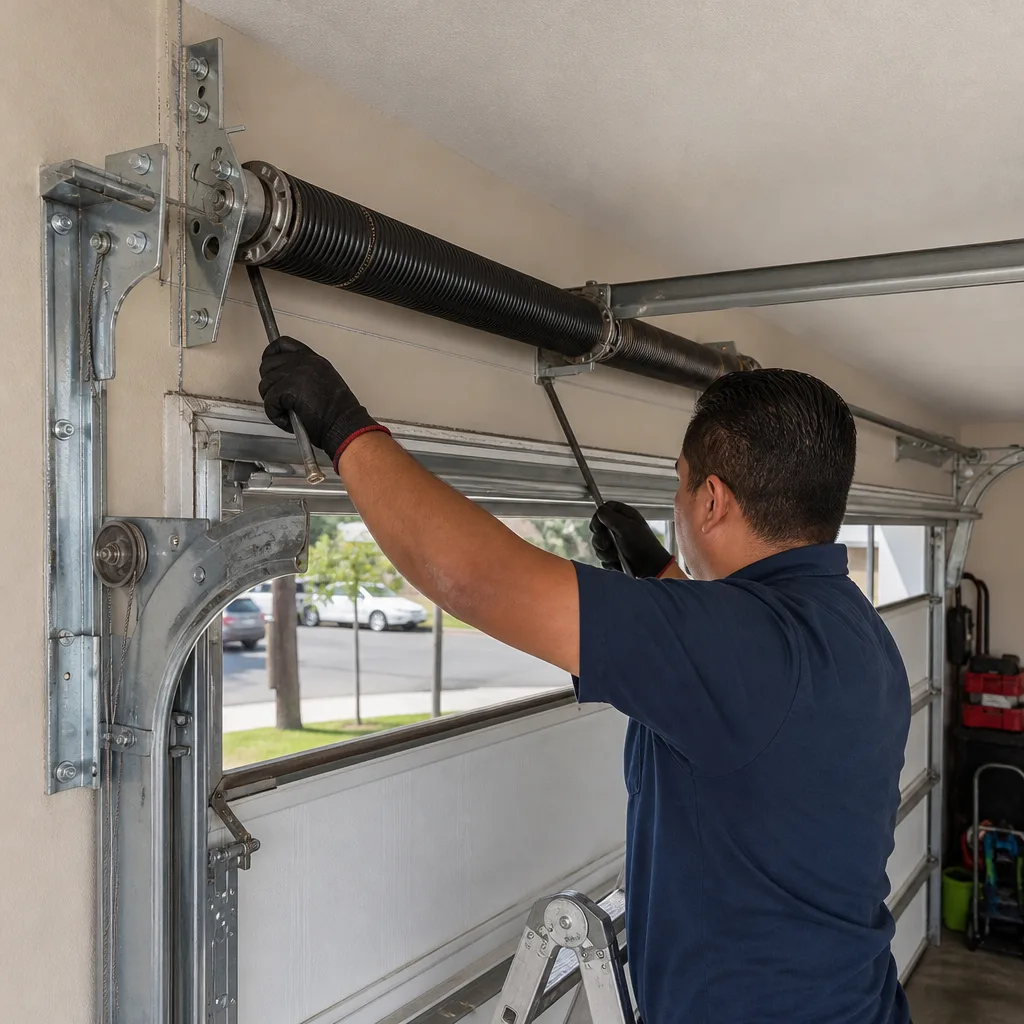
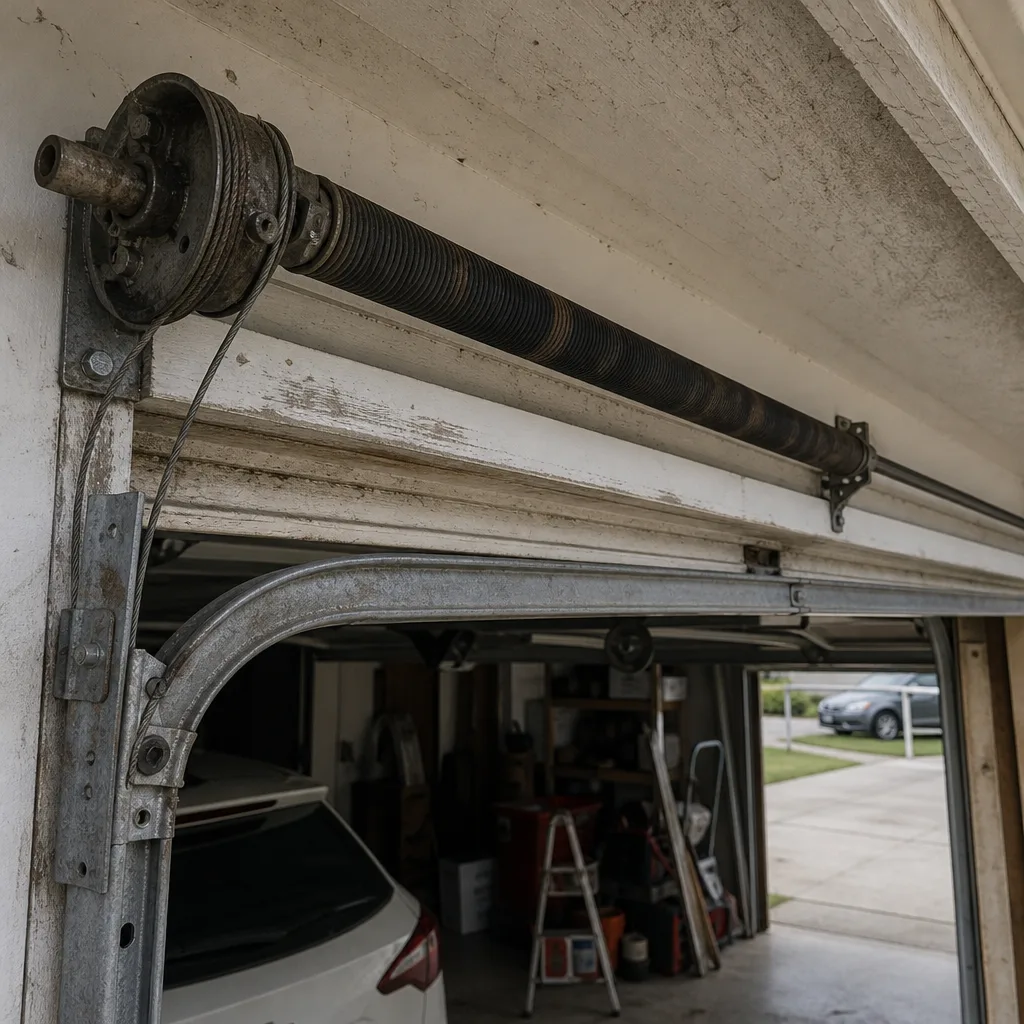
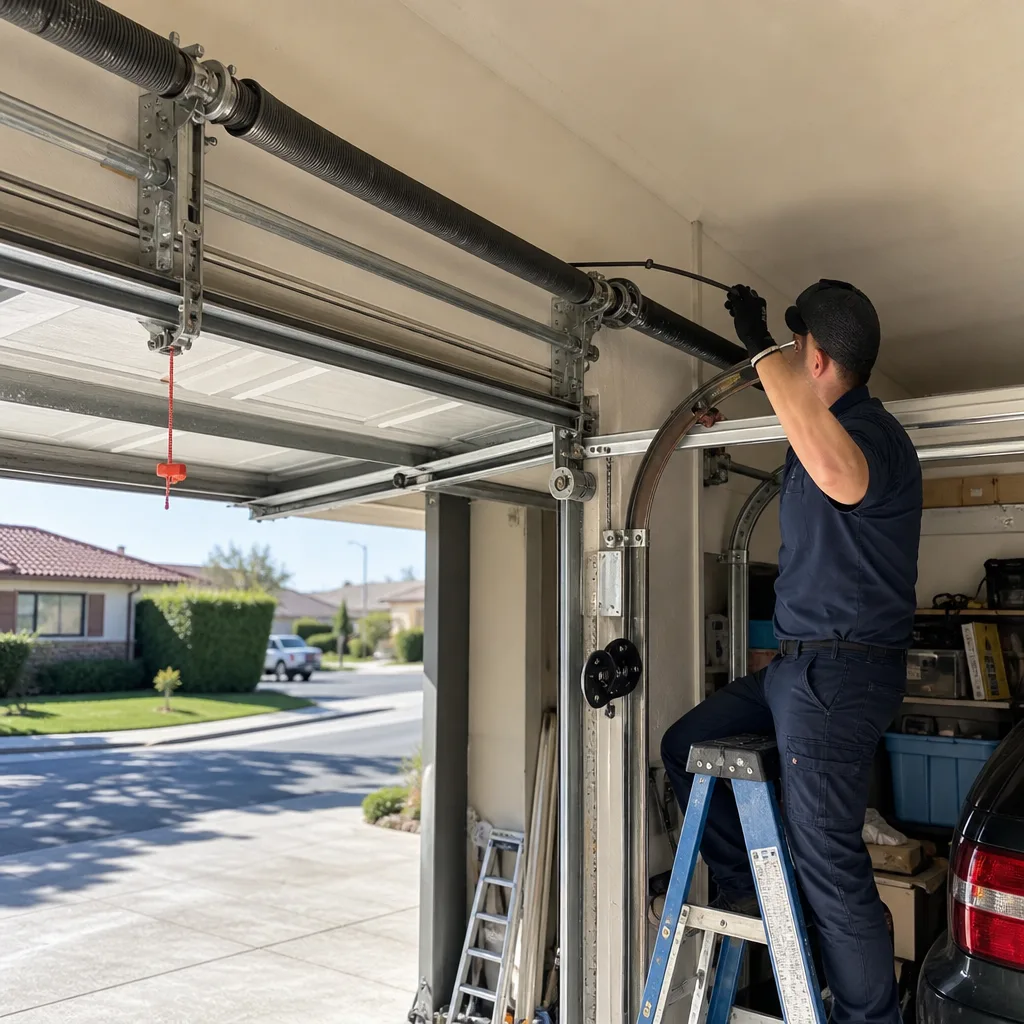
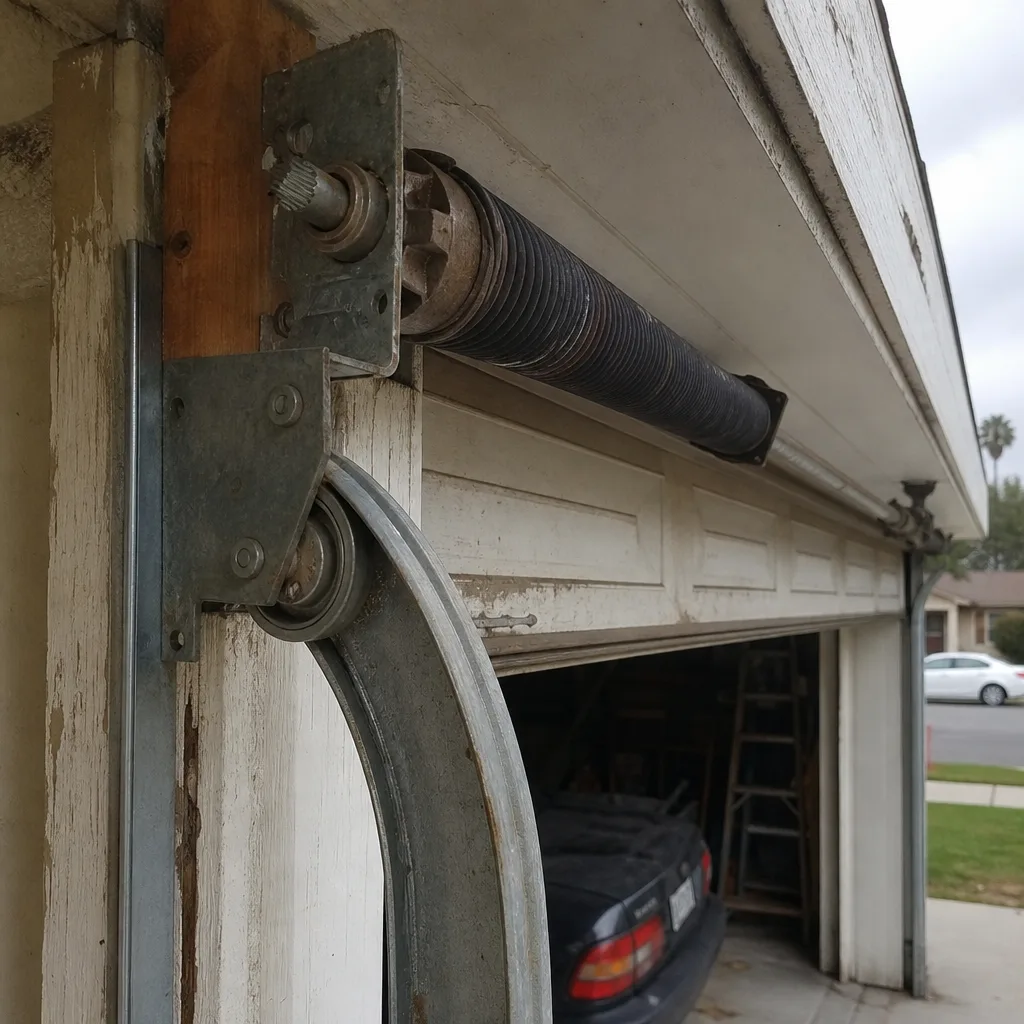
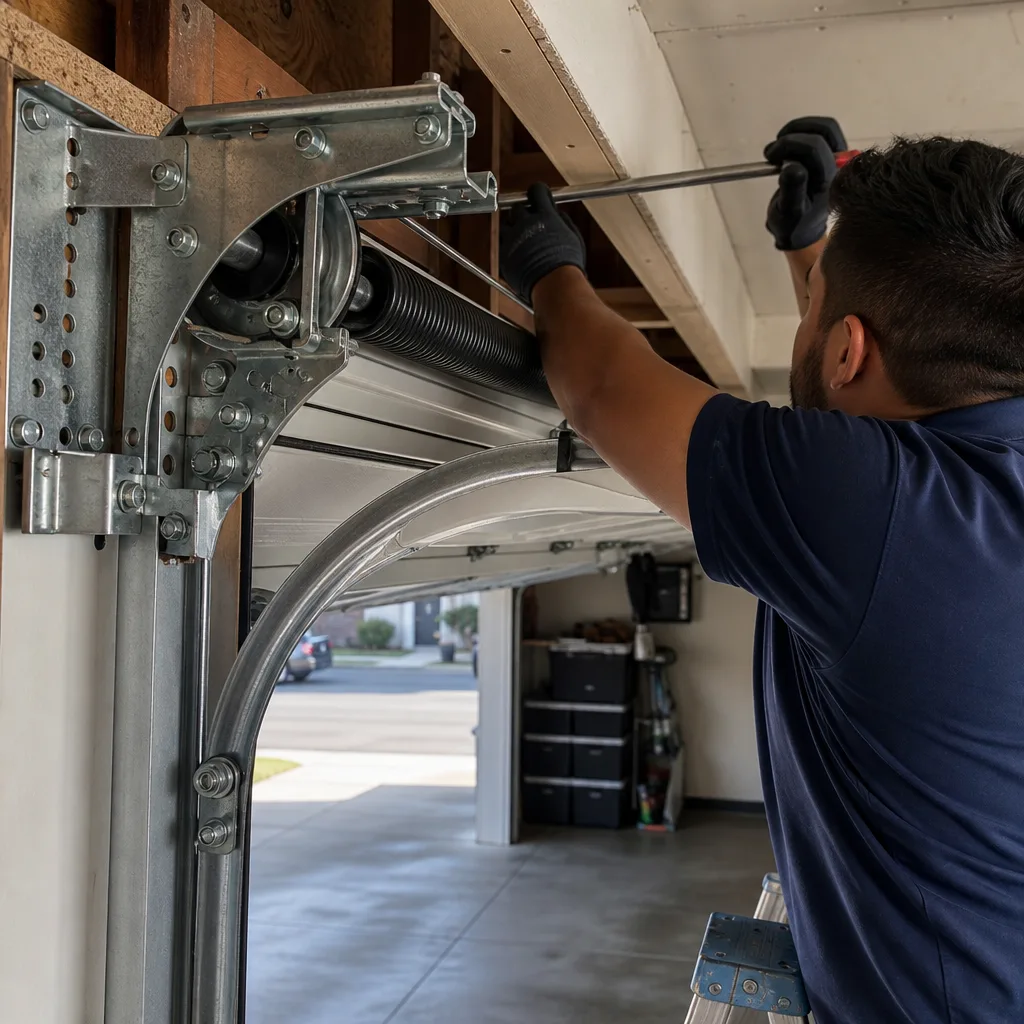
Every door has either torsion springs or extension springs. Torsion springs mount on a bar above the door and are vastly superior for Anaheim homes because they balance the door more evenly and fail less catastrophically. Extension springs stretch along the horizontal tracks and are the budget option. Some entry-level brands still ship with extension springs to hit a price point. Insist on torsion. It’s a safety issue, not a preference. When a torsion spring breaks, it usually snaps and stays on the bar. When an extension spring breaks, it can send hardware flying.
5. Cycle Rating
Manufacturers test springs and hardware to a cycle rating, meaning the number of open-close operations before failure. Entry-level doors are rated for 5,000 to 10,000 cycles. A mid-grade door typically carries a 10,000 to 15,000 cycle spring. Premium components can exceed 25,000 cycles. At 1,500 cycles per year in a busy Anaheim household, a 10,000-cycle spring lasts about six and a half years. A 25,000-cycle spring lasts over 16. If you plan to stay in your home, pay for the higher cycle rating at purchase.
The Honest Tier Breakdown: Entry, Mid-Grade, and Premium
Here’s what the price difference actually buys, using local Anaheim installed pricing ranges. These aren’t quotes, but they reflect what we see in the market for standard 16×7 doors.
Entry-Level: $800 to $1,400 Installed
These are non-insulated steel doors, usually 27 gauge, with a basic polyester finish and 5,000 to 8,000 cycle hardware. Brands include the entry lines from Clopay (like the Classic series), Amarr’s Lincoln line, and Wayne Dalton’s 800 series. They get the job done, and for a rental property or a garage that’s rarely opened, they’re fine. But expect fading within five years in direct Anaheim sun, and expect to replace rollers or springs within the decade. The door will work. It just won’t age gracefully.
Mid-Grade: $1,500 to $2,800 Installed
This is the sweet spot for Anaheim homeowners. You’re getting 25 or 24 gauge steel, a polyurethane or improved polyester finish, 10,000 to 15,000 cycle hardware, and usually an R-9 to R-12 insulated core. Clopay’s Gallery line, Amarr’s Heritage series, and Wayne Dalton’s 9000 series all sit here. The paint holds color meaningfully longer, the door feels solid when it operates, and the hardware lasts a decade or more with basic maintenance. For most homes in Anaheim, from the Ranch to Platinum Triangle condos, a mid-grade door is the right financial decision.
Premium: $3,200 to $6,500+ Installed
Premium doors use 24 gauge steel with thicker internal bracing, high-density polyurethane cores in the R-15 to R-18 range, and 25,000-plus cycle hardware. Clopay’s Reserve and Amarr’s Classica fall here, often with wood-look finishes that require a second look to distinguish from actual wood. The finish durability is exceptional. But the honest truth is that in Anaheim’s mild climate, the insulation gains mean little unless you’re converting the garage to a conditioned space. You’re paying for looks and longevity. If you want a door that still looks showroom-new in 15 years, premium is the way. If you want a door that works well and looks good enough, mid-grade does it.
Parts Availability: The Hidden Cost of Choosing Wrong
Every garage door breaks eventually. Springs fatigue. Rollers wear. Cables fray. The question isn’t whether something will fail, it’s whether the replacement part arrives in a day or takes six weeks on factory backorder.
This is where brand selection has a real, measurable consequence. Clopay and Amarr have deep distribution networks in Southern California. Their common panel sizes, springs, and hardware sit on shelves at multiple regional suppliers serving Orange County. When a Clopay spring breaks in Anaheim, we typically have the replacement on the truck or can source it same-day. Wayne Dalton historically had good availability, though their TorqueMaster spring system is proprietary, which complicates things. Some newer or imported brands have thin parts distribution, meaning a damaged panel or a proprietary bracket turns into a multi-week factory order while your garage sits unusable.
Here’s our practical advice: before you buy any door, ask the dealer two questions. First, “If a panel gets damaged in three years, where does the replacement come from?” Second, “Do you stock replacement springs and rollers for this exact model, or do you order everything?” If the answers are vague, walk away. We stock parts and knowledge for the brands Anaheim homeowners already have installed, including LiftMaster, Chamberlain, Genie, Clopay, Amarr, Wayne Dalton, Craftsman, and Raynor. That breadth matters when your opener stops working and you need a fix today, not in three weeks.
HOA Compatibility in Anaheim’s Planned Communities
A significant portion of Anaheim housing sits in planned communities with active HOAs. Anaheim Hills, Canyon Hills, and the newer developments around the Platinum Triangle all have architectural guidelines that govern what your garage door can look like from the street. Before you shop by color or wood grain, check your CC&Rs.
Most Anaheim HOAs require one of three categories: a wood-look finish that matches or complements the home’s trim colors, a specific palette of neutral tones, or a flush panel with no raised contours. The good news is that the major manufacturers have responded to this exact demand. Clopay’s Reserve and Gallery collections offer a wide range of wood-look finishes in colors that satisfy most Southern California HOA requirements without custom pricing. Amarr’s Classica and Heritage lines similarly include flush and recessed panel options across standard color families.
Raynor and Wayne Dalton also offer flush panel options that typically pass architectural review in Anaheim communities. The key is to get written HOA approval before ordering, not after. We’ve seen doors get removed because a homeowner assumed a “wood-look” finish was close enough to the approved color and it wasn’t. Approved doesn’t mean custom, and with the right brand selection, you can usually meet HOA requirements with a standard production door.
Opener Brands: What Works With What
You can pair any modern opener with any modern door, but the opener brand you choose matters because that’s the component that handles the daily work and the smart home integration.
LiftMaster and Chamberlain dominate the Anaheim market. They’re the same parent company, with LiftMaster as the professional line and Chamberlain as the consumer line sold through big-box stores. Both offer belt-drive models with battery backup, which matters during heat waves when the grid strains, and both integrate with MyQ smart home controls. We install and repair both lines, and for most Anaheim homeowners, a LiftMaster belt-drive unit with battery backup is the right call. It’s quiet, it works when the power doesn’t, and replacement parts are available everywhere.
Genie makes solid openers, with the key advantage being price. They’re often $50 to $100 less than a comparable LiftMaster. The tradeoff is slightly louder operation and fewer smart home integrations. Craftsman openers, historically made by Chamberlain, remain common in Anaheim garages because Sears sold them for decades. We still service plenty of older Craftsman units, and replacement parts remain available, though we’re transparent that a 15-year-old Craftsman is often better replaced than repaired when the circuit board fails.
One caution on smart openers: if you buy a Chamberlain from a big-box store, you’re installing it yourself or hiring someone to install a product they didn’t supply. If you buy a LiftMaster from a garage door company, you’re getting the professional version with a better warranty and a technician who’ll stand behind the install. The price difference is usually under $100. For an appliance that operates 1,500 times a year, that’s a rounding error.
Why Installation Quality Beats Brand Choice
Here’s the counterintuitive truth we’ve learned from repairing doors across Anaheim: a properly installed mid-grade door outperforms a premium door that was hung wrong. Every time. The brand on the panel is not the primary determinant of whether your door works smoothly in 10 years. The person who installed it is.
Spring tension is the most common failure point. A door’s springs must be wound to precisely match the weight of the door. Over-tensioned springs strain the opener motor. Under-tensioned springs make the door heavy and cause the opener to work harder with every cycle, shortening its lifespan. Both conditions lead to premature failure. This is also the most dangerous part of any garage door system. High-tension torsion springs store enough energy to cause serious injury if mishandled. This is not a DIY adjustment. A trained professional uses the right winding bars, follows the manufacturer’s tension chart, and tests the balance before walking away.
Track alignment matters equally. Anaheim homes, especially older ones in the Colony or neighborhoods with settled slabs, often have garage floors that aren’t perfectly level. A skilled installer compensates for that by adjusting the vertical track positions and setting the door to sit flush against an uneven floor using a proper bottom seal. A rushed installer hangs the tracks square to the framing and leaves a gap at one corner where drafts, dust, and pests get in.
The hardware mounting is where premium materials get wasted. A $4,000 Clopay Reserve door mounted with undersized lag bolts into a cracked header will sag and bind within two years. The same door mounted with proper anchors and reinforced brackets works flawlessly for two decades. We’re brand-agnostic for a reason: we work on your brand, not just our preferred brand. That’s the only way installation quality stays high across eight different manufacturers.
Common Mistakes to Avoid
- Buying based on the door panel alone. The panels are visible, so they get the attention, but the springs, rollers, cables, and hinges do the work. A beautiful panel on cheap hardware is a future service call.
- Ignoring the cycle rating. A 5,000-cycle spring on a door that opens five times daily in a busy Anaheim household fails in under three years. Ask for the cycle rating before you buy.
- Choosing the lowest bid without checking parts availability. A door is a 20-year purchase. The dealer who’s $200 cheaper today may be unable to source a replacement panel when a delivery truck clips the corner of your garage in five years.
- Skipping HOA approval. In Anaheim’s planned communities, installing a non-compliant door can result in a removal demand. Get written approval before ordering.
- Attempting to adjust or replace torsion springs yourself. These springs hold lethal tension. A single mistake with the winding bars can cause catastrophic injury. This is the one job where professional help is genuinely non-negotiable.
- Buying the most insulated door available. In Anaheim, where garages aren’t climate-controlled, an R-18 door is usually wasted money. An R-9 to R-12 door provides the structural and noise benefits without the premium price.
- Replacing a door but not the opener. If your opener is 15 years old and you’re installing a new door, replace both. An old opener with a new door means half your system is already on borrowed time.
When to Call a Professional
Some projects are genuinely DIY-friendly: replacing weatherstripping, lubricating rollers, tightening visible bolts. The rest of garage door work deserves a professional, both for safety and for the quality of the result. If you have a broken spring, a door that’s come off its tracks, fraying cables, or an opener that’s grinding or failing to lift, call someone who does this daily. Anaheim’s heat means doors and springs are under constant thermal stress, and a door that’s slightly off-balance gets worse, not better. One call covers repair, opener, and full installation. Ranger Garage Door Service offers free estimates in Anaheim, and our technicians arrive familiar with your system before the truck pulls in. Call (877) 752-4135 and we’ll give you honest options, not a sales pitch.
Frequently Asked Questions
For most Anaheim homeowners, Clopay, Amarr, and Wayne Dalton offer the best combination of UV-stable finishes, parts availability in Orange County, and HOA-compliant panel options. The specific model matters more than the brand name, and a mid-grade door from any of these three manufacturers will serve most homes well for 15-plus years with proper installation. Browse our more guides & resources for ongoing maintenance tips.
Expect to pay roughly $800 to $1,400 for an entry-level steel door, $1,500 to $2,800 for a mid-grade insulated door, and $3,200 to $6,500 or more for a premium door with wood-look finishes, all installed. The exact price depends on door size, panel style, insulation level, and hardware upgrades. Call (877) 752-4135 for a free estimate on your specific setup.
We service and install LiftMaster, Chamberlain, Genie, Clopay, Amarr, Wayne Dalton, Craftsman, and Raynor products. That brand-agnostic coverage means we diagnose the actual problem on whatever system you own, rather than steering you toward a replacement from a single manufacturer we have a relationship with. Our Ranger Garage Door Service home page lists the full scope of what we handle.
Insulation in Anaheim provides rigidity, noise dampening, and a modest buffer against afternoon heat on west-facing garages, but it won’t turn a non-climate-controlled garage into a conditioned space. An R-9 to R-12 polyurethane core is the practical sweet spot. Spending more on higher R-values is generally not cost-effective unless you’re converting the garage to a living space.
Panel replacement is possible if the manufacturer still produces that exact panel design and color, but color-matching on a five-plus-year-old door is imperfect due to UV fading. Brands with strong parts distribution, like Clopay and Amarr, make panel replacement more feasible. For older or discontinued doors, a full replacement is often the better financial decision. If you need a repair assessment, our Garage Door Repair in Anaheim service can tell you what’s viable within one visit.
A grinding noise usually means the opener’s drive gear is stripping, the chain or belt is misaligned, or the motor is straining against an improperly balanced door. Continuing to run an opener that grinds will cause further damage. We specialize in opener diagnostics across LiftMaster, Chamberlain, Genie, and Craftsman systems through our Garage Door Opener Repair in Anaheim service, and most issues are repairable same-day without replacing the whole unit.
The Bottom Line
The best garage door brand for your Anaheim home is the one with a finish that survives 280 sunny days a year, hardware rated for more cycles than you’ll use, and parts that don’t require a six-week factory order when something breaks. For most homeowners, a mid-grade Clopay, Amarr, or Wayne Dalton door with a torsion spring system and 24 or 25 gauge steel is the smartest long-term purchase. Pair it with a LiftMaster belt-drive opener, get HOA approval in writing if you’re in a planned community, and hire an installer who actually services the brand you’re buying. If you’re ready to replace your door or need an honest assessment of what you have, our Garage Door Installation in Anaheim team provides free estimates. Call (877) 752-4135 and get a straight answer from a technician who knows your system.
Written by the team at Ranger Garage Door Service, serving Anaheim since 2018.
See the difference
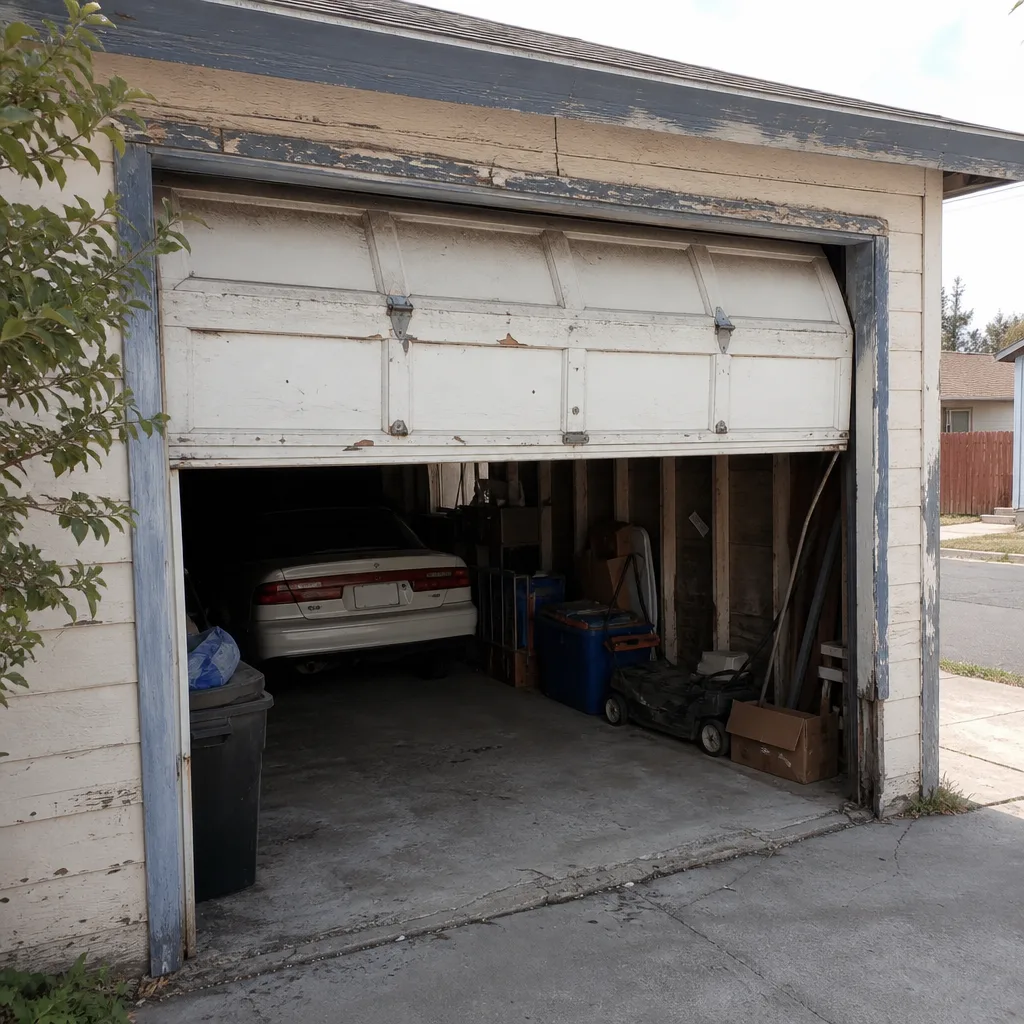 Before
 After
 Before
 After
 Before
 After