Last updated October 31, 2026
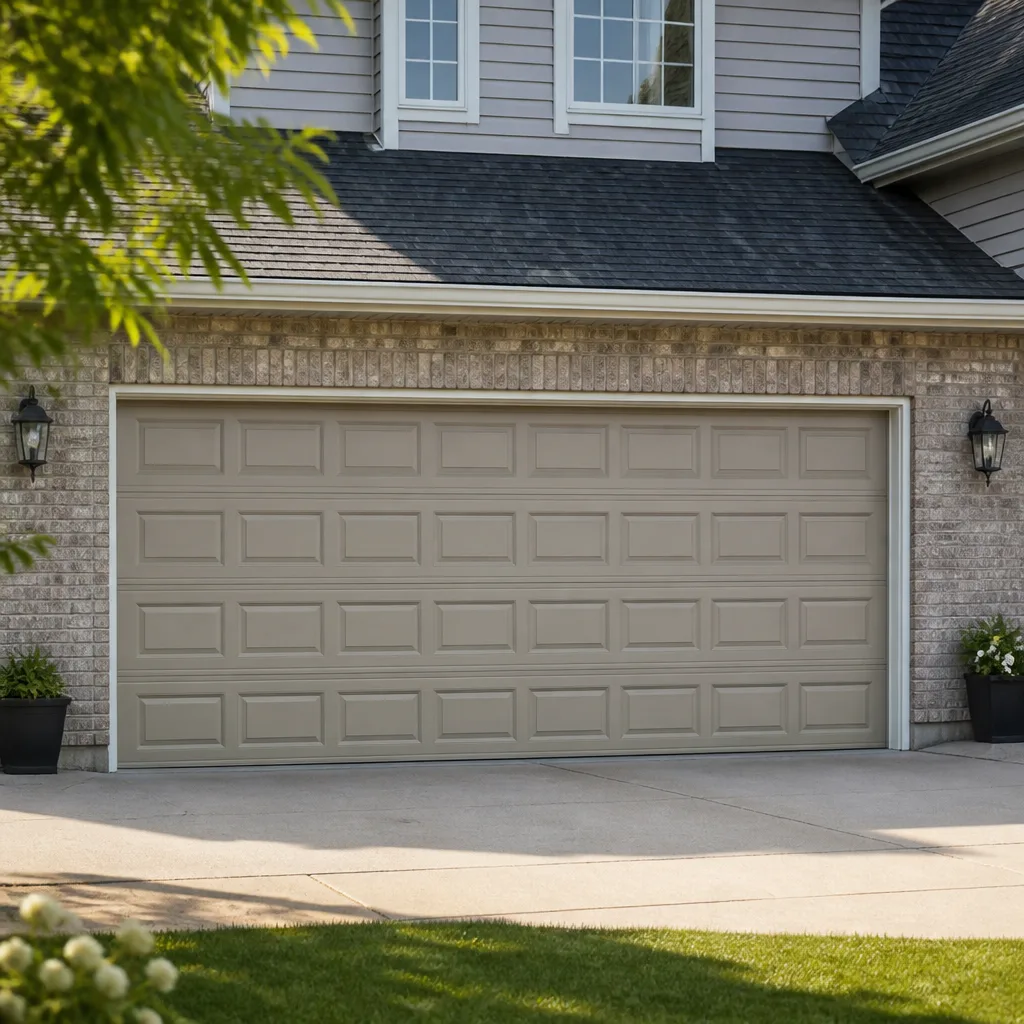 Raised-panel steel
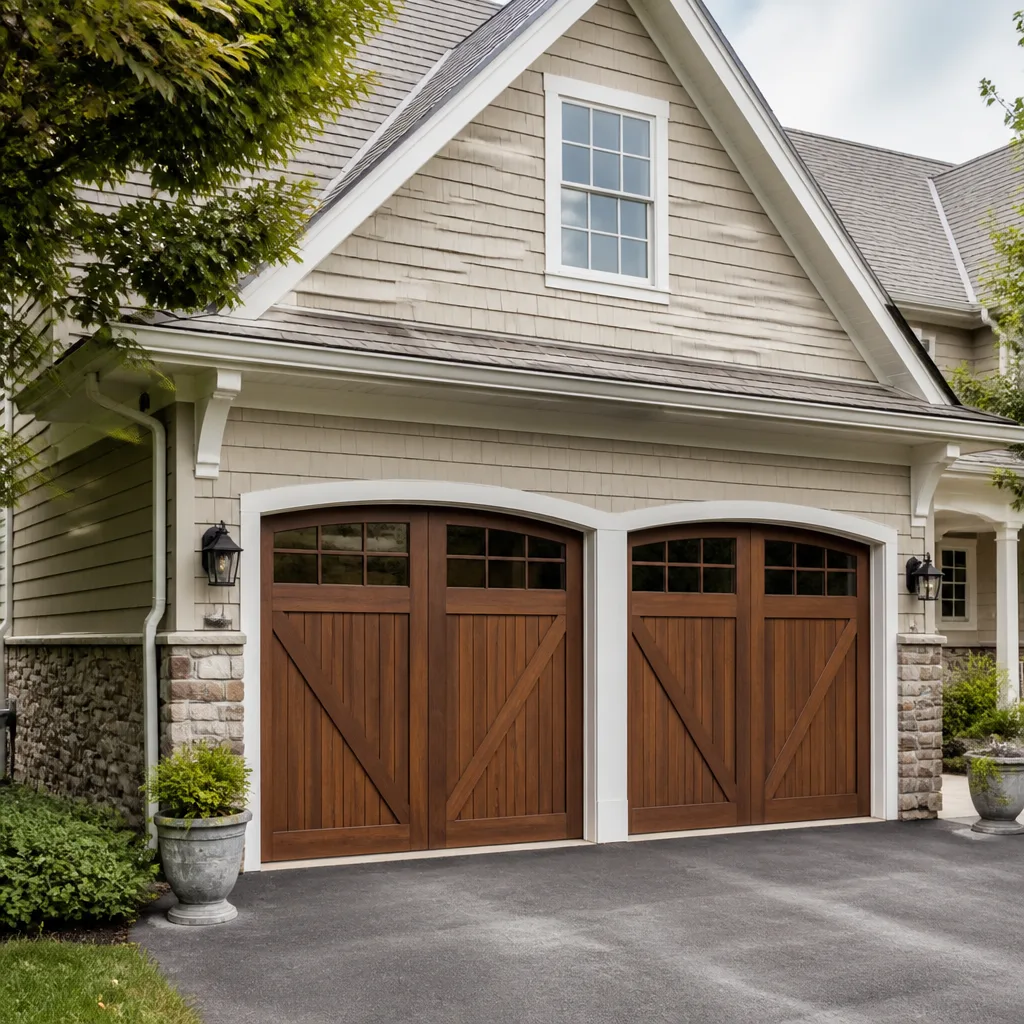 Carriage house
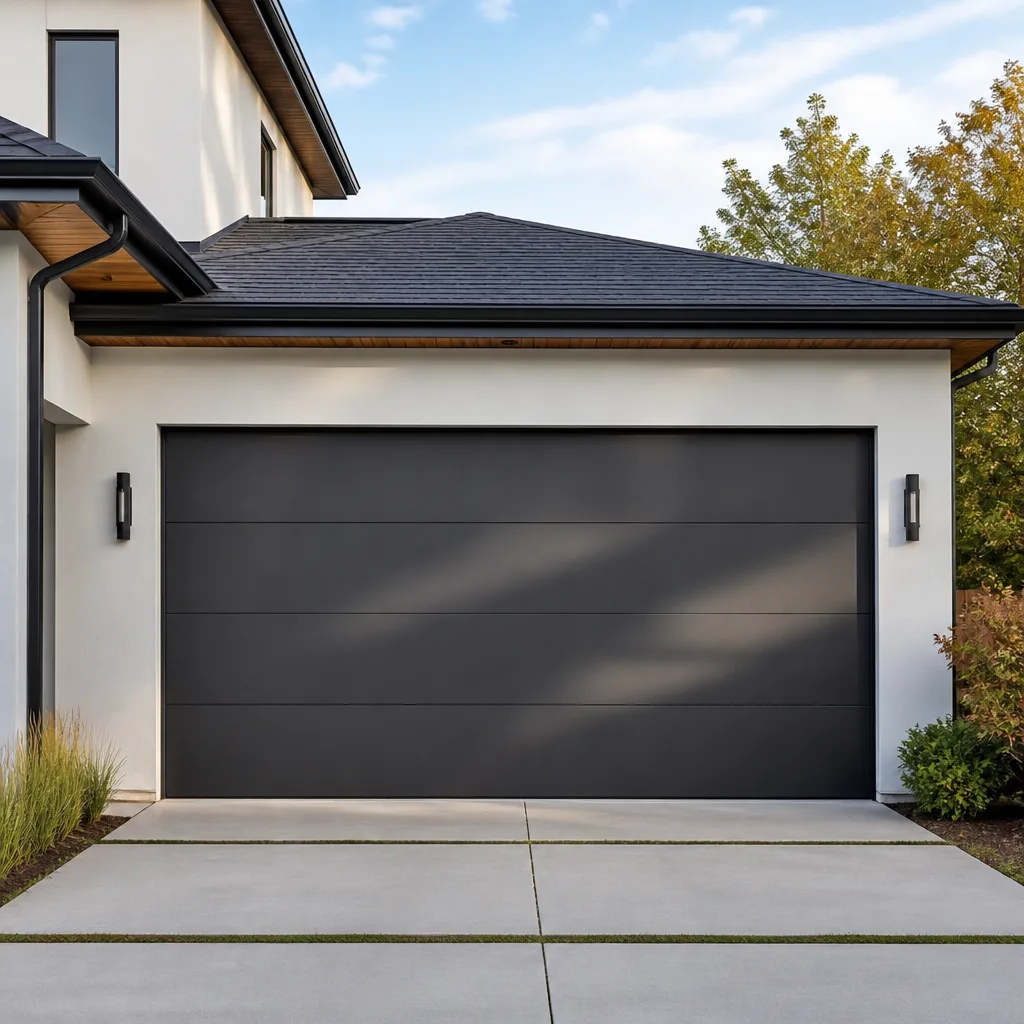 Modern flush
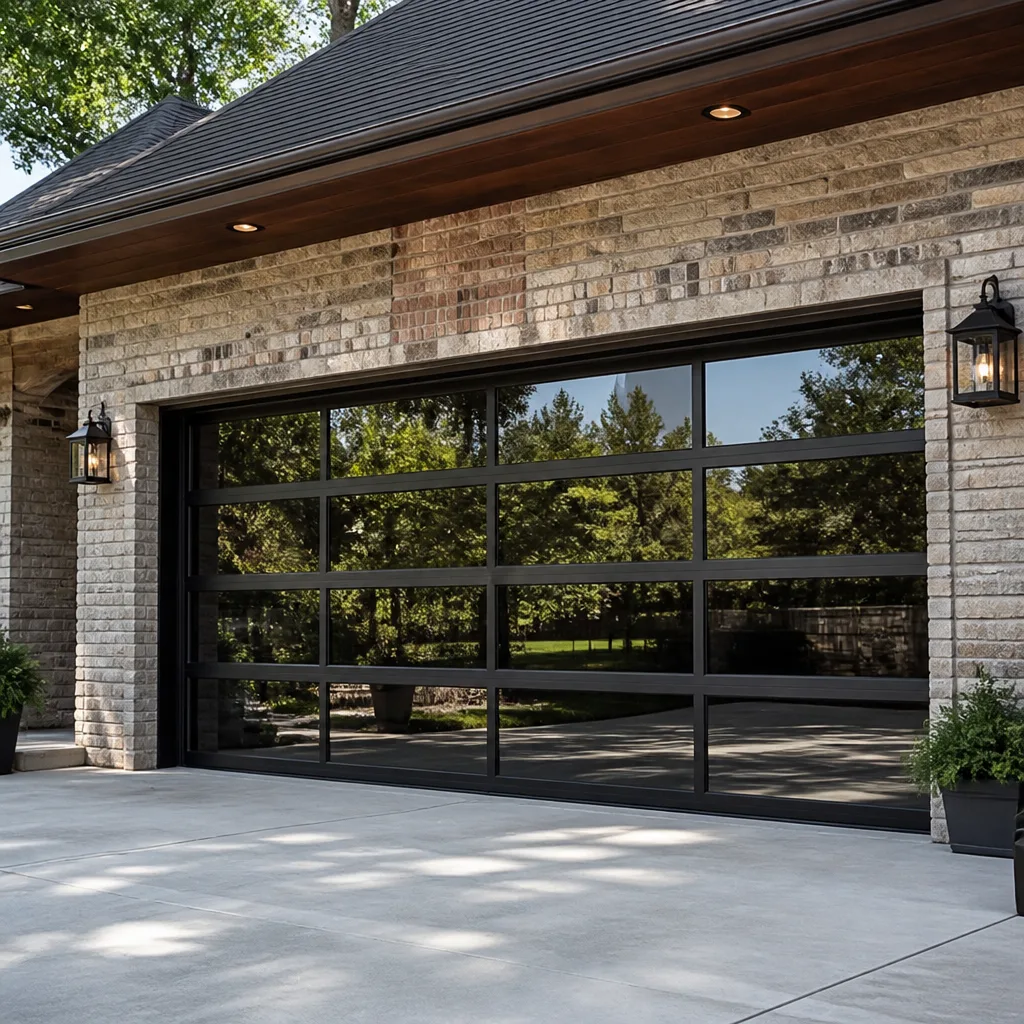 Full-view glass
 LiftMaster openers
 Chamberlain openers
Full 25-point door and opener safety check with every visit - springs, cables, rollers, tracks, and your LiftMaster or Chamberlain opener included
You get a price before we start. It does not change when the truck arrives.
Get your free estimateThe Complete Garage Door Repair Guide for Anaheim Homeowners
Anaheim sits in a micro-climate corridor where temperatures can swing 40°F in a single day, and that thermal cycling is quietly destroying garage door springs across the city faster than the national average. Most guides treat garage door repair as generic nationwide advice, but Anaheim homeowners face a specific combination of coastal humidity, inland heat, and the occasional seismic jolt that changes how doors fail and what Garage Door Repair services actually last. This guide maps those local conditions to the components they damage, so you know what to watch before a small issue becomes a full replacement. You’ll learn how to diagnose problems accurately, what repairs cost in Anaheim, which fixes are safe to handle yourself, and when to bring in a specialist.
Quick Answer
The Complete Guide to Garage Door in Anaheim covers typical repair costs: $125 to $450 depending on the component, with spring replacement being the most common repair at $180 to $340. Most repairs including spring, cable, and roller replacement can be completed the same day by a technician carrying parts for major brands including Amarr, Wayne Dalton, and Craftsman. Always get the price confirmed before work starts, and never attempt spring or cable repairs yourself, as these components are under extreme tension and cause serious injuries every year.
Styles & brands we work with
Table of Contents
- How Anaheim’s Climate Damages Garage Doors Differently
- Anatomy of a Garage Door System: What Actually Breaks
- How to Diagnose Your Garage Door Problem Before Calling
- The 6 Most Common Garage Door Repairs in Anaheim
- What Does Garage Door Repair Cost in Anaheim?
- DIY-Safe Fixes vs. Repairs That Require a Professional
- Anaheim Permit Requirements for Garage Door Work
- Annual Maintenance That Prevents Costly Repairs
How Anaheim’s Climate Damages Garage Doors Differently
Anaheim’s position roughly 12 miles from the Pacific creates a repair pattern we don’t see in inland cities like Riverside or San Bernardino. The marine layer rolls in most mornings, carrying salt moisture that settles on metal components, and by afternoon the temperature can climb into the 90s. That daily humidity cycling accelerates rust on torsion springs, hinges, and cables in ways homeowners rarely notice until something snaps.
Thermal expansion is the bigger culprit. Steel springs expand when hot and contract when cool. In Anaheim, a garage that bakes at 95°F during the day can drop to 55°F overnight. That 40°F swing forces the spring steel through thousands of additional stress cycles per year compared to more temperature-stable regions. The practical result: torsion springs in Anaheim homes often fail in the 7 to 10 year range, while the same spring in a milder climate might last 12 to 15 years.
Seismic activity adds another variable. Even minor earthquakes that never make the news can knock garage door tracks slightly out of alignment, especially in older Anaheim neighborhoods where homes were built before modern seismic strapping became standard. A door that suddenly binds or squeals weeks after a small tremor may not have a mechanical failure at all, just a track that shifted a fraction of an inch.
Salt air from the coast reaches further inland than most Anaheim homeowners assume. On days with an onshore breeze, airborne salt particles travel 10 to 15 miles before settling. That means the cable galvanization on a garage door in the Anaheim Hills takes a similar corrosive beating to a home much closer to Huntington Beach. The difference is that coastal homeowners expect rust and plan for it, while Anaheim homeowners are often blindsided when a cable frays three years earlier than expected.
Components Most Affected by Anaheim’s Climate
- Torsion springs: Thermal fatigue from daily temperature swings shortens lifespan by 25 to 35 percent compared to national averages.
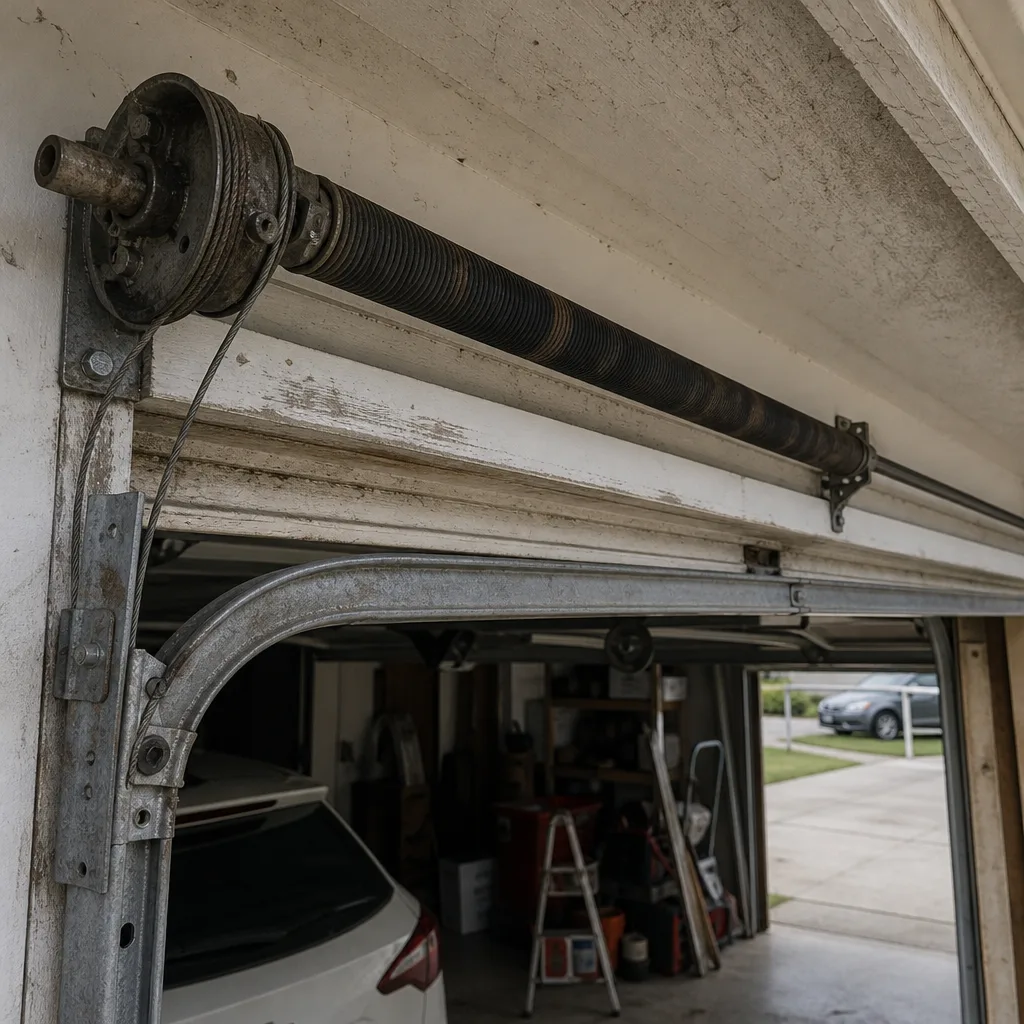
- Lift cables: Salt-air corrosion accelerates fraying, particularly where the cable wraps around the bottom bracket.
- Rollers: Humidity causes steel roller bearings to seize, which then flattens the roller and scores the track.
- Track hardware: Seismic micro-movements loosen lag bolts and shift bracket alignment over time.
- Weather seals: UV exposure plus marine moisture dries and cracks vinyl seals faster than the 3 to 5 year national replacement average.
Understanding these local failure patterns changes what maintenance makes sense. A homeowner in Phoenix might never think about cable corrosion, but in Anaheim an annual visual check of the cables and springs is the single most cost-effective habit you can develop.
Anatomy of a Garage Door System: What Actually Breaks
Most garage door problems fall into three categories: the door itself, the opener, or the track and hardware. Knowing which system is failing saves you from replacing the wrong component and helps you describe the problem accurately when you call for service. We work on all three systems across every major brand, because the reality is that a door from Amarr uses fundamentally the same mechanical principles as one from Wayne Dalton, even when the parts differ.
The Door Assembly
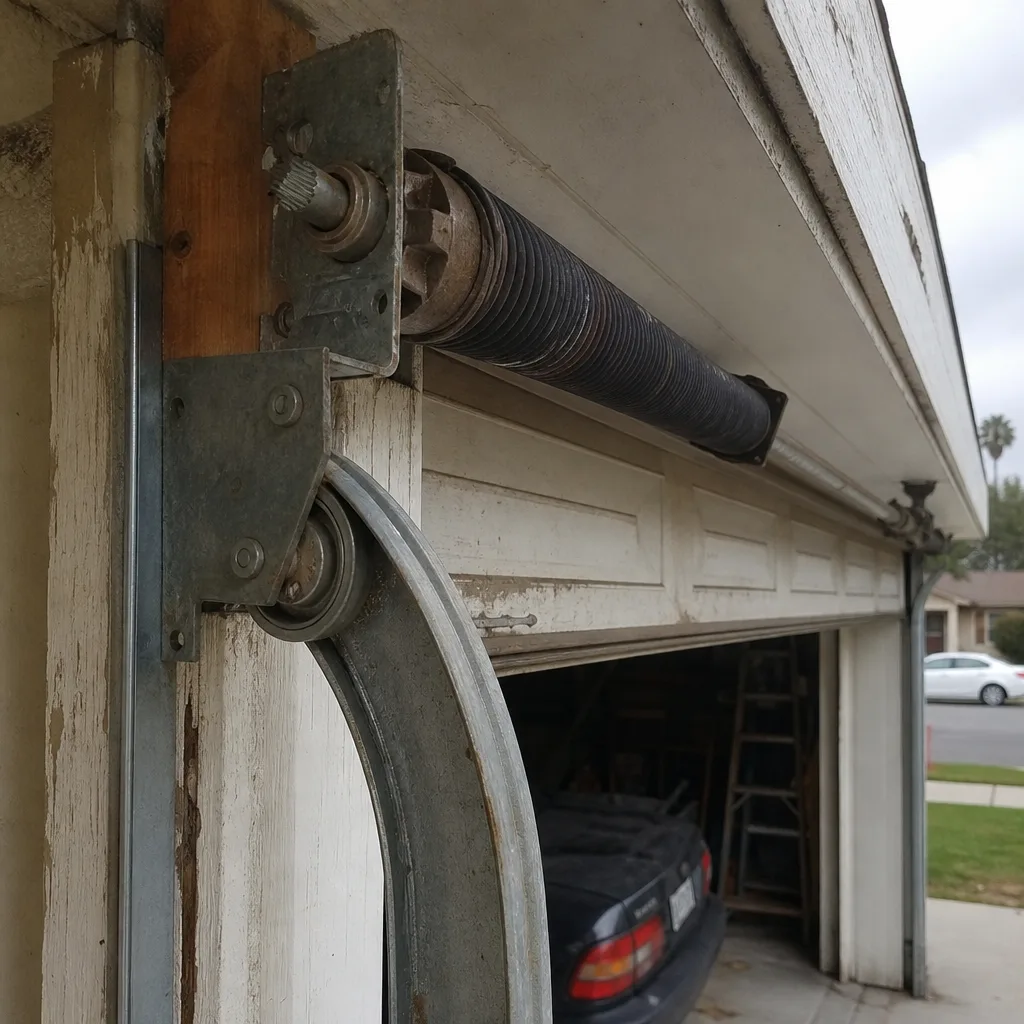
The door itself is the heaviest moving object in your home, typically weighing between 130 and 400 pounds depending on material and size. It consists of hinged panels, rollers attached to the panel edges, and the springs that counterbalance most of the weight. Steel doors are the most common in Anaheim because they resist the warping that humidity causes in wood, though many older Anaheim neighborhoods still have original wood doors from the 1970s and 1980s that need different repair approaches.
The Counterbalance System
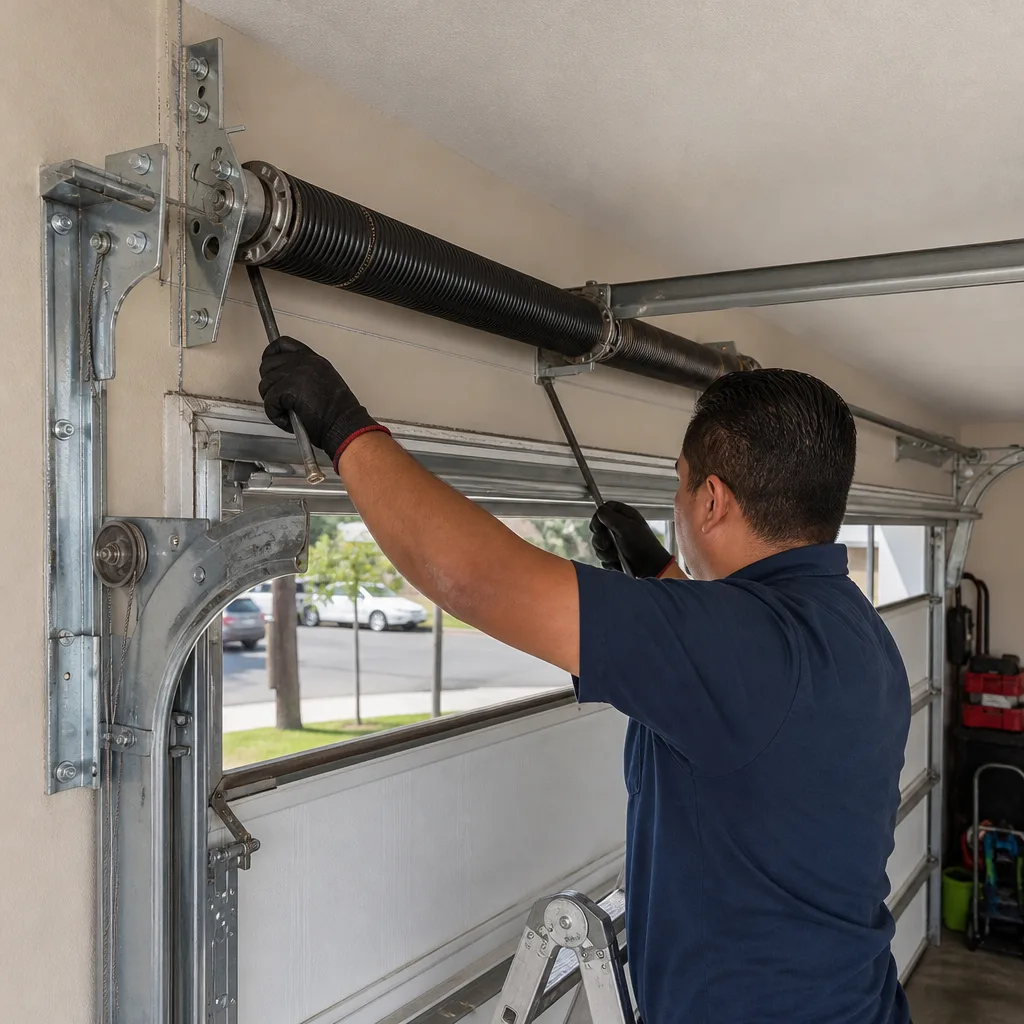
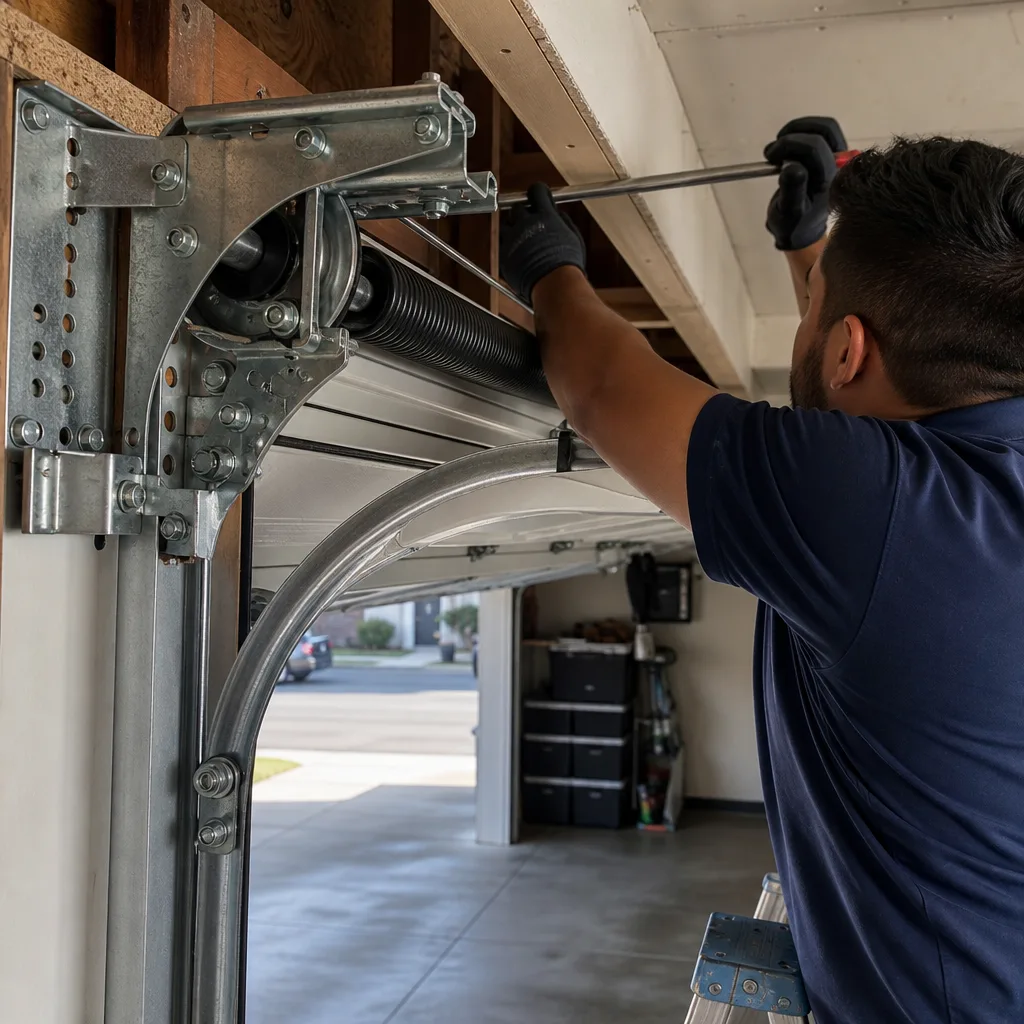
Two spring types counterbalance the door: torsion springs mounted on a shaft above the door opening, and extension springs mounted on tracks parallel to the door. Torsion springs store enormous mechanical energy, which is why spring failure is loud (it often sounds like a gunshot) and why spring replacement is never a DIY job. Extension springs are less common on newer doors but still appear on many Craftsman-era installations in Anaheim homes built before 1990.
The Opener
The opener is an electric motor that pulls or pushes the door along the track, but it is not designed to lift the door’s full weight. A properly balanced door requires only about 10 pounds of force to move manually, and the opener simply supplies that force. When springs weaken or break, the opener suddenly bears the full weight, which burns out motor gears and circuit boards rapidly. This is why opener failures and spring failures often happen within weeks of each other.
The Track System
Vertical tracks guide the door up and horizontal tracks carry it back into the garage. Track problems include misalignment from seismic shifts, worn rollers that no longer seat correctly, and bent sections from impact. Track issues create friction, and friction transfers stress to every other component in the system.
If you need help identifying which system is causing your problem, our Garage Door Repair in Anaheim page walks through the diagnostic process in detail, and our technicians arrive familiar with the brands we service before the truck pulls in.
How to Diagnose Your Garage Door Problem Before Calling
Before you pick up the phone, spend five minutes running through this diagnostic sequence. It will help you describe the problem accurately, which means a faster fix and fewer surprises when a technician arrives. None of these steps involve touching springs or cables, so they are safe for any homeowner to perform.
- Watch and listen for one full open-close cycle. Does the door move smoothly or does it jerk? Does it make a grinding noise, a squeal, or a rhythmic clunking? Grinding suggests roller or track problems. Squealing points to dry bearings or hinges. A single loud bang during opening usually means a broken spring.
- Disconnect the opener using the red emergency release handle. The cord hangs from the opener rail. Pull it down to disengage the motor. Now try to lift the door manually. If it is extremely heavy or impossible to lift, the springs have failed or lost tension. If it moves easily but is noisy, the problem is rollers or track hardware. If it opens halfway and binds, the track is likely misaligned.
- Check the door balance. Lift the door to about waist height and let go. A properly balanced door should stay in place or drift very slowly. If it drops, the springs are weak. If it flies upward, the springs are over-tensioned, which is less common but equally dangerous.
- Inspect the rollers visually. With the door closed, look at the rollers on the sides. Cracked plastic rollers, rollers missing their wheel, or metal rollers with visible rust on the bearing should be replaced. In Anaheim’s humidity, roller bearings seize frequently, and a seized roller then grinds a flat spot onto the track.
- Examine the cables. The lift cables run along both sides of the door. Look for rust-colored staining, loose strands, or any section that appears thinner than the rest. Frayed cables can snap without warning, and a snapped cable under tension can whip violently.
- Test the opener’s response. After reconnecting the opener, press the wall button and watch the door’s first few inches of travel. If the motor hums but the door does not move, the opener gear is stripped, likely from compensating for a failed spring.
This sequence separates door problems from opener problems from track problems in about five minutes. When you call, describing what you found in step 2 and step 3 tells the technician exactly what to bring. Our Garage Door Opener Repair in Anaheim page covers opener-specific diagnostics in more depth if your door moves fine manually but the motor is struggling.
The 6 Most Common Garage Door Repairs in Anaheim
These six repairs account for the vast majority of our service calls across Anaheim. We see them in every neighborhood, from the older homes near downtown Anaheim to newer construction in Platinum Triangle. The frequency ranking reflects both mechanical reality and the climate factors we discussed earlier.
1. Torsion Spring Replacement
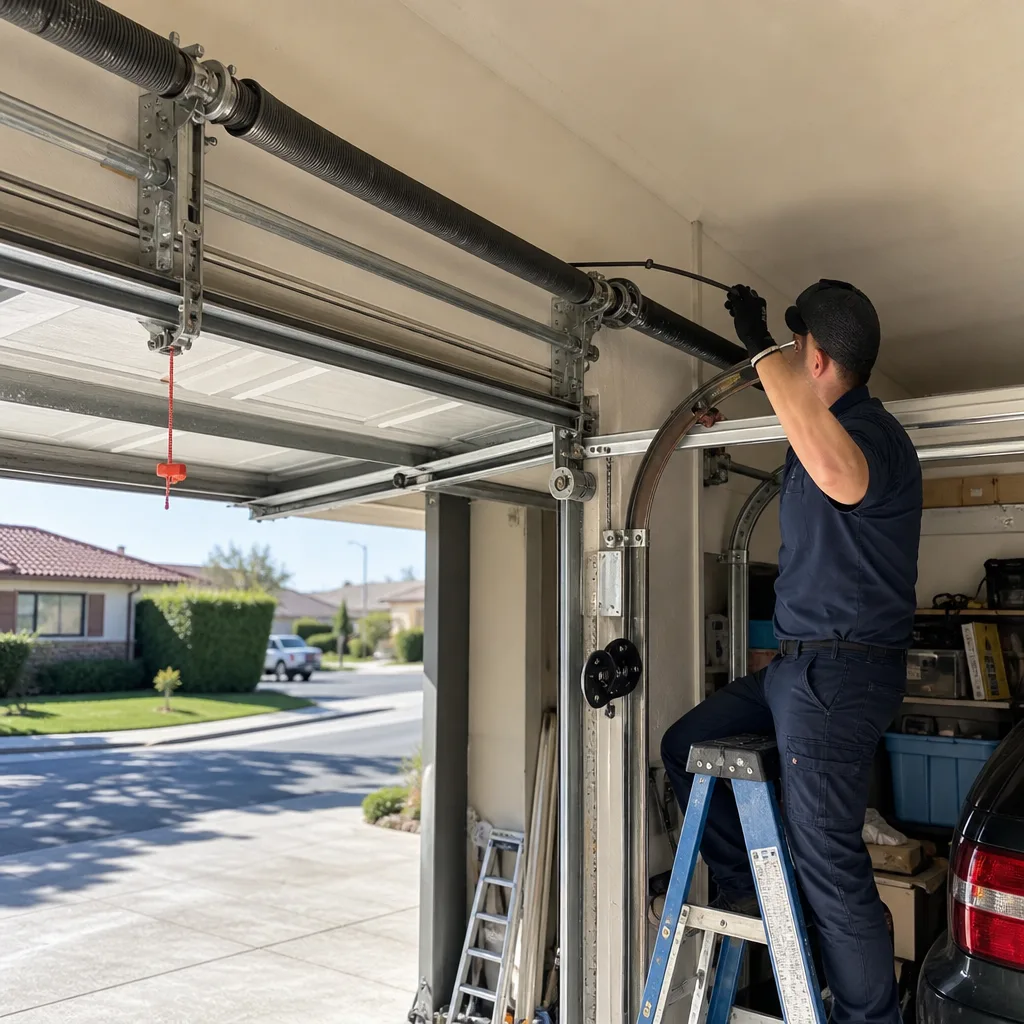
Spring failure is the most common repair in Anaheim, and climate is the reason. The thermal cycling we described earlier pushes springs through fatigue cycles faster than the national average, and homeowners in Anaheim should expect to replace their springs at least once during a 15-year span of ownership. Symptoms include a loud bang when the door is closed, a door that refuses to open even though the opener runs, and a visible gap in the spring coil when you inspect the shaft above the door. Spring replacement costs between $180 and $340 in Anaheim, including the springs and labor, and a technician should always replace both springs even when only one has broken, because the surviving spring has the same fatigue history and will fail soon.
2. Cable Replacement
Lift cables fail from corrosion and fatigue at the bottom bracket, where they wrap around a steel drum and experience maximum flex. Salt air from the Pacific accelerates rust on the cable strands, even in Anaheim neighborhoods that seem far from the coast. A frayed cable can snap suddenly, and when it does, the door drops with full force on that side. Cable replacement in Anaheim runs $120 to $200 for both cables, and the work should be done by a professional because cables share the same high-tension system as the springs.
3. Roller Replacement
Rollers wear out every 5 to 7 years, faster if humidity has caused the bearings to rust. Nylon rollers with sealed bearings resist Anaheim’s marine moisture better than steel rollers, and upgrading to nylon typically costs only slightly more. Symptoms of failing rollers include a rough-feeling door, visible flat spots on the wheel surface, and a rattling noise as the door travels. Replacing all rollers on a double door costs $100 to $170 in Anaheim.
4. Track Realignment
Seismic micro-movements and daily door use gradually push tracks out of alignment. A misaligned track causes the door to bind, creates uneven wear on rollers, and eventually pulls lag bolts loose from the wall framing. Symptoms include the door pausing mid-travel, visible gaps between the rollers and the track, and scraping marks on the inside edge of the track. Realignment typically costs $100 to $150 and usually takes under an hour.
5. Hinge and Bracket Repair
Sheet metal hinges connecting door panels eventually crack from repeated stress, especially on doors that have operated with weakened springs for months. Cracked hinges stress adjacent panels and can cause corner fractures that require replacing an entire panel. Replacing a set of hinges runs $80 to $150 depending on the door design.
6. Weather Seal Replacement
Bottom seals crack from UV exposure and heat, allowing debris, water, and pests into the garage. In Anaheim, where concrete slab temperatures can exceed 120°F in summer, vinyl seals degrade in 2 to 3 years instead of the 5 years manufacturers estimate for temperate climates. Seal replacement is one of the few genuinely DIY-safe repairs, costing $30 to $60 for materials at any local hardware store.
For a complete breakdown of what repairs cost in your area, our Garage Door Repair in Anaheim service page lists current pricing and same-day availability. We’re brand-agnostic, which means we work on your brand, not just our preferred brand.
What Does Garage Door Repair Cost in Anaheim?
Anaheim pricing tracks slightly above the national average because of travel distances across Orange County and the premium on same-day service, but the difference is modest. The numbers below reflect what we quote daily across Anaheim neighborhoods including West Anaheim, East Anaheim, and Anaheim Hills. Every price is confirmed and agreed before any work starts.
| Repair Type | Typical Anaheim Price Range | Time on Site |
|---|---|---|
| Torsion spring replacement (pair) | $180 – $340 | 45-90 minutes |
| Extension spring replacement (pair) | $150 – $250 | 45-75 minutes |
| Cable replacement (both sides) | $120 – $200 | 30-60 minutes |
| Roller replacement (full set) | $100 – $170 | 30-45 minutes |
| Track realignment | $100 – $150 | 45-60 minutes |
| Hinge replacement (set) | $80 – $150 | 30-45 minutes |
| Bottom seal replacement | $60 – $100 | 15-30 minutes |
| Opener gear replacement | $140 – $220 | 45-60 minutes |
| Full diagnostic visit (no repair needed) | $75 – $100 | 20-30 minutes |
These ranges assume a standard sectional steel door in good condition. Wood doors, custom sizes, and doors with rusted hardware may land at the higher end or require additional parts. The price is quoted and agreed before any work starts, so the invoice matches the estimate exactly.
One note about the diagnostic fee: if you proceed with the repair during the same visit, the diagnostic charge is waived. That structure encourages honesty on our end because we do not benefit from finding extra problems, and it protects you from paying for a visit that ends with no fix.
When comparing quotes in Anaheim, ask three questions: does the price include both springs or just one, are the parts from an original manufacturer or generic aftermarket, and is there a warranty on the labor. Different answers explain most price differences between companies.
DIY-Safe Fixes vs. Repairs That Require a Professional
Honest guidance here matters. Some garage door maintenance is genuinely safe and satisfying for a homeowner to handle, and some repairs carry injury risks that no YouTube tutorial can eliminate. See our DIY vs Professional Garage Door: The Anaheim Homeowner’s Decision Guide for a detailed breakdown. We will tell you which is which without scare tactics, because a homeowner who understands the danger boundary makes better decisions.
Repairs That Are Safe to Do Yourself
- Lubricating hinges, rollers, and springs: Use a silicone-based spray on hinges and rollers, and a light lithium grease on the spring coils. Do this every 6 months in Anaheim’s climate. No disassembly required.
- Tightening visible hardware: Lag bolts on the track brackets and hinge screws loosen over time. A quick pass with a socket wrench keeps things aligned. Use a hand tool, not an impact driver, to avoid overtightening.
- Replacing the bottom weather seal: The seal slides into a channel on the bottom of the door. Cut to length and slide in. Takes 15 minutes and requires no mechanical disassembly.
- Repainting the door surface: Surface rust on the panel edges can be sanded and painted as long as the rust has not penetrated the panel. This is cosmetic and safe.
- Programming and remotes: Opener remotes, keypads, and vehicle HomeLink systems are all homeowner-programmable. Your opener manual has the steps, and most brands use the same process whether the unit is from Genie, LiftMaster, or another brand.
Repairs That Require a Trained Professional
- Torsion spring replacement: The spring stores thousands of pounds of tension. A slip during winding can cause the winding bar to spin violently, causing severe hand, arm, or facial injuries. This is the single most dangerous home repair that exists.
- Cable replacement: Cables connect to the same tensioned system. Cutting or releasing a cable without properly securing the spring can cause the spring to unwind explosively.
- Track removal or major realignment: The track holds the entire door weight during travel. Removing or significantly repositioning it while the door is engaged risks the door falling.
- Opener motor or logic board repair: Opener wiring carries 120 volts at the outlet, and the capacitor inside the motor head holds a charge even when unplugged. Electrical work of this type requires training and proper discharge procedures.
The rule of thumb: if the component you are working on is touched by a spring or a cable, call a professional. If it is attached to the door panel or the track but not part of the tension system, you can likely handle it. We’ve seen too many Anaheim homeowners attempt spring work with improvised tools and end up in the emergency room. The savings of $180 to $340 is not worth the risk.
Anaheim Permit Requirements for Garage Door Work
The short answer: most garage door repairs in Anaheim do not require a permit, and most garage door replacements do not either, but there is a specific exception you should know about. Anaheim follows California Building Code requirements enforced through the City of Anaheim Building Division, and the distinction comes down to whether the work is considered a like-for-like replacement or a structural modification.
Repairs: No Permit Needed
Replacing springs, cables, rollers, hinges, openers, and other components on an existing door is classified as routine maintenance and repair. No permit is required regardless of the extent of the parts replacement, as long as the door opening dimensions and structural mounting points remain unchanged.
Replacements: Usually No Permit Needed
Replacing an entire door with a new door of the same size and configuration is considered a like-for-like change and does not require a permit in Anaheim. This covers the majority of what our Garage Door Installation in Anaheim service handles. A new door on existing tracks or new tracks on the same opening falls into this category.
When a Permit Is Required
A permit is required when the door opening itself changes size, when the header above the door is modified, or when framing is altered. Converting a single-car door opening to a double-car opening, enlarging an existing opening, or adding a second door where none existed all require permits through the City of Anaheim. These projects involve structural work beyond the garage door system itself.
If you are replacing a door and the opening stays the same size, no permit is needed and the work can typically be scheduled within days. If you are planning a larger structural project, the contractor handling the framing work should pull the permit, and your door installer coordinates with them on the opening dimensions.
One additional note: some Anaheim homeowner associations have architectural review requirements for door appearance, color, and material even when no city permit is required. If your home is in an HOA-managed community, check your CC&Rs before choosing a new door material or color.
Annual Maintenance That Prevents Costly Repairs
An hour of maintenance once a year prevents most of the repairs we covered above and extends the life of your door by several years. Given Anaheim’s specific climate challenges, the maintenance schedule below is tailored to what actually matters here rather than generic advice.
- Inspect the springs for rust and gaps. Look at the torsion spring shaft above the door or the extension springs along the tracks. Surface rust is normal, but deep pitting or an obvious gap in a coil means failure is near. Call for replacement before it snaps.
- Inspect both lift cables for fraying. Run your finger along the cable (with the door closed) and feel for loose strands. Look for rust staining where the cable wraps the bottom bracket. If you see any fraying, schedule replacement. A cable that snaps while the door is opening drops the door on that side.
- Check roller condition and track alignment. Rollers should be round, not flattened. The track should be parallel to the door edge with no visible bend. If you see shiny metal shavings below the track, a roller has seized and needs replacement.
- Lubricate all moving parts. Apply silicone spray to rollers, hinges, and the track interior. Apply lithium grease to the spring coils. Skip the opener rail, which on most modern openers is designed to run dry. This step takes five minutes and should be done twice per year in Anaheim, in spring and fall, because the humidity cycle is hardest on metal parts.
- Test the auto-reverse safety feature. Place a 2×4 flat on the ground in the door’s path and close the door. It should reverse immediately upon contact with the wood. Federal law has required this safety mechanism on all openers since 1993, and it is the feature most likely to be disabled or fail on older openers.
- Check the door balance every six months. Disconnect the opener and lift the door manually to waist height. If it stays, the springs are healthy. If it drops, the springs are weakening and should be replaced before they fail.
- Clean the photo eye sensors. The small sensors near the bottom of the track on both sides get dusty and dirty, which causes intermittent opening failures. Wipe them with a dry cloth. Many service calls for “opener problems” in Anaheim are just dirty sensors.
These steps take most homeowners under an hour total over the course of the year and catch small issues before they become full replacements. If you find something concerning during an inspection, call for a professional assessment rather than waiting. The cost of a diagnostic visit in Anaheim is small compared to the cost of a failed spring damaging panels or an opener burning out while compensating for weak springs.
Common Mistakes to Avoid
- Replacing only one spring when both are the same age. Torsion and extension springs fatigue at the same rate. Replacing only the broken spring saves $100 to $150 upfront but means another service call and another diagnostic visit within months. Always replace both.
- Ignoring a slow or labored opener. An opener that strains to lift the door is telling you the springs are failing. Continuing to run the opener will strip the motor gear, turning a $200 spring job into a $300 spring-plus-opener repair.
- Spraying WD-40 on nylon rollers. Household lubricants like WD-40 attract dust and break down the nylon in modern rollers. Use a silicone-based spray designed for garage door applications instead.
- Attempting spring work with improvised tools. Using screwdrivers or rebar pieces instead of proper winding bars is the direct cause of most garage door injuries. The $300 savings is not worth the medical bill and the permanent hand damage.
- Waiting to replace a visibly frayed cable. Cables do not fail gradually in a way you can schedule around. They snap suddenly, and a snapping cable under tension will damage whatever is nearby, including you. If you can see fraying, the cable is already past its service life.
- Disabling the auto-reverse feature because it is “too sensitive.” If the door reverses when it should not, the close force limit needs adjustment, not elimination. The auto-reverse sensor has prevented countless injuries and deaths since it became mandatory, and disabling it is both dangerous and a liability issue if anyone is hurt.
- Skipping maintenance until something breaks. The same Anaheim homeowners who service their cars on schedule never think about their garage door, which moves several hundred pounds multiple times per day. The annual checklist earlier in this guide takes under an hour and prevents most of the repairs listed.
See the difference
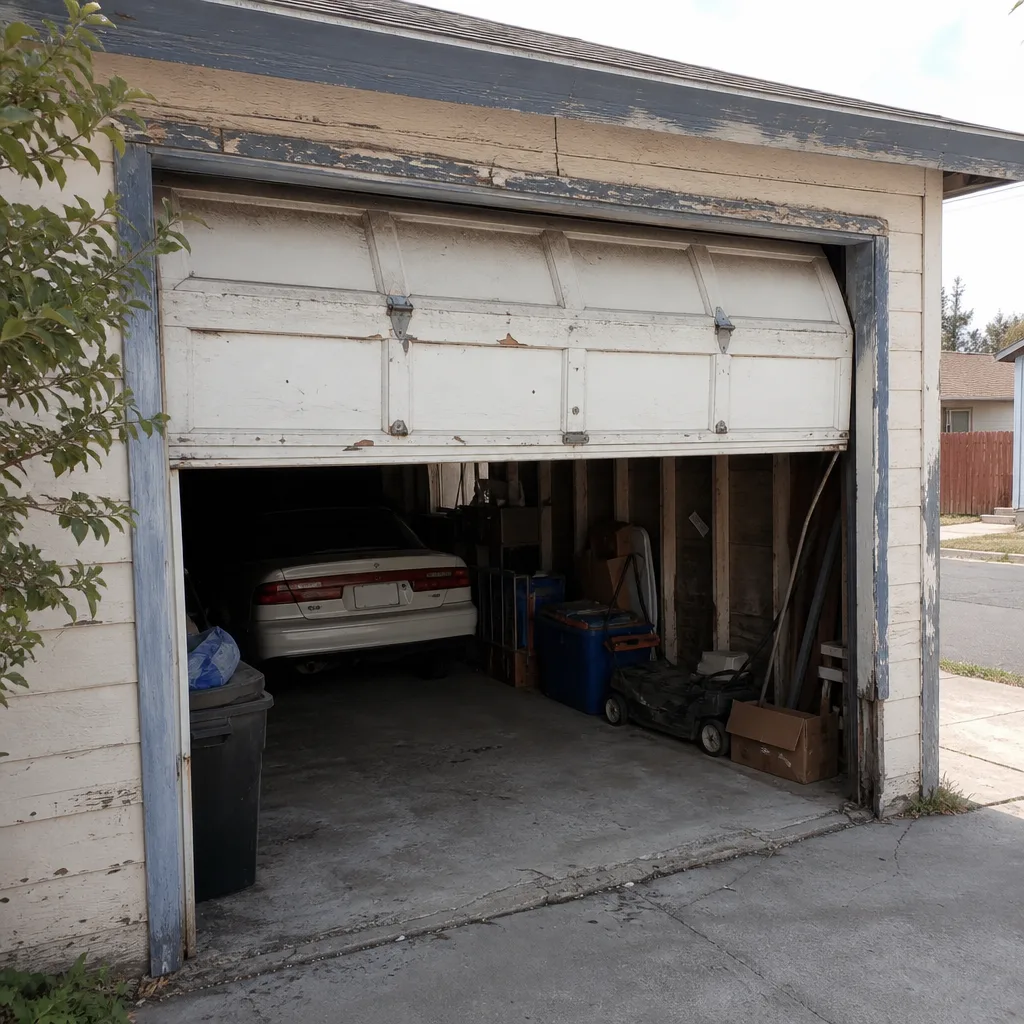 Before
 After
 Before
 After
 Before
 After
When to Call a Professional
Call a professional immediately if you hear a loud bang that sounds like a gunshot coming from the garage, which almost always means a torsion spring has snapped and the door cannot be operated safely. Call if the door is visibly off-balance, if one side hangs lower than the other, or if you see a frayed cable. Call if the door will not open even when the opener is disengaged, which means spring failure or a track obstruction you cannot see. Call if the opener motor runs but the door does not move, which indicates stripped internal gears. And call for any spring, cable, or track work regardless of how simple it appears. Ranger Garage Door Service offers free estimates in Anaheim, call (877) 752-4135 and we’ll schedule a diagnostic visit, often the same day. We work on your brand, not just our preferred brand.
Frequently Asked Questions
Most garage door repairs in Anaheim cost between $125 and $450 depending on the component. Spring replacement, the most common repair, runs $180 to $340 for a pair. Roller replacement typically runs $100 to $170 per full set, and cable replacement costs $120 to $200. The price is quoted and agreed before any work starts, so the invoice matches the estimate exactly. Call (877) 752-4135 for a free estimate.
Yes. Spring replacement is a same-day repair in most cases, and our technicians carry spring inventory for the doors common in Anaheim homes, including models from Amarr, Wayne Dalton, and Craftsman. Most spring jobs are finished within two hours of arrival. Call (877) 752-4135 in the morning and the job is usually done before dinner.
Emergency response is available for situations where the door is stuck open or stuck closed and the vehicle inside is trapped. Call (877) 752-4135 and describe the problem, and the dispatcher will give you a realistic arrival time. Anaheim locations across the city including West Anaheim and Anaheim Hills are typically reachable within the same day.
No. The price is quoted and agreed before any work starts. If the technician discovers an additional issue during the repair, the new scope and price are discussed with you before anything is done. You approve the full invoice before any tools come off the truck.
In most cases, yes. Our technicians carry springs, cables, rollers, hinges, and opener components for the brands most commonly installed in Orange County. If a specific panel or custom component needs to be ordered, the technician will tell you upfront and schedule the return visit at no additional trip charge. We work on brands including Amarr, Wayne Dalton, and Raynor, which covers the vast majority of doors in Anaheim.
Torsion springs in Anaheim typically last 7 to 10 years because daily temperature swings accelerate metal fatigue. If you use the door multiple times daily or the spring is an older single-unit design, replacement may be needed sooner. If your door is approaching the 7-year mark and the springs show visible rust or slight gaps in the coils, consider proactive replacement before the spring snaps.
The Bottom Line
Anaheim’s climate creates garage door failure patterns that are predictable once you understand them. Thermal cycling shortens spring life, salt air corrodes cables and rollers, and seismic activity knocks tracks out of alignment. These issues are manageable with annual maintenance and prompt attention to early warning signs. When repairs are needed, the market rate for most jobs in Anaheim falls between $125 and $450, always quoted before work begins. Whether your door is an aging Amarr model, a Wayne Dalton from a recent install, or an original Craftsman from decades back, the principles are the same, and so is the fix. Fast diagnosis, honest options, lasting fix. Call (877) 752-4135 when you are ready, and we will get your door working again.
Written by the team at Ranger Garage Door Service, serving Anaheim since 2018.